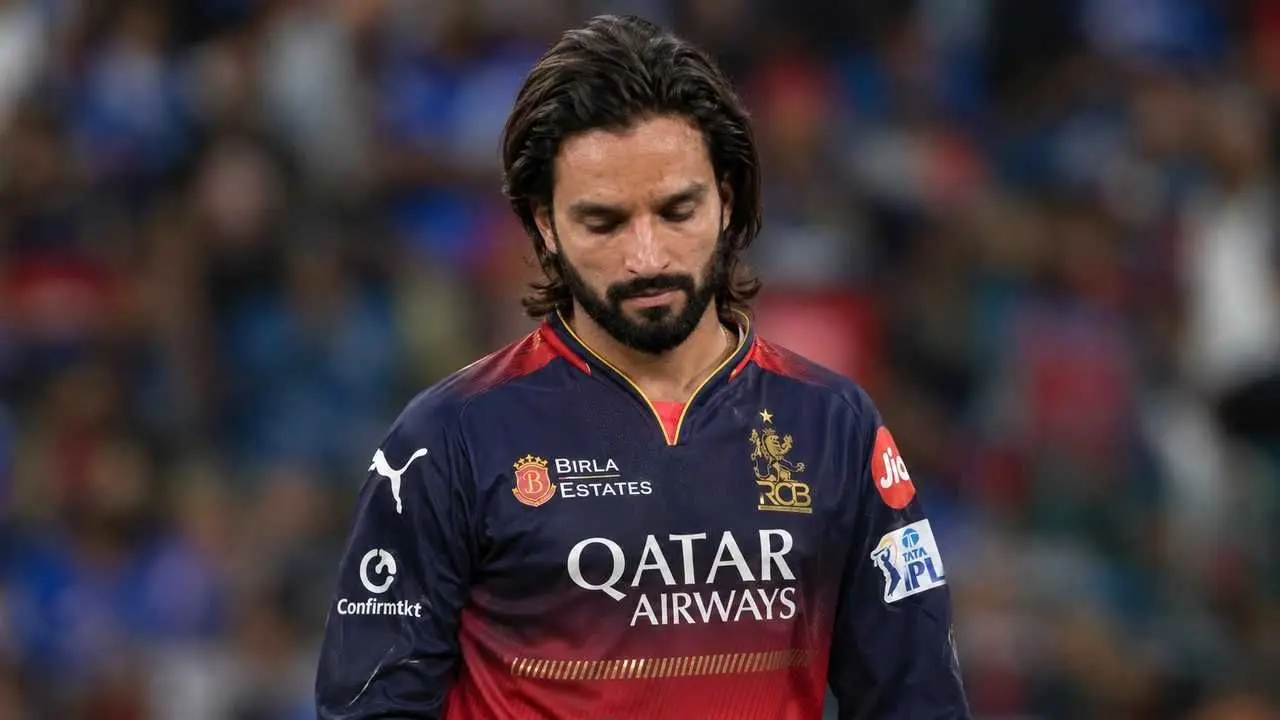
Royal Challengers Bengaluru
Bye-bye, Rajat Patidar. You will never get selected for Team India again. I have strong reasons for saying this, and Rajat Patidar himself has given me those reasons.
Patidar was supposed to represent India A in the Asia Cup. He was also the vice-captain. When selectors give a player that responsibility, it shows that he remains in their plans. This tournament offered him a chance to prove himself on a bigger stage and strengthen his case for the senior Indian team.
As vice-captain, he was well placed to get a consistent run of matches. He had the platform and the responsibility. Instead of making the most of them, he withdrew from the squad.
He has reportedly also asked not to be considered for the 50-over format, saying he needs to manage his injury.
Why Rajat Patidar’s Withdrawal Sends the Wrong Message
The problem is the timing of this decision.
Patidar has been playing Ranji Trophy cricket. He also recently represented India A against Australia A, including in the 50-over format. With him playing regularly, withdrawing from this assignment raises questions about his priorities.
Read alsoMumbai Indians Set to Release Three Big Names Ahead of IPL Retention: ReportMumbai Indians are reportedly preparing to release three big names before IPL retention as trade plans and team combinations take shape.
Those appearances do not establish that he is injury-free. But the selection opportunity he has surrendered is clear: he was given a place in the team, a leadership role and a chance to strengthen his international claim.
For a player trying to establish himself in Team India, these opportunities matter. Strong domestic performances bring a player into contention. India A assignments provide another platform to turn that promise into selection.
The danger is that selectors interpret his withdrawal as rejecting their backing. If that happens, the question becomes straightforward: why keep offering opportunities to someone who has made himself unavailable for the one already given to him?
Ishan Kishan’s Experience Is a Warning
Ishan Kishan withdrew from the South Africa Test series citing personal reasons, with reports pointing to mental fatigue. His subsequent absence from domestic cricket became a separate dispute, and he later lost his BCCI central contract.
As per reports, following his withdrawal, selectors stopped considering Kishan’s name in selection discussions. It took him around two years to regain their confidence and return to the Indian team.
But Kishan had age on his side. Patidar, already 33, does not have that luxury. Another two-year wait would leave him trying to establish himself in Team India at 35.
That is the biggest concern in this comparison. A player can produce runs and still spend a long time waiting for another opportunity. Meanwhile, other players enter the team and strengthen their positions.
At 33, Patidar Cannot Afford to Lose More Time
This year and next year are crucial for Patidar if he wants to establish himself in the Indian team.
There is no official age cutoff, but the competition does not stand still. Younger players are building their cases, and selectors have more options with every domestic season.
If Patidar now has to rebuild confidence in his availability, he risks spending his remaining opportunity window trying to get back to where he already was.
He had been selected. He had been made vice-captain. He had a chance to prove himself through performances in the Asia Cup.
Walking away from that position is a costly gamble for someone who cannot afford another lengthy wait.
Read alsoAxar to CSK, Brevis to Delhi? Blockbuster Trade Talks EmergeAxar to CSK with Ashutosh Sharma? Brevis and Noor Ahmad could move to Delhi in a reported four-player trade, but nothing has been finalised.

His T20 Chances Could Suffer Too
Turning down 50-over cricket does not automatically protect Patidar’s T20 ambitions.
If the selectors take a negative view of his availability, that concern could carry into their planning for other formats. They may decide to invest in players who are available for the opportunities offered to them.
That is why this decision carries consequences beyond missing one tournament. Patidar has given up an immediate opportunity while relying on another one arriving later.
The prediction that this could end his India career rests on that combination: a missed opportunity, the risk of losing the selectors’ confidence and limited time to rebuild his case.
At 33, Patidar cannot assume that the door will stay open while he decides which opportunities to accept.