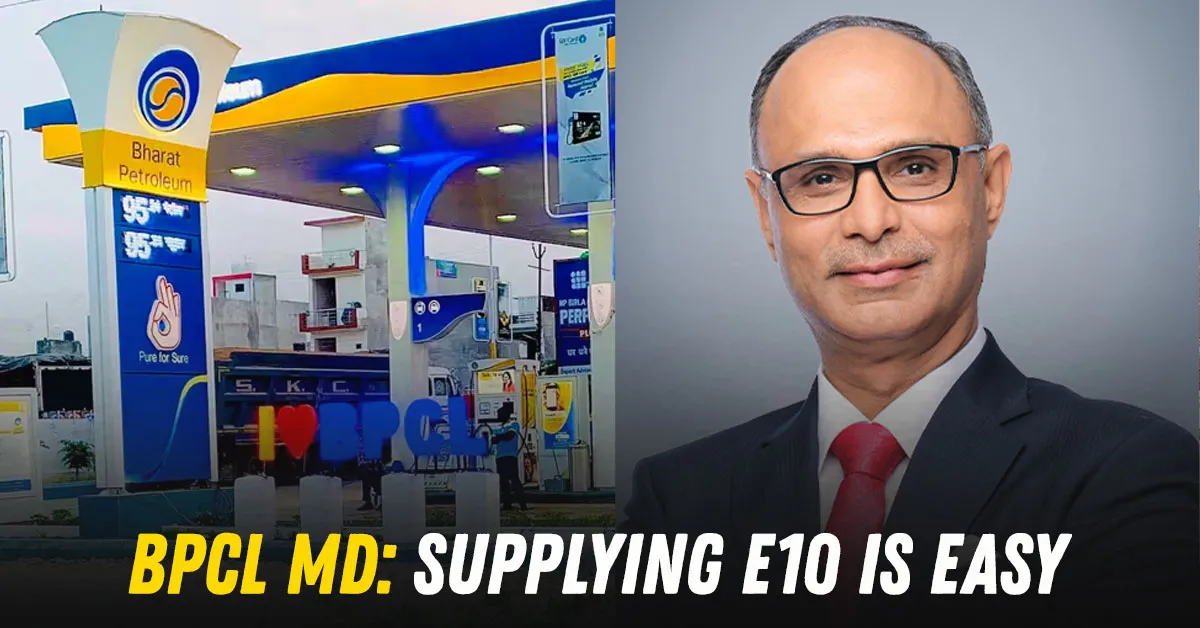
The government is reportedly considering bringing back E10 ( 10% ethanol-blended) petrol and selling it alongside E20 ( 20% ethanol-blended) petrol. Infrastructure limitations were seen as one of the major hurdles in bringing back E10 fuel. Now, Bharat Petroleum Corporation Ltd (BPCL) Chairman and Managing Director Sanjay Khanna has confirmed that the company is technically ready to supply E10 petrol alongside E20, and no separate dispensing infrastructure would be needed for the same. He, however, stressed that no final decision has been taken yet on introducing E10 at petrol pumps. The discussions are mainly focused on whether E10 can be offered as an additional fuel option, particularly for older vehicles.
The possible return of E10 petrol has gained attention as concerns over E20 compatibility continue among vehicle owners. According to Khanna, BPCL already has the infrastructure needed to dispense petrol containing up to 10% ethanol.
He explained that the company is currently dispensing E20, so moving to E10, if required, would largely involve changing the fuel being supplied rather than creating a new network of pumps or storage infrastructure.
This means BPCL does not see any major infrastructure challenge in supplying E10. The bigger question is whether oil marketing companies can manage another petrol grade alongside the existing options.
The government is not currently considering a complete reversal of the ethanol-blending programme. Instead, one option under discussion is to make E10 petrol available alongside E20.
This would be a great relief for older vehicles. These vehicles may have been designed and certified for lower ethanol blends. An E10 option would thus make a lot of sense.
However, several details still need to be worked out. These include how E10 would be supplied, the extent of its availability and whether OMCs (Oil Marketing Companies) can handle another grade of petrol through the existing distribution system.
Khanna made it clear that these discussions are still ongoing and that the final form of the proposal has not yet been decided.
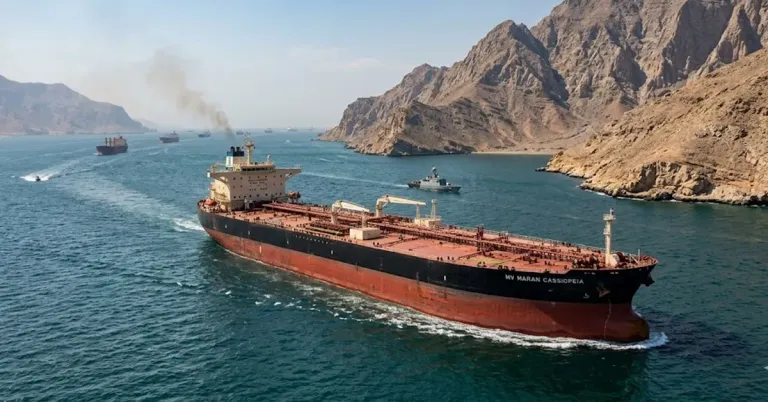
Khanna also commented on India’s oil supply situation amid the continuing conflict in West Asia and uncertainty surrounding possible US tariffs on countries importing Russian oil. Earlier this month, the US Senate passed a bill proposing tariffs of up to 100% on major buyers of Russian oil and gas, including India. The legislation is expected to be considered by the US House of Representatives in September.
Khanna said that India’s oil supplies are currently safe, although the situation remains volatile. BPCL is diversifying its sources of crude to reduce the impact of disruptions in individual supply routes.
BPCL Director of Finance Vetsa Ramakrishna Gupta said that the company has already made crude arrangements for September and is now working on securing supplies for October. BPCL will also receive its first Iraqi crude cargo of the current financial year in the coming days. It is willing to purchase additional crude from Gulf suppliers on a free-on-board basis, provided suitable ships are available.
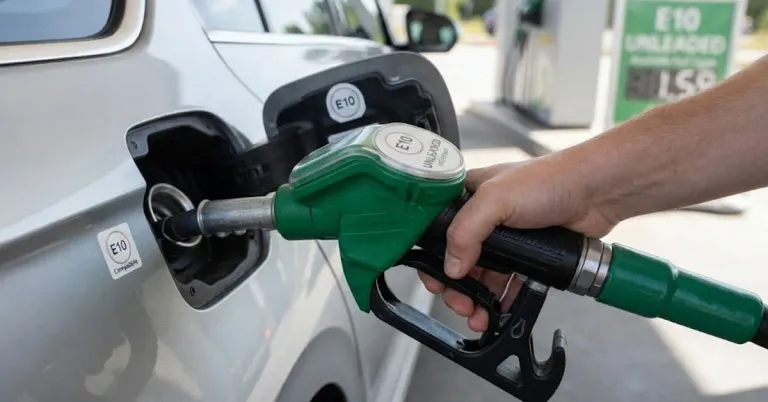
The discussion comes after severe public backlash over the E20 programme. The E20-blending program aims to reduce India’s dependence on imported crude oil. Our annual crude oil import bill is generally more than $120 billion. The blending program helps in reducing this significantly.
It began as a pilot in 2001. E5, or 5% ethanol-blended petrol, was introduced in 2006. The blending remained relatively low for several years. In recent past, however, it increased substantially. India achieved its E20 target well ahead of its original timeline, in 2025.
E20 has now been made the standard petrol. The only petrol grade on sale. This is what triggered the public. Growing concerns over compatibility, damages, impact on older vehicles, and insurance coverage- all surfaced in no time. Things escalated steadily, eventually making the government consider the possibility of giving buyers multiple options (fuel grades) to choose from instead of making E20 the only petrol available.
The idea of offering E10 alongside E20 has also received support from Chief Economic Adviser V. Anantha Nageswaran. In a recent column for The Indian Express, he argued that restoring a lower-blend option at pumps, while continuing to offer E20, could address much of the public concern surrounding the programme. This would allow the government to continue its ethanol policy while providing an alternative for owners of older vehicles.