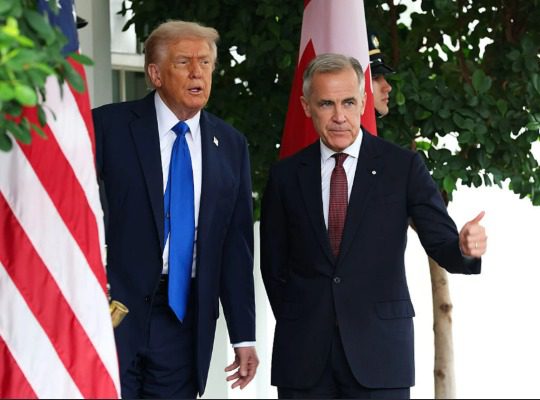
The long-running trade tension between the US and Canada now appears to be moving towards an open trade war. Despite several rounds of talks between the two countries, no agreement could be reached on a trade deal. After this the American President donald trump Has moved towards imposing heavy tariffs on Canadian goods. Prime Minister of Canada in response mark carney Instead of retreating, America To respond ‘tit for tat’ Has indicated.
This new conflict is expected to have an impact on trade, industry, employment and common consumers of both the countries. This may especially affect the prices of those goods which are imported and exported on a large scale between the two countries.
50% tariff may be implemented from midnight
Despite three days of intense talks between US and Canadian officials in Washington, no final agreement could be reached. After this, Canadian Prime Minister Mark Carney called his negotiators back to Ottawa.
According to reports, America is close to 28 billion Canadian dollars that is, on approximately US$20 billion worth of Canadian goods. 50% tariff Preparing to install.
This step is considered very important for the trade relations between the two countries. If this tariff goes into effect, the cost of affected products going from Canada to the US could increase and this could impact businesses as well as consumers.
Canada will also retaliate in response to Trump’s decision
Canadian Prime Minister Mark Carney has clearly indicated that his country will not bear the brunt of US tariffs unilaterally. Canada to protect its economy and business interests retaliatory trade measures Preparing to lift.
Carney says that there has been a big change in America’s trade policy and now America is trying to charge higher prices for access to its market even from its close allies.
The Canadian government has helped businesses in the last 18 months to 25 billion Canadian dollars aid Has made available. The government is also considering new measures to provide further relief to the business and industry sector.
Why were the talks not successful?
In the talks between America and Canada, agreement could not be reached on many important issues. The US side claims that Canada was made a very attractive trade offer.
US Trade Representative jamison greer During negotiations, tariffs on Canadian automobiles were reduced to 25%, according to 15% and reducing tariffs on steel and aluminum from 50% 25% It was proposed to do.
However, the issue of Canada’s trade restrictions on American wine and dairy products remained a major sticking point in the talks. Both sides could not reach any common solution on these issues.
Canada is now exploring new avenues of trade
Canada is working on a strategy to make its economy more diverse amid increasing trade tensions with the US. Prime Minister Mark Carney has indicated that Canada will strengthen trade ties with other countries and new markets rather than relying solely on the US market.
in canada near present day Major infrastructure projects worth 500 billion Canadian dollars But work is going on. The government’s emphasis is also on promoting domestic investment, employment and economic activities.
Canada’s claim regarding employment and development
The Canadian Prime Minister has expressed confidence in the country’s economic potential despite trade tensions with the US. According to him, Canada is currently closer than America. Creating jobs four times faster.
Apart from this, Canada’s economic growth rate is expected to be second among G7 countries in the next two years. In such a situation, the Canadian government is emphasizing on strengthening the domestic economy and other international markets to compensate for the possible loss in the American market.
What will be the impact on common people?
Increasing trade conflict between America and Canada can have a direct impact on the consumers of both the countries. Increasing tariffs increase the cost of imported goods and companies often pass this burden on to consumers through price increases.
Apart from this, the supply chain may also be affected due to impact on automobile, steel, aluminium, agricultural products and other business sectors. If both countries continuously impose retaliatory tariffs against each other, it could have a greater impact on inflation and business activities.
After the breakdown of the trade deal between the US and Canada, trade tensions have further increased in the relations between the two countries. The Trump administration’s preparations for a 50% tariff on Canadian goods and Mark Carney’s warning of retaliatory measures have made the situation critical.
Now the biggest challenge before both the countries is how to prevent the growing tariff dispute from turning into a broader economic conflict while protecting trade interests. The talks between the US and Canada in the coming days will decide whether this dispute remains limited to limited trade differences or takes the form of a major trade war.