

Chandigarh has always been an oddity among Indian cities, meticulously planned, deeply historic, and yet perennially treated as a stopover between Delhi and the hills, or a dormitory town for young professionals who arrive for work and leave the moment the weekend calls them elsewhere. Hyatt Centric Sector 17 Chandigarh has set out to change that script, positioning itself less as a hotel and more as a curated gateway into the city’s layered identity, modernist, Punjabi, nostalgic, and unexpectedly cosmopolitan all at once.
A City Caught Between Eras
Chandigarh’s dual character, postcard-modern grid meets old-world cultural warmth, is precisely what the hotel leans into. Sector 17, where the property sits, has long been the city’s commercial and cultural nerve centre, and Hyatt Centric occupies that geography with intent, threading design cues from Le Corbusier’s original vision through its interiors and menus. It is a hotel built for a city that is simultaneously a heritage capital and a transit hub for people criss-crossing between Punjab’s business towns, Himachal’s hill stations, and Delhi’s corporate corridors.
A Lifestyle Hub Disguised as a Hotel
Set in Sector 17, the city’s central commercial spine, Hyatt Centric Chandigarh leans into the brand’s stated reason for being: Hyatt Centric properties are built for travelers who’d rather be in the middle of things than removed from them, with design and food-and-beverage programming pulled from the neighborhood rather than shipped in from a global template. In Chandigarh, that translates into a property that behaves less like a hotel and more like the city’s unofficial living room, somewhere locals turn up for dinner with no intention of ever checking in.
The Food and Beverage Playbook
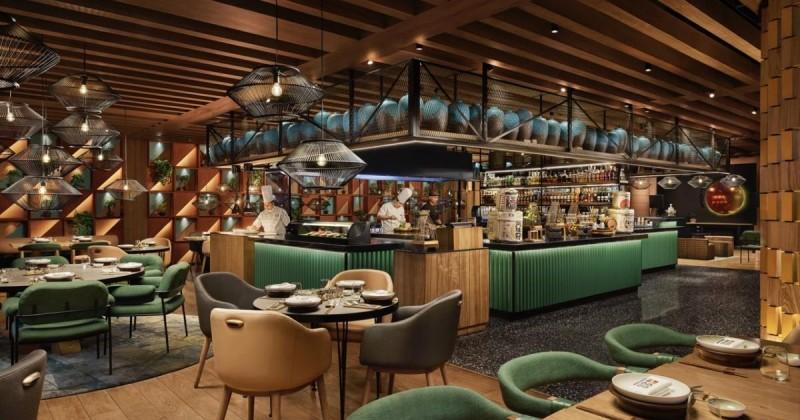
What sets this property apart on the F&B front is sheer range, executed with a specificity rarely seen outside metro flagships. Corby’s, the all-day diner, draws directly from Le Corbusier’s design philosophy for its interiors while its menu juxtaposes classic French cuisine against hearty, undivided-Punjab cooking, pan-Indian street snacks, and a European-leaning bakery counter. It is the kind of menu that could only make sense in Chandigarh, a city built by European modernists but fed on desi soul food.
Koyo Koyo brings contemporary Asian cooking and a cocktail programme designed to carry the day into night, while Glasshouse, a temperature-controlled, plant-wrapped dining room, sources produce from the hotel’s own rooftop organic garden, ROOTS, for a wellness-driven, farm-to-table experience that feels distinctly forward-looking for the region. Zyra, the poolside bistro, threads a lighter, globetrotting narrative, hot dogs, fish and chips, satay, éclairs, built around the idea of a well-travelled young explorer’s food memories.
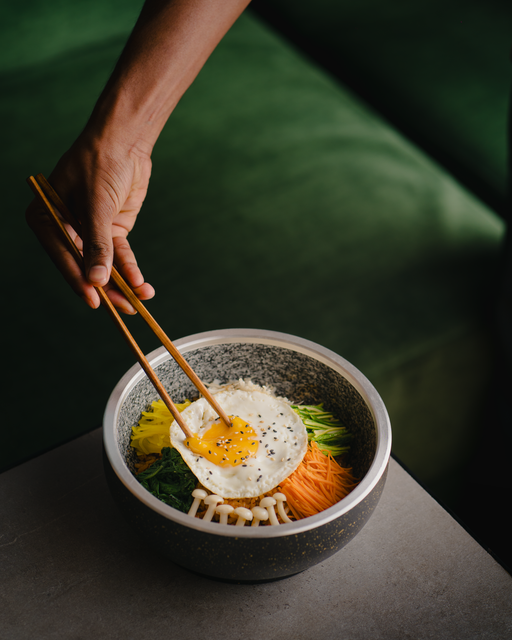
Koyo Koyo, the hotel’s pan-Asian restaurant and cocktail bar. This is not a quietly-tolerated hotel restaurant that guests default to out of convenience, it has become a genuine tricity dining destination in its own right, with diners driving in from Mohali and Panchkula specifically for it. The sushi is the draw regulars talk about first, alongside a khao suey and ramen menu, dim sum baskets built for sharing, and lemongrass fish skewers that keep coming up in conversation. The cocktail list gets nearly as much attention as the food. It isn’t cheap, and portions run precise rather than generous, but the consensus among regulars is that the quality justifies both, enough that Koyo Koyo has become one of the more talked-about tables in the tricity, hotel stay or not.
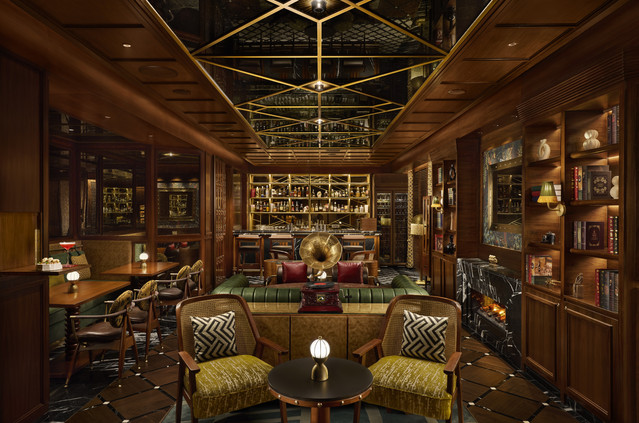
The real conversation-starter, however, is PVT LTD – Chandigarh’s first and, so far, only speakeasy. Tucked behind an unmarked door, it demands reservations and an access code, immediately setting a tone of discretion rare in a city where nightlife has historically meant loud, brightly lit lounges. Inside, the room commits fully to a 1920s fantasy: vintage-inspired interiors, curated vinyl jazz collections, a Members’ Reserve for personal liquor lockers, and a cigar humidor for the truly indulgent.
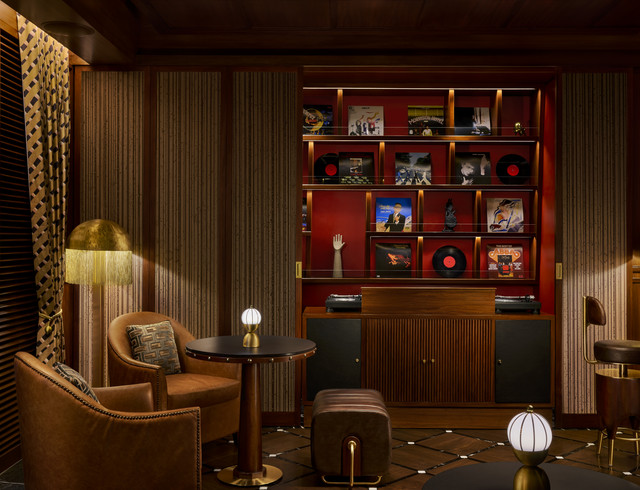
The cocktail menu revives forgotten Prohibition-era classics alongside inventive reworks, some built around real historical anecdotes from the bootlegging era, paired with a Neo-Indian food menu that plays with bold, unexpected combinations, think a blue cheese-stuffed naan or a Sichuan-inflected take on Bandra’s iconic kheema pav. Live jazz and blues performances on weekends complete the illusion, reportedly even experimenting with AR-enhanced cocktail presentations, a level of theatre virtually unheard of in this part of North India.
A Lifestyle Hotel Run by a Young, Passionate Team
Guest reviews consistently single out the same trait: a young staff that treats hospitality as craft rather than routine. Visitors repeatedly name individual team members, from front-desk hosts to restaurant servers, as the reason a stay felt personal rather than transactional, with one recent guest calling it “one of the best hospitality experiences” across a multi-day stay and another highlighting how thoroughly the personalised touch carried through the rooms, bathrooms, and dining spaces. Management’s habit of publicly thanking staff by name in review responses signals a culture where recognition flows both ways, reinforcing a sense of ownership among a workforce that skews notably youthful for a luxury property of this scale.
Beyond the Hotel: Selling Chandigarh as a Destination
Where the property truly distinguishes itself is in refusing to let the city remain background scenery. The hotel has built out curated local experiences with qualified historians that push guests past the usual rose-garden-and-rock-garden checklist and into Chandigarh’s academic and civic heart, chiefly, Panjab University’s Sector 14 campus, one of India’s most significant, if underappreciated, works of post-independence modernist architecture.
The university’s story begins long before Chandigarh existed. Originally founded in Lahore in 1882 as the University of the Punjab, it was among only a handful of universities in colonial India at the time. Partition forced it into exile, the university spent nearly a decade operating out of scattered transit campuses in Solan, Jalandhar, Hoshiarpur, Amritsar, Shimla, and Delhi before finally settling into its purpose-built 550-acre home in Chandigarh’s Sector 14 in 1956.
The campus itself is essentially an open-air museum of Swiss architect Pierre Jeanneret’s genius. Jeanneret, cousin and long-time collaborator of Le Corbusier, stayed on in Chandigarh long after the master planner departed, effectively becoming the city’s resident architect and, in the evenings after his day job as Chief Architect, personally supervising the university’s construction.
The undisputed centrepiece, though, is the Gandhi Bhawan, a three-winged, white-hued structure that Jeanneret considered his finest work in the city, deliberately built in stark contrast to the red sandstone dominating the rest of the campus. Inaugurated in December 1962 by then-President Dr. S. Radhakrishnan as a tribute to Mahatma Gandhi, the building remains the university’s symbolic heart and a favourite stop on any serious architecture walk.
Weaving History Into a Weekend
This is exactly the terrain the hotel’s local partnerships are built to explore. By collaborating with an independent city historian for guided walks, the property turns a static architecture campus into a living narrative, one that moves from the engineering logic baked into the science blocks, to the symbolism of the Gandhi Bhawan, to the quieter corners of Sector 17 that housed some of Chandigarh’s earliest single-screen theatres, now fading relics of the city’s mid-century social life. Local food detours, woven into these tours, round out an itinerary that treats Chandigarh not as a way-station but as a subject worth a full day’s unhurried attention, precisely the kind of storytelling that turns a transit stop into a reason to stay an extra night.
Having experienced one of these curated walks firsthand, the value is less in ticking off landmarks and more in the texture the historian adds, the anecdotes about how classrooms were engineered around principles of physics and light, why certain buildings feel almost defiantly modern despite being over half a century old, and how the city’s oldest theatres once anchored an entirely different rhythm of evening life before multiplexes arrived. It reframes an afternoon walk as a genuine cultural excursion rather than a hotel-arranged formality.
A Genuine One-Stop Destination
The hotel covers an unusually complete spectrum of a guest’s day, something few properties in tier-two Indian cities attempt, let alone execute well. Layer on a young, visibly engaged service team and curated historical experiences that go well beyond the standard concierge handout, and the property starts to look less like a hotel and more like an argument for treating Chandigarh itself as the destination.
For business travellers passing through for a single meeting, it offers enough reason to extend the trip by a night. For residents of Punjab, Haryana, and Himachal within driving distance, it works as a legitimate weekend escape without needing to leave the region. And for a late-night cocktail run, a corporate off-site, or simply a long lunch that turns into an afternoon, Hyatt Centric Sector 17 has assembled the pieces of a wholly self-contained lifestyle destination, one that finally gives Chandigarh’s in-between reputation something substantial to push back against.

Comments are closed.