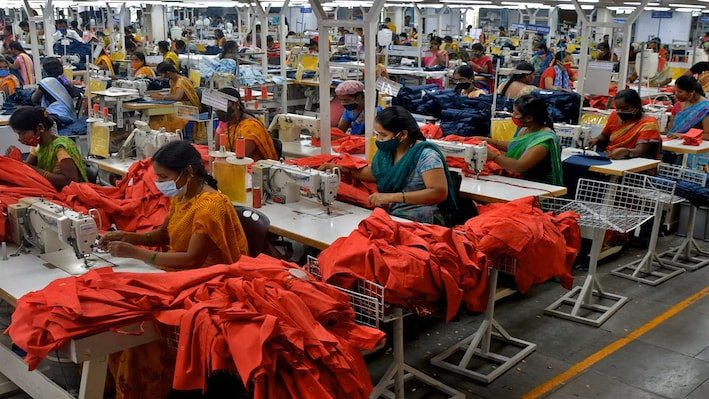
In the neighboring country Bangladesh, deepening political tension, violent protests by workers and lockout of factories have broken the back of the garment industry, which is the backbone of the economy there. India now seems to be getting direct and huge economic benefits from this unprecedented crisis. According to the latest international trade data, between the first 18 days of November i.e. 1 to 18 November 2026, the world's leading fashion brands have withdrawn garment orders worth about $ 254 million (about ₹ 23,62,18,34,900 in Indian currency i.e. more than Rs 2,362 crore) from Bangladesh. To avoid supply chain disruptions, international buyers have diverted the lion's share of these orders to India's textile and apparel hubs, leading to new orders lining up for textile exporters in Tirupur, Noida, Surat, Ludhiana and Bengaluru. Giants like Zara, H&M and Marks & Spencer turned their backs: 5.9 crore clothing orders diverted. The report of Bangladesh's leading industry organization 'Bangladesh Garment Manufacturers and Exporters Association' (BGMEA) and data from government agencies have confirmed this big change. According to the report, major international retail brands like Zara, H&M, Marks & Spencer and Celio have shifted about 10 percent of their monthly orders from Bangladesh to safe manufacturing centers like India, Vietnam, Cambodia and Indonesia. Within just two and a half weeks, around 5.9 crore (59 million) pieces of confirmed orders of readymade garments have been transferred to other countries, with India emerging as the biggest beneficiary. More than 600 factories in the industrial areas of Dhaka, Ghazipur and Ashulia have been directly affected by the unrest, which has cost Bangladesh more than $428 million in production losses so far. Broken magic of cheap labor and energy crisis: Why are foreign buyers running away from Bangladesh? The biggest strength of Bangladesh, which reigned as the world's second largest textile exporter after China for decades, has been its extremely cheap labor and low production costs. But despite the recent 36 percent increase in the minimum wage of garment workers by the Bangladesh government, labor organizations are dissatisfied and are protesting violently on the streets demanding doubling of wages. On the other hand, factory owners say that along with wage increases, deepening electricity and gas shortages due to the Middle East crisis and rising raw material prices have almost eliminated Bangladesh's 'cheap labour' advantage over India. Apart from this, the ongoing political instability regarding the possible return of former Prime Minister Sheikh Hasina has shaken the confidence of foreign buyers. On-time delivery has become India's biggest strength: Supply is available a week earlier than 120 days. Today, along with price, on-time delivery of goods (On-Time Shipment) has become the most decisive factor in the global fashion retail market. Factories around Dhaka have lost 20 to 25 working days due to frequent strikes and closures, leading to a huge backlog of old orders. According to BGMEA officials, while Bangladeshi factories are taking an average of 120 days to fulfill a typical order, Indian manufacturers are able to deliver a week earlier on the back of advanced technology and stable supply chain. India also has abundant domestic availability of raw materials like cotton and yarn, giving Indian exporters a huge strategic advantage in meeting the immediate demand of foreign brands. Golden opportunity for Indian textile sector: Preparation to convert into permanent partnership The biggest fear of the factory owners of Bangladesh is now that this temporary change made by global brands might go permanently in favor of competing countries like India and Vietnam. On the other hand, this is a historic opportunity for the Indian Textile Ministry and Export Promotion Councils. India's total textile and apparel exports have reached the level of Rs 3.09 lakh crore in the financial year 2025-26, in which the share of readymade garments has been Rs 1.39 lakh crore. Along with this, the progress of India-UK Free Trade Agreement (India-UK FTA) is also expected to increase the competitiveness of Indian clothes in the British market. Industry experts believe that if Indian companies rapidly expand their production capacity and maintain quality standards, India can become the largest hub for global garment sourcing in the coming years.