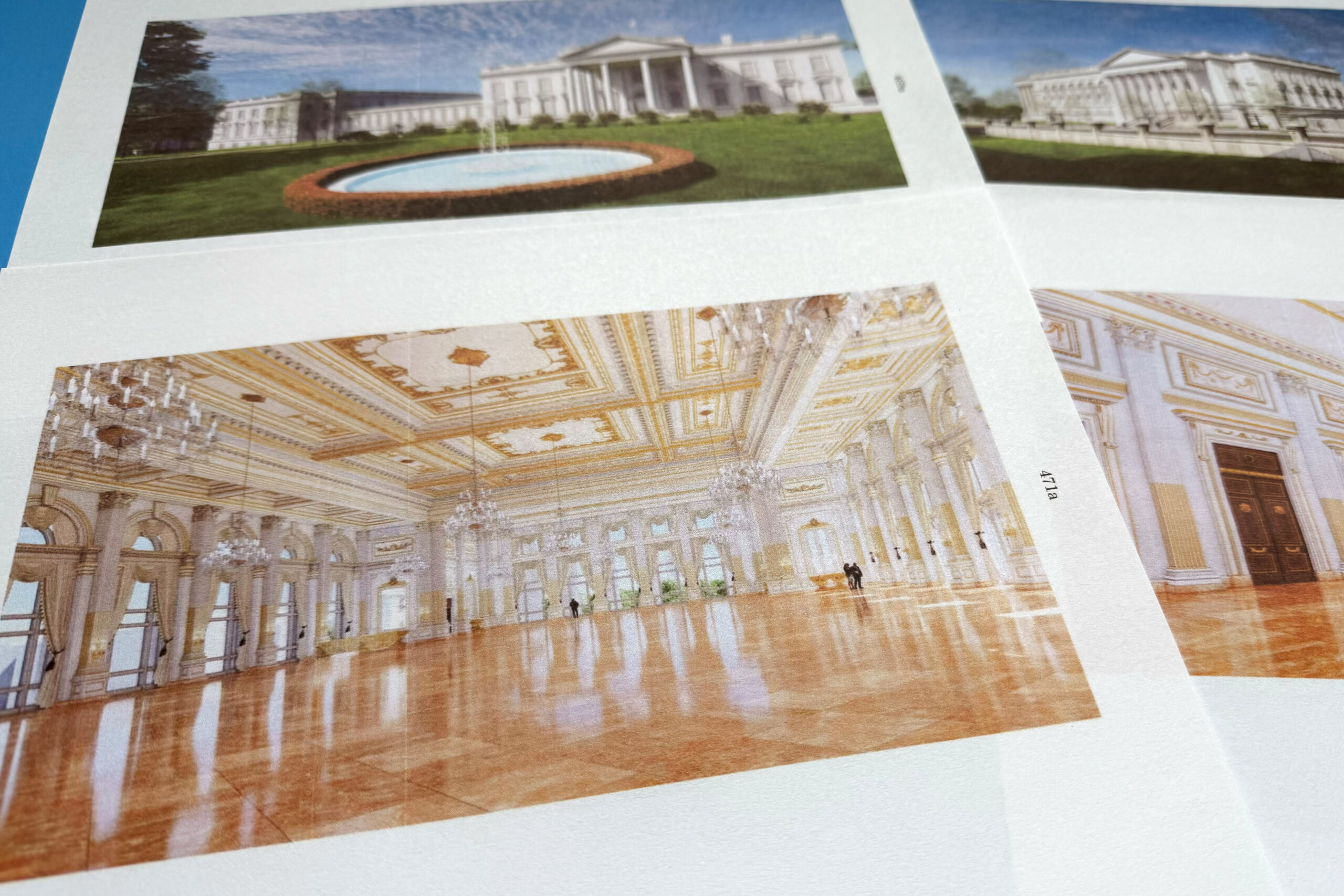
Chief Justice Roberts Lets Trump’s $400M White House Ballroom Proceed for Now/ TezzBuzz/ WASHINGTON/ J. Mansour/ Chief Justice John Roberts temporarily allowed construction of President Donald Trump’s $400 million White House ballroom to continue. The order prevents lower-court rulings from halting aboveground work while the Supreme Court considers the administration’s emergency request. Preservationists argue Trump needed congressional approval, while the administration says the project is essential to national security.

Quick Look
- Roberts temporarily allowed ballroom construction to continue.
- The order prevented an imminent halt to aboveground work.
- The Supreme Court is considering the administration’s emergency request.
- Roberts did not explain his reasoning or provide a timeline.
- The project is expected to cost $400 million.
- The planned ballroom covers 90,000 square feet.
- The Trump administration says construction is 65% complete.
- Crews are working 20 hours a day, seven days a week.
- About $200 million in private donations has been spent or committed.
- The project included demolition of the White House East Wing.
- Lower courts found Trump lacked congressional approval.
- Belowground military and bunker work had been allowed to continue.
- The administration says completing the project is required for national security.

Deep Look
Roberts allows construction to continue temporarily
Chief Justice John Roberts on Friday allowed the White House to continue construction on President Donald Trump’s $400 million ballroom while the Supreme Court considers the administration’s emergency appeal.
The temporary order came hours before lower-court rulings were set to halt aboveground construction.
Roberts’ one-page order did not explain his reasoning or indicate when the full court might issue a more complete decision.
The action does not resolve the underlying dispute. It temporarily preserves the project’s current status while the justices consider whether to intervene.
Lower courts sought to halt aboveground work
U.S. District Judge Richard Leon ordered a stop to aboveground ballroom construction in April.
The ruling was initially suspended but later upheld by a federal appeals court panel.
Leon concluded that Trump lacked congressional authorization to proceed with the project.
His order allowed belowground work on military facilities and bunkers to continue.
Roberts handled the emergency request because the chief justice oversees appeals arising from federal cases filed in Washington.
Case tests Trump’s presidential authority
The dispute comes before the Supreme Court as Trump makes expansive claims about presidential authority and moves to reshape parts of Washington.
The administration argues that the president possesses complete authority to renovate the White House and other federal buildings.
Trump has won several cases on the Supreme Court’s emergency docket.
However, the justices have ruled against some administration policies after conducting fuller reviews of their legal merits.
Administration cites national security
The White House now argues that completing the ballroom is necessary for national security.
When Trump initially unveiled the proposal, he did not emphasize security considerations.
Instead, he said the project would be financed through private donations, including his own money.
Solicitor General D. John Sauer called the lower-court decision stopping construction “extraordinary and unlawful.”
He argued that completion of the ballroom was “vitally required by national security.”
Preservation group challenges Trump’s authority
The National Trust for Historic Preservation filed the legal challenge to the project.
The organization argues that Trump cannot unilaterally undertake construction of this scale without congressional approval.
The ballroom project included demolishing the White House East Wing.
Lawyers for the preservation organization accused the administration of attempting to “outrun the courts” by accelerating construction before judges could rule.
White House says project is 65% complete
The administration says approximately 65% of the planned 90,000-square-foot ballroom has already been completed.
The structure covers about 8,400 square meters and is being built on the former site of the East Wing.
Construction crews are working 20 hours a day, seven days a week.
Justice Department filings state that approximately $200 million in private donations has already been spent or committed.
The rapid construction schedule has become central to the dispute, with challengers arguing that the administration is trying to make the case effectively irreversible.
Appeals court divides over project
Two appeals court judges appointed by Democratic presidents concluded that the project requires congressional authorization.
They said decisions about the ballroom belong to Congress and are “not a matter for Executive self-help.”
A third member of the panel, appointed by Trump, disagreed.
That judge found that the National Trust for Historic Preservation lacked the legal standing required to challenge the project.
The administration adopted that argument in its Supreme Court filing.
High court will consider fuller response
Roberts’ order ensures that construction can continue while the Supreme Court examines the administration’s request.
The court could allow the project to proceed throughout the appeals process, reinstate the construction halt or issue another temporary order.
For now, work can continue on both the aboveground ballroom and the belowground security facilities.
More on US News