New Delhi .China is moving towards making Artificial Intelligence, Robotics, advanced chips and modern manufacturing the main basis of economic and technological development. The government is emphasizing on using AI widely in industry, health, education, science and social sectors. China has set a target of increasing the reach of AI tools and agents to 90 percent of the society by 2030.
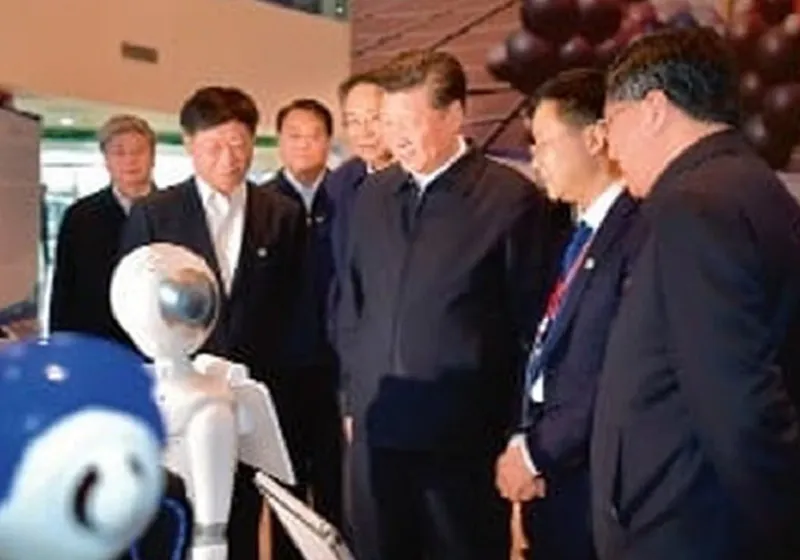
Chinese President Xi Jinping has emphasized the role of robotics and advanced manufacturing in technological development. He watched a demonstration of robotic technology during a visit to a technology park being developed on the outskirts of Beijing. Here hundreds of companies are engaged in developing state-of-the-art chips and AI models. Emphasis is also being laid by the local administration on providing computing capacity to these companies.
Xi Jinping has talked about increasing the capacity of advanced robotics and high-end manufacturing, linking technological development to China's next economic progress. His emphasis is that China should concentrate its national capacity and available resources in important technological areas, so that new inventions and industrial changes can be made on a large scale.
Inventions related to AI and robotics along with many other modern technologies were also displayed in the technology park. These include projects like special chips and brain-implant technology to help paralyzed patients speak. Through these technologies, work is being done on the possibilities of future use in health and industrial sectors.
Government investment also plays a big role in China's technological strategy. According to available data, government-led funds invested more than $184 billion in AI companies between 2000 and 2023. Apart from this, last year the government and public sector banks had committed to invest hundreds of billions of dollars in additional investment in the AI sector. However, private sector AI investment in China is reported to be lower than in the US.
China is also linking robotics to future labor needs amid the growing elderly population. Intelligent robots are being developed to be used in such tasks where availability of workers may become a challenge in the future. In the health sector too, possibilities of increasing access to specialist services through digital technology and AI are being worked on.
The widespread use of AI also comes with its associated risks. Advanced chatbots and AI systems can create challenges related to information control. Apart from this, there is a possibility of increasing the capability of cyber attacks through foreign technologies and advanced AI models. Security of critical infrastructure and control over technological systems are among the major challenges facing China.
Despite this, China continues to make AI, robotics, chips and advanced manufacturing an important part of its long-term technology strategy. The government aims to extend these technologies to various sectors of health, education, economy and society instead of limiting them to industry only. The plan for widespread social use of AI technology by 2030 reflects China's ambitious preparation in this direction.