
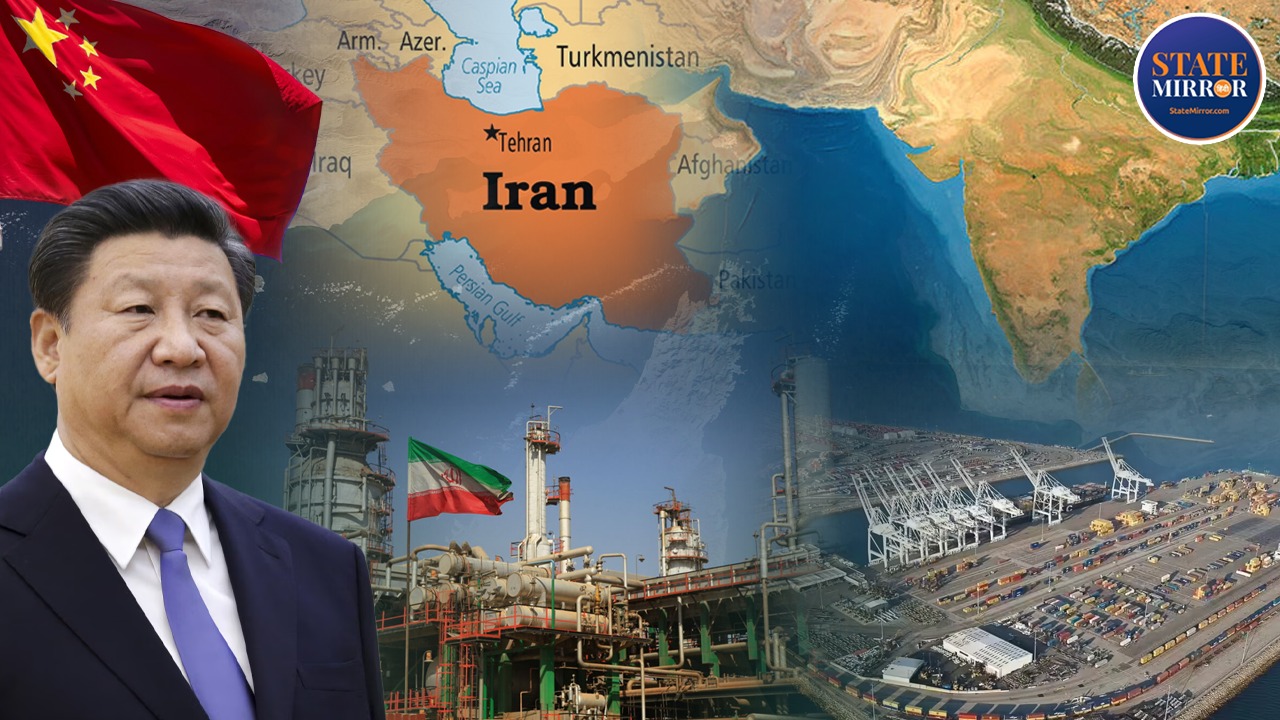
China’s Silent Game: How can India get trapped in Iran crisis? Understand the whole game from Chabahar to oil

War has started once again between Iran and America in West Asia. The world is not only seeing this tension as a security crisis, but everyone is also keeping an eye on the geopolitical equations going on behind it. Although China is not a direct party to this conflict, it has continuously strengthened energy, ports, infrastructure and strategic partnerships with Iran over the past decade. On the other hand, Iran is not only an oil supplier for India, but is also an important gateway to Central Asia and Russia.
In such a situation if Iran crisis If it continues for a long time or takes the form of a regional conflict, it may impact India’s energy security, Chabahar Port, trade corridors and foreign policy. Experts on West Asian affairs are seeing this as China’s long-term strategy and India’s strategic challenge.
Why is Iran so important for India?
Iran’s importance for India is not limited to crude oil only. India imports more than 85% of its total crude oil needs. Till the year 2018-19, Iran was the third largest oil supplier to India and India used to buy about 5 to 6 lakh barrels of crude oil from Iran every day. However, after the sanctions imposed by the US in 2019, India almost completely stopped importing Iranian oil.
Despite this, Iran remains an important part of India’s connectivity strategy. India has invested in the development of Iran’s Chabahar port. This port gives India the option to bypass Pakistan and reach Afghanistan, Central Asia and further Russia. This project is also an important part of the International North-South Transport Corridor (INSTC), through which both the time and cost of freight transportation between India and Europe can be reduced. Therefore, instability in Iran can have a direct impact on India’s regional strategy.
On which fronts can India get stuck?
If the conflict in Iran deepens, India may have to face the impact of Chabahar Port and INSTC first. This route is the most important option for India to reach Central Asia and Russia. Any kind of military or political instability can affect the pace of this project.
Another major impact may be on energy security. About 20% of the world’s seaborne oil trade passes through the Strait of Hormuz. If there is a disruption in this route, there may be a sharp rise in the prices of crude oil in the global market. Many global analysts have expressed apprehension that in case of a serious crisis, oil may go up to $100 to $120 per barrel or even above. Due to this, India’s import bill, inflation and current account deficit may increase.
The third impact will be on business. India’s annual trade with West Asia is more than 100 billion dollars. As tensions increase in the region, shipping will become more expensive, marine insurance premiums will increase and supply chains will be affected. This will increase the costs of both exporters and importers.
The fourth aspect is that of Indian immigrants. More than 90 lakh Indians live and work in Gulf countries. If the crisis spreads across West Asia, India may need to conduct a large-scale evacuation operation. Besides, remittances worth billions of dollars coming from Gulf countries may also be affected.
How can China gain strategic advantage?
China is not a direct party to this conflict, but the changing situation in West Asia could strengthen its long-term interests. If America’s attention remains entangled in Iran and West Asia for a long time, then China may get an opportunity to increase its strategic activities in the Indo-Pacific and South China Sea.
Along with this, China will try to advance the economic corridors connecting West Asia, Central Asia and Europe under the Belt and Road Initiative (BRI). Its 25-year strategic partnership with Iran gives it both energy security and regional influence. Despite US sanctions, China has been continuously buying Iranian oil, which provides it with relatively cheap energy and provides economic support to Iran. This is why even in times of crisis, China appears to be in a better position to safeguard its long-term economic and strategic interests.
What is India’s biggest challenge?
India’s foreign policy is going through the test of maintaining balance in this entire crisis. On one hand America is a major strategic partner of India, on the other hand Iran is an important part of India’s connectivity strategy. Israel is a major defense ally of India and the Gulf countries are very important for India’s energy needs and Indian diaspora.
For this reason, India adopts balanced diplomacy instead of openly standing with any one side. India’s priorities remain focused on energy security, Chabahar Port, INSTC, security of maritime trade routes and maintaining stability in West Asia. This balance will also be India’s biggest strategic challenge in the times to come.
How did China’s strategy increase pressure on India?
China has not directly cornered India, but its long-term strategy has definitely increased India’s challenges. First, India has almost stopped importing oil from Iran after 2019 due to US sanctions, while China continued to strengthen its energy security by purchasing Iranian oil. This gave China both cheap energy and a strong economic hold in Iran.
Second, India made Chabahar Port a strategic means of access to Central Asia, but the progress of this project was affected several times due to sanctions and regional instability. On the other hand, China continuously strengthened its strategic presence in the Arabian Sea through Pakistan’s Gwadar Port and the China-Pakistan Economic Corridor (CPEC). This increased China’s influence in the region, while India faced greater challenges in developing its alternative trade routes.
Third, if tensions in West Asia continue for a long time, India may have to face double pressure on energy, shipping and supply chains. India is still dependent on raw materials and manufacturing supplies coming from China in many industrial sectors. In such a situation, oil becoming expensive and global supply disruption may have a greater impact on the Indian economy. This is why experts see it as China’s “Silent Strategy” and a growing strategic challenge for India.
What is the meaning of China’s Silent Game?
“China’s Silent Game” does not mean that China caused the Iran crisis or is a direct party to the war. This means that China has been strengthening its position with Iran for the last several years through energy, trade, ports and strategic investments. If the current crisis continues for a long time, China can take strategic advantage of these investments. At the same time, the challenge before India is more complex, because it has to simultaneously maintain energy security, Chabahar Port, INSTC, trade with West Asia, security of Indian expatriates and diplomatic balance between America-Iran-Israel. Therefore, the Iran crisis can become not only a regional conflict but also a big test of India’s economy, foreign policy and national interests.

Comments are closed.