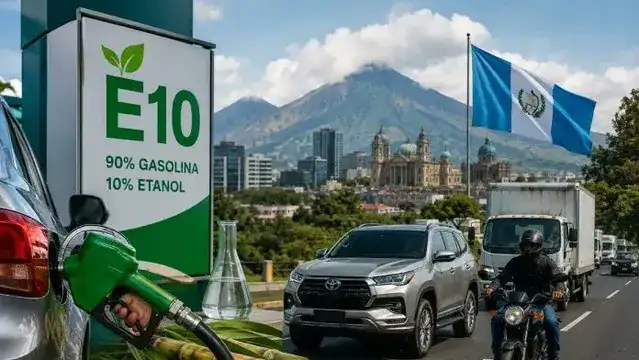
There is a debate going on in India regarding E20 petrol. Chief Economic Adviser V. Ananth Nageswaran has suggested that the government should make petrol with low ethanol content – such as E10 – available at petrol pumps along with E20. He believes that this can significantly reduce the worries of owners of old vehicles. Nageswaran said this in an article co-written with Akash Pujari, advisor to the Department of Economic Affairs. According to him, having the option of low ethanol petrol like E10 along with E20 will make it easier to drive older vehicles. Last month, the government had clarified that there is no proposal as of now to reintroduce low ethanol petrol variants like E0 or E10. E20 was introduced across the country last year and has become the standard grade available at petrol pumps since April.
According to Nageswaran and Pujari, ethanol contains about two-thirds the energy of petrol; As a result, increasing the amount of ethanol in petrol results in a slight reduction in mileage. They estimate that the difference in energy due to E20 could be about 6-7%. However, he refuted the claims being spread online about reduction in mileage by up to 30%. He also pointed out that ethanol blending reduces emissions of some pollutants such as carbon monoxide and unburned hydrocarbons.
Why is this a problem for old bikes and scooters?
The main concern is around older two-wheelers – especially those made before BS4 emissions norms and which use carburettors. Reports suggest that there could be 75 million to 80 million such old two-wheelers in India. The carburetor cannot automatically adjust the fuel-air mixture to compensate for the extra oxygen present in E20 gasoline. As a result, an engine running on E20 may receive less fuel than air, making the engine more likely to overheat. Rubber seals in older vehicles can also cause problems. If these seals are not designed for ethanol, they may deteriorate due to prolonged exposure to fuel.
Why might E10 be the solution?
The report says that replacing these rubber seals is not very expensive, but doing so in millions of older vehicles will take a lot of time. Therefore, as long as the process of making older vehicles E20-compliant is underway, the option of E10 can be made available at petrol pumps. Nageswaran and Pujari believe that offering both E10 and E20 options can ease the concerns of owners of older vehicles. Additionally, this approach could help manage total ethanol consumption rather than simply increase it.
How practical is it to move from E20?
Questions have also been raised about blends with higher ethanol content, such as E27 or E30. India imports crude oil worth about ₹11-12 lakh crore every year, and it is estimated that E20 will reduce this import bill by about 3-4%. However, increasing ethanol levels will increase demand for corn and other grains. Corn accounts for almost half of India's ethanol production. Its cultivation requires land and water – resources that are also needed for other farming needs. The authors say that increasing demand for maize could put pressure on oilseed crops like soybean, groundnut and mustard. Therefore, ethanol policy should not only be viewed from the perspective of petrol needs, but should also consider food security, water resources and farmers' income.
What should the government do?
Nageswaran and Pujari suggest that the government reintroduce low ethanol petrol for older vehicles, while maintaining the current focus on E20. They also recommend reviewing price and water regulations for maize and reconsidering import duties on edible oils. In his view, the main debate is not just about whether E20 hurts engines; Rather, the bigger issue is how India wants to use its land, water and crops for ethanol production.