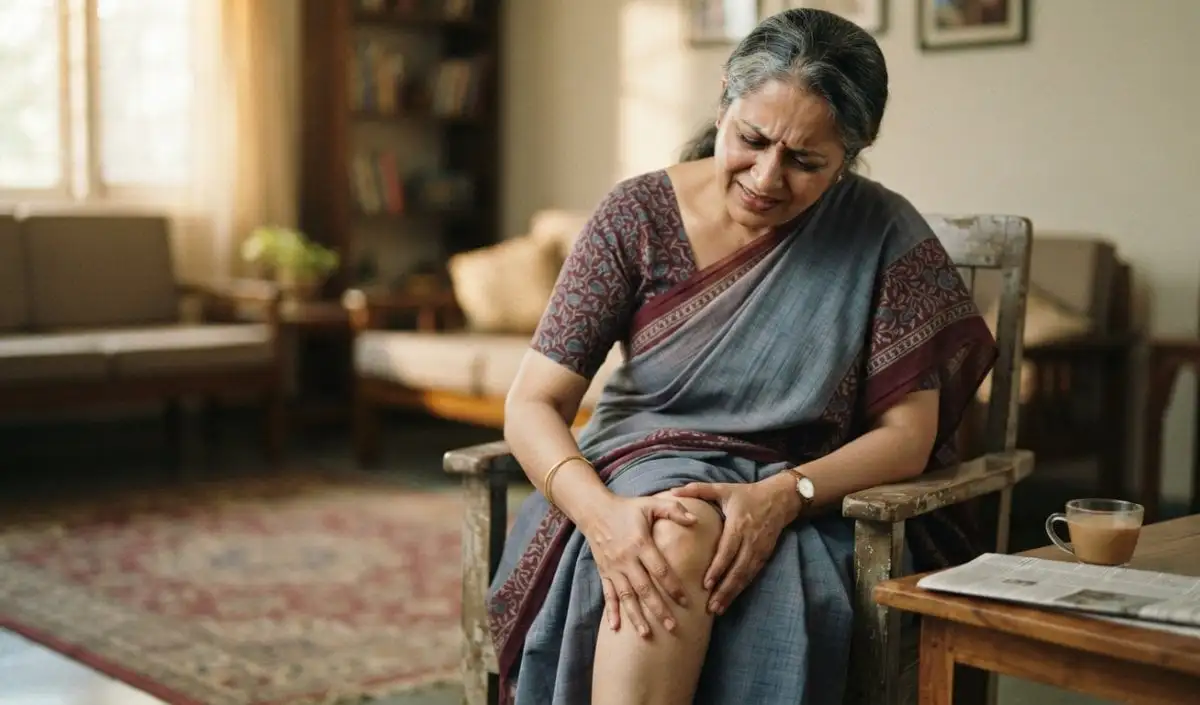
Relationship between menopause and arthritis
Many changes occur in a woman's body with age, especially after menopause due to hormonal changes. At this time, the joints and bones are affected, causing pain in the waist, knees, hips and fingers. Many women ignore these symptoms considering them to be a normal effect of age, but persistent pain can be a sign of arthritis. In this article, we will discuss the symptoms of arthritis due to menopause.
Does menopause increase the problem of arthritis?
If after menopause it has become difficult to get out of bed in the morning, climb stairs or even walk for a while, then it should not be taken lightly. Decreased levels of estrogen hormone during menopause can affect joints and bones, increasing joint problems in some women. However, not every woman is equally likely to develop arthritis, and joint pain is not always a sign of arthritis.
Causes of arthritis after menopause
The main reason for arthritis after menopause is the lack of estrogen hormone in the body. During periods, women have higher levels of estrogen in their bodies, which strengthens bones and maintains lubrication between joints. But at the age of 45 to 50, during menopause, the level of estrogen suddenly falls, due to which the bones start weakening and the lubrication of the joints decreases.
Don't ignore arthritis symptoms
There are some special symptoms of pain and stiffness in joints around menopause.
morning joint stiffness
If you feel stiffness in your fingers, knees or wrists for more than 30 minutes after waking up in the morning, it may be an early sign of arthritis.
joint pain and swelling
Pain and slight swelling may appear in the hips or knees even after doing light work. Sometimes joints feel warm to touch, which is an important symptom of arthritis.
Arthritis prevention tips
Include curd, milk, ragi, cheese and green vegetables in your diet. Sit in the sun for at least 15 to 20 minutes daily so that the deficiency of Vitamin D can be compensated.
Do regular exercise to keep joints healthy. Walking and doing yoga maintain movement in hands and legs.
Start exercising slowly and if pain increases, consult a doctor.
Take care of your diet and consume foods rich in Vitamin D and calcium. Keep your weight balanced so that pressure on knees and hips can be reduced.
contact doctor
If your joint pain is affecting daily activities, check with a doctor. Take help of physiotherapy and medicines as per requirement. Hormone replacement therapy may also be considered in some cases, but it is not suitable for every woman. Before starting it, it is necessary to understand its benefits and disadvantages from the doctor.