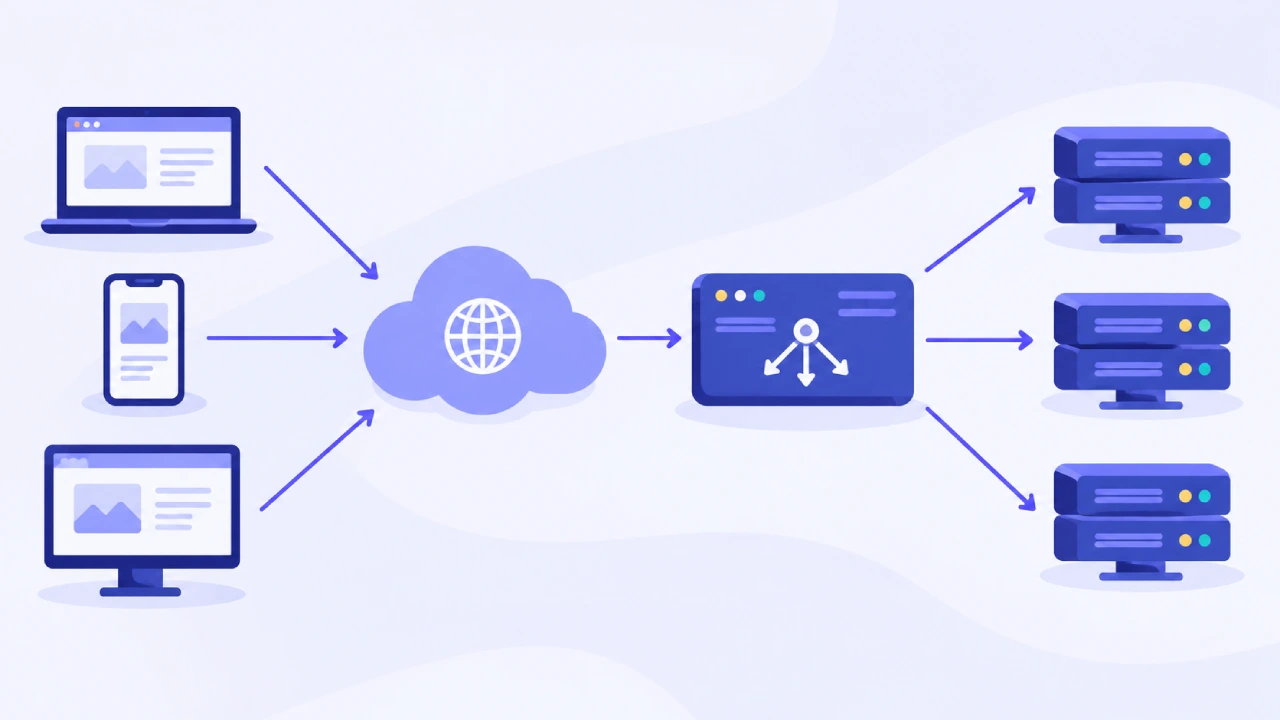
Digital products generate data from almost every interaction. Users create accounts, search for content, make purchases, send messages, open applications, and interact with features. Behind these activities is a continuous stream of information that can help businesses understand customers and improve their products.
As a digital product grows, however, managing this information becomes increasingly complicated. Data may come from application databases, APIs, mobile devices, third-party platforms, event tracking systems, and operational tools.
Simply collecting this information is not enough. It needs to be moved, cleaned, transformed, stored, and made available for analysis. This is where cloud data pipelines become important.
Cloud data pipelines provide automated workflows for moving data from its original sources to systems where it can be processed and analyzed. They help organizations build a reliable connection between product activity and business intelligence.
What Is a Cloud Data Pipeline?
A cloud data pipeline is an automated workflow that moves data from one or more sources through processing stages before delivering it to a destination.
A simplified workflow looks like:
Data Sources → Ingestion → Transformation → Storage → Analytics
For a digital product, data sources might include application databases, event tracking systems, payment platforms, customer-support tools, and APIs.
The pipeline collects this information, processes it into useful formats, and makes it available to systems used by analysts, engineers, and business teams. The exact architecture depends on the product’s size, data volume, latency requirements, and analytical needs.
Why Growing Products Generate More Data?
A small application may initially generate a manageable amount of information. As the product gains users and features, however, the number of data sources and events can increase rapidly.
A growing product might collect:
- User registrations
- Login activity
- Product interactions
- Search queries
- Purchases
- Subscription events
- Application errors
- Customer-support interactions
- Marketing events
- Device information
Different teams may need different parts of this information. Product managers may analyze user behavior, finance teams may examine transactions, marketing teams may measure campaigns and engineers may investigate application performance. Without a structured pipeline, these teams may end up working from disconnected datasets.
Data Ingestion
Data ingestion is the process of collecting data from its source and bringing it into a processing or storage environment. Data can arrive through different methods.
Batch Ingestion
Batch pipelines collect data periodically. For example, a system might transfer records every hour or once per day. Batch processing can work well for reporting workloads that do not require real-time information.
Streaming Ingestion
Streaming pipelines process events continuously or with low latency. For example, an online application might send user activity events as they occur.
Streaming can be useful for:
- Real-time dashboards
- Fraud detection
- Personalization
- Operational monitoring
- Event-driven applications
The choice between batch and streaming depends on how quickly the business needs the information.
Data Transformation
Raw data is often not ready for analysis. It may contain inconsistent formats, duplicate records, missing values or information spread across multiple systems.
Transformation processes can:
- Clean incorrect data
- Remove duplicates
- Standardize formats
- Combine datasets
- Calculate metrics
- Apply business rules
- Create analytical fields
For example, an application may record individual purchase events. A transformation process can combine those events into metrics such as daily revenue, average order value or customer purchase frequency. Transformation therefore turns raw information into data that can support useful analysis.
Cloud Data Storage
Cloud platforms provide scalable options for storing large amounts of information. Organizations may use different storage systems depending on the type of data and how it will be accessed.
Raw data can be stored for future processing, while transformed data can be organized for analytics and reporting. Cloud storage can make it easier to expand capacity as data volumes increase without requiring organizations to purchase and maintain physical storage infrastructure. However, storage costs can increase as datasets grow, so retention policies and lifecycle management are important.
Data Warehouses and Analytics
A major purpose of a data pipeline is to make information accessible for analysis. Processed data can be delivered to a cloud data warehouse or another analytics platform.
Product and business teams can then use this information to answer questions such as:
- Which features are used most frequently?
- Where do users abandon a workflow?
- Which customers are returning?
- How are subscriptions changing?
- Which marketing channels generate conversions?
- How does product performance vary between user groups?
Reliable pipelines help ensure that these decisions are based on consistent and accessible data.
Supporting Product Analytics
Digital product teams increasingly rely on behavioral data to understand how customers interact with their applications. A data pipeline can combine events from multiple product areas and make them available for analysis.
For example:
User Signup → Product Usage → Subscription → Renewal
Analyzing this sequence can help teams understand user journeys and identify areas where the product experience may need improvement. This makes data infrastructure part of the product-development process rather than simply a back-office system.
Supporting Machine Learning and AI
Modern AI and machine learning systems also depend on reliable data. Training and inference workflows may require information from application databases, event systems, customer interactions, and other sources.
Data pipelines can prepare this information for machine learning workflows by:
- Collecting training data
- Cleaning datasets
- Creating features
- Updating data regularly
- Delivering information to model-serving systems
Poor-quality data can reduce the reliability of downstream AI systems, making data pipeline quality an important part of AI infrastructure.
Scalability
One of the major advantages of cloud-based pipelines is the ability to scale infrastructure as workloads change. A growing product may move from thousands of daily events to millions or billions.
Pipeline architecture should therefore account for:
- Data volume
- Processing frequency
- Storage requirements
- Concurrent workloads
- Peak traffic
- Query requirements
Cloud infrastructure can provide additional capacity when needed, although scaling can also increase costs if resources are not managed carefully.
Reliability and Data Quality
A pipeline that runs successfully is not necessarily producing correct data. For example, a pipeline could continue operating while silently dropping events or processing duplicate records. Organizations should monitor data quality as well as infrastructure health.
Important checks can include:
- Missing data
- Duplicate records
- Unexpected values
- Delayed data
- Failed jobs
- Processing latency
- Schema changes
Automated alerts can notify engineering or data teams when important thresholds are exceeded.
Security and Access Control
Data pipelines can process sensitive information, including customer records, financial data, and application activity. Security should therefore be considered throughout the pipeline.

Important controls may include:
- Encryption
- Access controls
- Data classification
- Secure credentials
- Audit logging
- Data masking
- Retention policies
Not every employee needs access to every dataset. Permissions should reflect business responsibilities and applicable security requirements.
Common Cloud Data Pipeline Challenges
As data infrastructure grows, several problems can emerge.
Common challenges include:
- Inconsistent data formats.
- Poor data quality.
- Duplicate records.
- Broken integrations.
- Unexpected schema changes.
- Increasing cloud costs.
- Slow processing.
- Difficult-to-debug pipeline failures.
- Lack of ownership for datasets.
- Insufficient monitoring.
These issues can make analytical results unreliable and reduce confidence in the organization’s data.
Best Practices for Cloud Data Pipelines
Growing digital products can improve their data infrastructure by following several principles.
- Define clear ownership for important datasets.
- Automate ingestion and transformation wherever practical.
- Monitor pipeline health and data quality.
- Establish consistent data schemas.
- Document important data sources and transformations.
- Use appropriate retention policies.
- Apply least-privilege access controls.
- Separate raw data from transformed analytical datasets where appropriate.
- Design for expected growth rather than only current volume.
- Track infrastructure and processing costs.
- Test pipeline changes before deploying them to production.
Good documentation is particularly important because data pipelines often connect many systems owned by different teams.
When Should a Product Invest in a Cloud Data Pipeline?
Not every small application needs a sophisticated data platform from its first day. A simple product may initially rely on its operational database and basic analytics tools.
The need for a more structured pipeline often increases when:
- Data sources multiply.
- Reporting becomes more complex.
- Teams need a shared source of truth.
- Data volumes increase significantly.
- Real-time analysis becomes important.
- Machine learning becomes part of the product.
- Manual reporting becomes difficult to maintain.
The goal is to introduce the appropriate level of infrastructure for the product’s current and expected needs.
Conclusion
Cloud data pipelines provide the infrastructure needed to move digital product data from collection to meaningful analysis. Through ingestion, transformation, storage, and analytics, pipelines turn raw application activity into information that product, engineering, and business teams can use.
As products grow, automated data workflows can improve consistency, scalability, and access to insights while reducing manual data-processing work.
However, successful data pipelines require more than moving information between cloud services. Organizations also need to consider data quality, security, monitoring, reliability, and cost.
For growing digital products, investing in a well-designed cloud data pipeline can create a dependable foundation for product analytics, operational intelligence, and future AI or machine learning initiatives.
(Source)