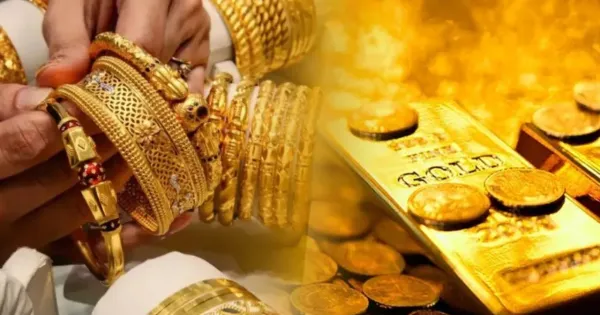
New Delhi. If you are preparing to buy gold on Dhanteras, then just keeping an eye on the price of gold in the market is not enough. For jewelery of the same weight and design, you may have to pay different prices at different shops. The biggest reason for this is the making charge. Apart from this, wastage, cost of stone and taxes can also increase your bill. In such a situation, if some important things are understood before purchasing, thousands of rupees can be saved.
What is making charge, how does it increase the price of jewellery?
Designing and craftsmanship is required to transform gold into rings, chains, necklaces or other jewellery. The amount that the jeweler charges for this work is called making charge. This fee may be different for every shopkeeper.
Generally making charge is taken in two ways. Some jewelers charge a fixed amount per gram, while others charge a fixed percentage of the total price of gold. For example, one shopkeeper may charge Rs 300 per gram making charge, while another may charge up to 12 per cent of the price of gold. Therefore, after liking the jewellery, definitely ask on what basis the making charge is being added.
The more complex the design, the higher the making charge.
Making charges are not the same for every jewellery. Machine-made simple chains and rings with lightweight designs are usually charged less. At the same time, hand-made jewelery with intricate designs, temple jewelery and necklaces with intricate workmanship may attract higher making charges.
Therefore, there may be a difference in the price of similar looking jewelery at two shops. Before purchasing, be sure to understand its complete cost along with the design.
Don't be in a hurry after seeing the offer of low making charge.
Many times shopkeepers offer low making charges, but it is not necessary that the jewelery is the cheapest. It is possible that the price of gold at that shop may be higher or other charges may be added to the bill. In such a situation, instead of taking a decision only by looking at the making charge, compare the total bill of different shops.
Are you paying more money in the name of zero making charge?
During Dhanteras and Diwali, jewelers give attractive offers of zero or discounted making charges. Before making a purchase in such an offer, definitely ask some questions. For example, is the discount applicable to all designs or only to selected jewellery? Are there any separate charges for wastage or other charges? Along with this, also get information about buyback and exchange policy of old gold in advance.
While making jewelery bill, definitely check these 6 things
When buying gold jewellery, many things factor into the final price. Therefore, please check their separate details in the bill:
-
Price of gold per gram and its purity.
-
Actual weight of the jewelry.
-
Making charge and method of its calculation.
-
Wastage charge, if applicable.
-
Cost of stone or other decorative materials.
-
Applicable GST and total amount paid.
Retail sale of gold jewelery generally attracts 3 per cent GST on the total transaction value. Therefore, definitely check the details of tax and all other charges in the bill.
If you want to buy gold at low price then follow this method
If your aim is to buy jewelery at low cost then you can choose simple and machine made designs. At the same time, if you are buying gold for investment purposes, then you can also look at the option of coins and bars. Making charges are generally not levied on these like traditional jewellery.
While shopping on Dhanteras, remember that it is important to compare not just the price of gold, but the entire price from making charges to taxes. This small precaution can save your budget from getting spoiled.
Also read: Diwali 2026 Sugar Price Hike: Can Diwali sweets become expensive? Demand to increase sugar price from Rs 31 to Rs 42 per kg, know what will be the effect