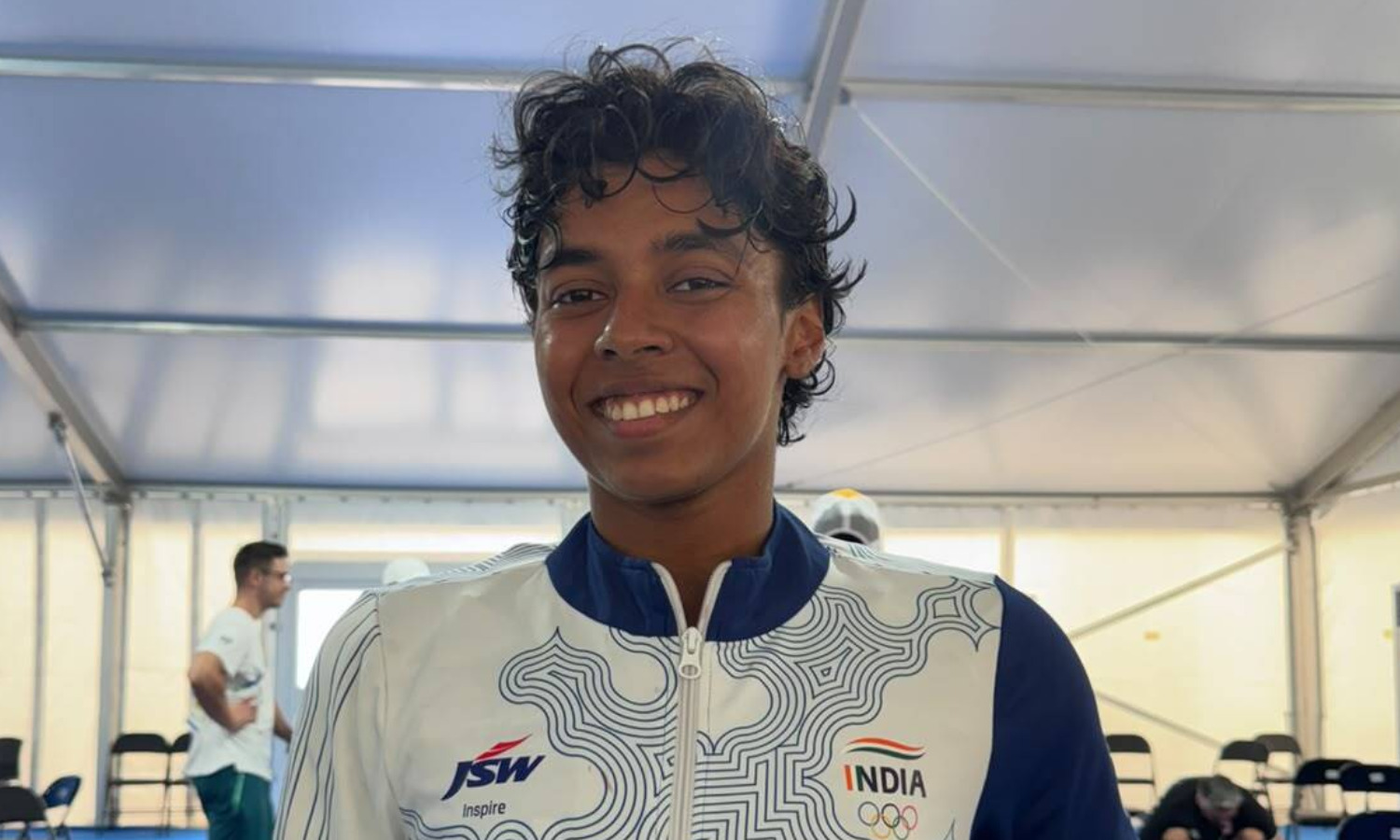
Teenage swimming sensation Dhinidhi Desinghu wants to change the mindset around Indian swimming and help bridge the 30-40-year gap with the world’s leading nations.
She believes the difference between India and the rest of the world lies more in preparation, technique and belief than in genetic ability.
The 16-year-old, who returned from the 2026 Youth Olympic Games in Dakar with two medals, said competing alongside world-class swimmers had given her a close understanding of the technical details and race strategies that Indian swimmers need to master.
“I don’t think genetically we Indians can’t do what other people do. It comes down to how you prepare for an event and how mentally you believe that it is possible,” Dhinidhi said in a virtual media interaction facilitated by SAI.
“Every small detail matters. These athletes have learnt things at the grassroots level which we are still trying to understand. I feel learning those things is what makes me better every year.
“The world record times that were there 30-40 years back are what we Indians are swimming now. For us to catch up, we would have to improve by four or five per cent every year if other countries are improving by one per cent. It is a very long journey,” she added.
Dhinidhi, who became the youngest Indian to compete at the 2022 Asian Games and the 2024 Paris Olympics, hopes to change the perception that Indian swimmers, particularly women, cannot compete at the highest level.
She credited her discipline and inner drive for helping her maintain consistency, including breaking national records three times during the year.
“Discipline is not something somebody else has to externally force on you. If I want something, I will make sure that I get it. In my sport, you need to have that inner drive,” she said.
“Even in training, I make sure I am early, put in 100 per cent every day and do not skip anything, whether it is swimming or studies. I just get into the zone and focus. I think that is something within my personality which has really helped my swimming.”
She added that preparation gave her confidence before major competitions.
“Once you have put in all your work, the thought that you could have done something else does not come into your head. You know you have done everything you could, and that gives you confidence going into a meet,” she said.
Asked about her immediate roadmap, Dhinidhi said she would first take a short break to recover mentally and physically before returning to training and working with her coach and gym trainer on a plan for the next two years.
Her upcoming competitions include the World Championships, World Junior Championships and Youth Commonwealth Games, while her ultimate ambition is to qualify for the Los Angeles Olympics.
“Ultimately, it would be to qualify. The standards have gone up a lot and the times are really difficult. We as Indians, male or female, are quite behind. I am hoping to change that,” she said.
Dhinidhi named American great Katie Ledecky as the swimmer she had looked up to since childhood, while also drawing inspiration from Chad le Clos, Gretchen Walsh and Cameron McEvoy.
“What inspires me even more is not just the medals or world records, but how these swimmers think, how much they want something and how they approach the sport. As you get better and reach the top, it becomes harder to deal with everything mentally. Their ability to handle that and still perform at the highest level is inspiring,” she said.
Balancing competitive swimming with academics also requires careful planning. Dhinidhi, who has opted for science in Class 11, said she had scored 92.7 per cent in her Class 10 examinations despite taking time away from regular studies to focus on swimming.
“Swimming is so hectic that I cannot study throughout the day. You would go insane doing swimming, putting your body and head through so much, and then trying to sit and study. I mostly study on weekends whenever I can,” she said.
The journey to becoming an elite swimmer was not straightforward. Dhinidhi said she was once afraid of water and preferred reading or drawing by herself to participating in sports.
Watching Indian swimmers Sajan Prakash, Srihari Nataraj and Maana Patel compete at the Tokyo Olympics during the pandemic, however, changed her outlook and inspired her to dream of reaching the Olympic stage.
Dhinidhi said the demands of swimming sometimes made her feel she was missing out on a normal childhood, but she now sees it as a choice rather than a sacrifice.
“There were times when I felt I was missing out on a normal childhood, seeing friends go to school, parties and social gatherings while I was training. But I have realised that this is something I chose. I would not call it a sacrifice because I could still do those things if I wanted to.”
(Except for the headline, this story has not been edited by Read Desk. It is published from a syndicated feed)