Choosing a stockbroker is an important part of participating in the stock market. Brokers provide access to trading platforms, facilitate transactions and offer services that help investors manage their market activities. There are two types of brokers, discount brokers and full service brokers. Discount brokers generally offer low cost trading whereas full service brokers will provide extra services such as research, market guidance, etc. This article explores the difference between the two types of brokers and what you should consider.
What Is Discount Broking?
Discount broking refers to a low cost trading platform. Discount brokers typically trade via an online platform.
They will generally provide basic services and little or no personal research or advisory services.
What Is Full-Service Broking?
Full service broking includes trading in addition to extra services such as research, analysis, and advisory.
Brokers may offer research, stock recommendations, assistance with your portfolio and information about investments. This will depend on the broker and package you choose.
If you need help analysing the market or your investments then a full service broker may be a good option to consider. However, the availability and scope of advisory services should be checked before opening an account.
Discount Broking vs Full-Service Broking: Key Differences
Both brokerage models provide access to stock market transactions, but they differ in their pricing structures and additional services.
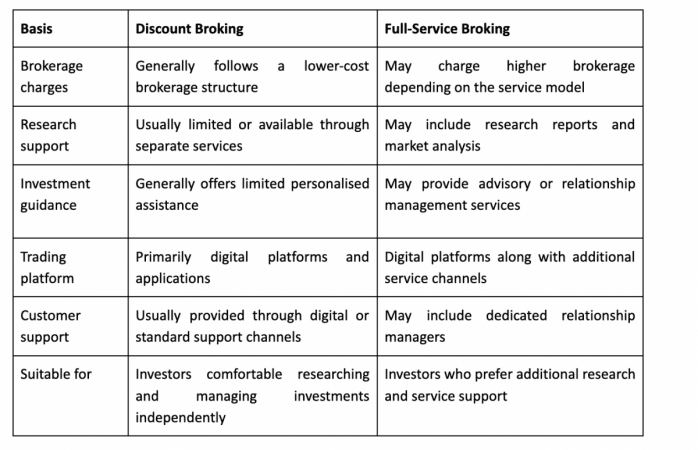
The actual charges and services vary across brokers. Investors should review the applicable tariff and service details rather than relying only on the brokerage model.
Advantages of Discount Broking
Discount broking can be relevant for investors who prefer managing their market activities independently. Some of its key features include:
1. Lower Brokerage Costs
Discount brokers tend to charge less than traditional full-service brokers. This can help you understand and manage the cost of your transactions. This can be useful if you are an active trader.
However, the costs aren’t just the brokers cost. You will also have statutory costs and other applicable fees.
Most discount brokers provide a brokerage app through which investors can place orders, monitor market movements, and review their holdings. These facilities allow users to manage transactions without depending on a physical branch.
3. Independent Investment Decisions
Investors who are comfortable researching companies, analysing financial information and tracking market developments may prefer a brokerage model that focuses on transaction facilities rather than personalised guidance.
Advantages of Full-Service Broking
Full-service broking may appeal to investors who want access to additional market-related services along with trading facilities.
1. Research and Market Information
Full-service brokers may provide research reports, company analysis and market updates. These resources can help investors understand business developments and market trends. However, research information does not guarantee investment outcomes.
2. Personalised Assistance
Some full-service brokers provide relationship managers or advisory support to help clients with account-related queries and investment-related requirements. The scope of assistance depends on the broker and the service arrangement.
3. Access to Multiple Financial Products
Full-service brokers may provide access to different financial products, including equities, mutual funds, bonds and other investment options. The available products vary by provider.
Conclusion
There are two different types of brokers, discount brokers and full-service brokers. Discount brokers will generally offer a trading platform and low costs. Full-service brokers may offer research, advice and extra services. This will depend on your experience, how often you trade and how much research you need. If you are looking at online trading options, you can look at the 5paisa Alpha app to see what trading features, market features and costs are available. Knowing what services are included can help you choose the right type of broker for your needs.