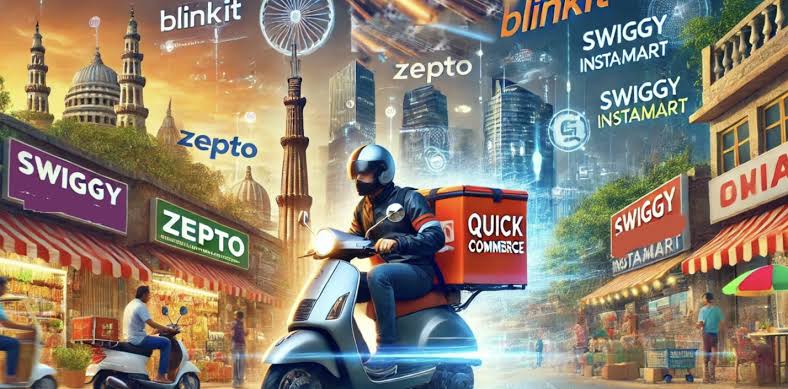
India’s quick-commerce sector is showing early signs of greater pricing discipline as platforms reduce the intensity of discounts and raise minimum spending thresholds for free deliveries and cashback offers.
A latest analysis by Jefferies suggests that the industry’s intense discount-driven competition may be gradually giving way to a strategy focused more on customer retention, larger baskets and profitability.
Average Discounts Around 15%
Jefferies conducted a mystery-shopping exercise in Bengaluru and found average discounts of around 15% across a sample grocery basket, excluding checkout coupons and cashback.
Discounts ranged between 12% and 19% across the platforms tracked.
However, the brokerage found significant differences between product categories, indicating that quick-commerce companies are increasingly using targeted discounts instead of offering similar reductions across their entire grocery selection.
Personal Care Gets Highest Discounts
Personal care products remained the most heavily discounted category, with average discounts of around 29%.
Basic staples and packaged food followed at approximately 17% each.
Dairy products had the lowest average discount at just 3%.
The differences suggest that platforms are adjusting prices and promotions depending on the category, product and customer behaviour.
Zepto Raises Free Delivery Threshold
One of the clearest signs of changing pricing strategies is the increase in minimum order values.
Zepto has raised its free-delivery threshold from Rs 99 earlier this year to Rs 199.
The new threshold is now broadly aligned with competitors including Blinkit, Swiggy Instamart and BB Now.
Amazon Now has also increased the minimum spending requirements for some cashback offers by between 7% and 25%.
Blinkit And Instamart Keep Discounts Stable
Jefferies found that Blinkit and Swiggy Instamart have maintained discounts at around 14% to 16% since March.
The brokerage sees this stability as an indication that companies are becoming more cautious about spending heavily on customer acquisition.
Instead of continuously increasing discounts, platforms appear to be looking for ways to encourage larger orders and repeat purchases.
Zepto Still Offers Higher Discounts
Despite the broader moderation, Zepto continued to record the highest aggregate discount in Jefferies’ September basket at around 19%.
DMart Ready also remained relatively aggressive with its pricing.
This shows that competition has not disappeared. Instead, companies appear to be balancing discounts differently depending on their growth and customer acquisition strategies.
User Engagement Remains Strong
The shift in discounting has not resulted in a major decline in user engagement.
SensorTower data cited by Jefferies showed a slight month-on-month increase in monthly active users across the tracked platforms in September.
However, monthly app downloads declined across all the platforms during the month.
This suggests that existing users continue to engage with quick-commerce services even as companies reduce some promotional incentives.
Quick Commerce Moves Beyond The Discount War
The latest trends indicate a gradual change in India’s quick-commerce business model.
Platforms initially relied heavily on discounts and incentives to attract customers and build market share. As the industry matures, companies are increasingly trying to improve order economics and profitability.
Higher delivery thresholds, targeted discounts and loyalty-focused programmes could become more common as the sector moves towards a more sustainable competitive model.
Summary
India’s quick-commerce sector is showing signs of greater pricing discipline as platforms moderate discounts and raise minimum spending thresholds. Jefferies found average grocery discounts of around 15% in Bengaluru, with personal care receiving the highest discounts. Zepto raised its free-delivery threshold to Rs 199, while Blinkit and Swiggy Instamart have maintained discounts around 14% to 16%.