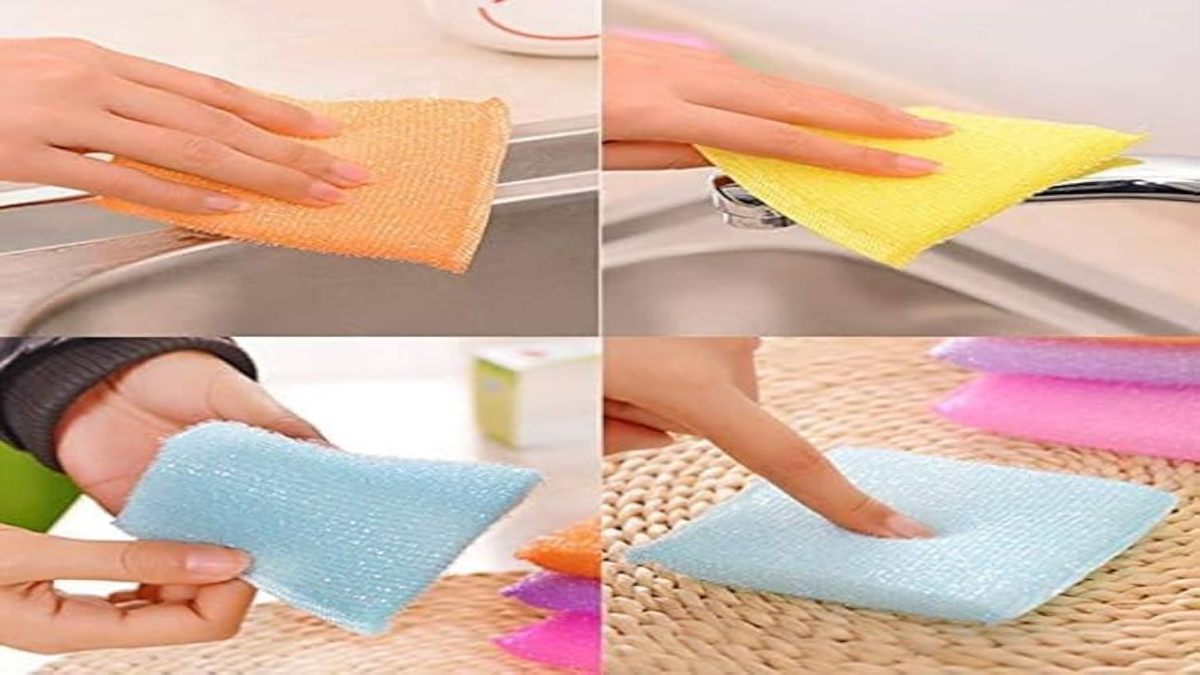
Lifestyle Desk – Kitchen sponge is used in most of the houses for washing utensils. It is very convenient in removing oil, grease and food stains from utensils. But the sponge which we use daily to clean utensils, if it remains wet and dirty for a long time, can become a breeding ground for bacteria. In such a situation, it is important to pay attention to the method of cleaning utensils. Let us know what to use for cleaning utensils instead.
Why does a wet sponge become a home for bacteria?
While washing utensils, small particles of food, oil and grease get trapped inside the sponge. Due to the porous structure of the sponge, it is not always easy to remove them completely. At the same time, the sponge remains moist for a long time after use. Moisture, food debris and a warm environment can combine to create favorable conditions for bacteria.

There have also been reports of bacteria like E. coli, Staphylococcus and Salmonella being found in kitchen sponges. Although the presence of bacteria on a sponge does not necessarily mean it will cause illness, dirty or long-used sponges can increase the risk of cross-contamination.
Just washing with water is not enough
Often, after cleaning the utensils, people wash the sponge under the tap and keep it on the side of the sink. This allows the surface of the sponge to appear clean, but food particles and moisture trapped inside may remain. Therefore, instead of using the sponge for a long time, it is better to change it regularly and squeeze it thoroughly after use and let it dry.
You can use these things instead of sponge
- If you want to reduce the use of sponge in the kitchen, then some other options can be adopted to clean utensils.
- Dish Brush-A dish brush with a long handle can be a good option for cleaning utensils. It can be washed and dried relatively quickly after use. This can also reduce contact of hands with dirty water and food residues.
- Steel or Nylon Scrubber: Suitable scrubber can be used on pans, pans and such utensils where accumulated grease has to be removed. However, one should avoid using such a scrubber on non-stick utensils, as it may damage their coating.
- Silicone brushes or scrubbers – Brushes and scrubbers made of silicone are easier to clean and may be less likely to trap food residue deeply than sponges.
- Clean cloth or dishcloth – A clean, quick-drying cloth can also be used for some utensils. But it is also important to wash the clothes regularly and dry them completely.
Pay attention not only to utensils but also to the method of cleaning.
Just polishing the utensils is not enough to clean the kitchen. The cleanliness of the material with which the utensils are being cleaned is equally important. If you use a sponge, change it regularly, squeeze it thoroughly after each use and keep it in a place where it can dry quickly. Also, it is best to keep cloths or sponges used for cleaning surfaces that have come in contact with raw meat, eggs or other raw food items separate from sponges used for cleaning dishes.