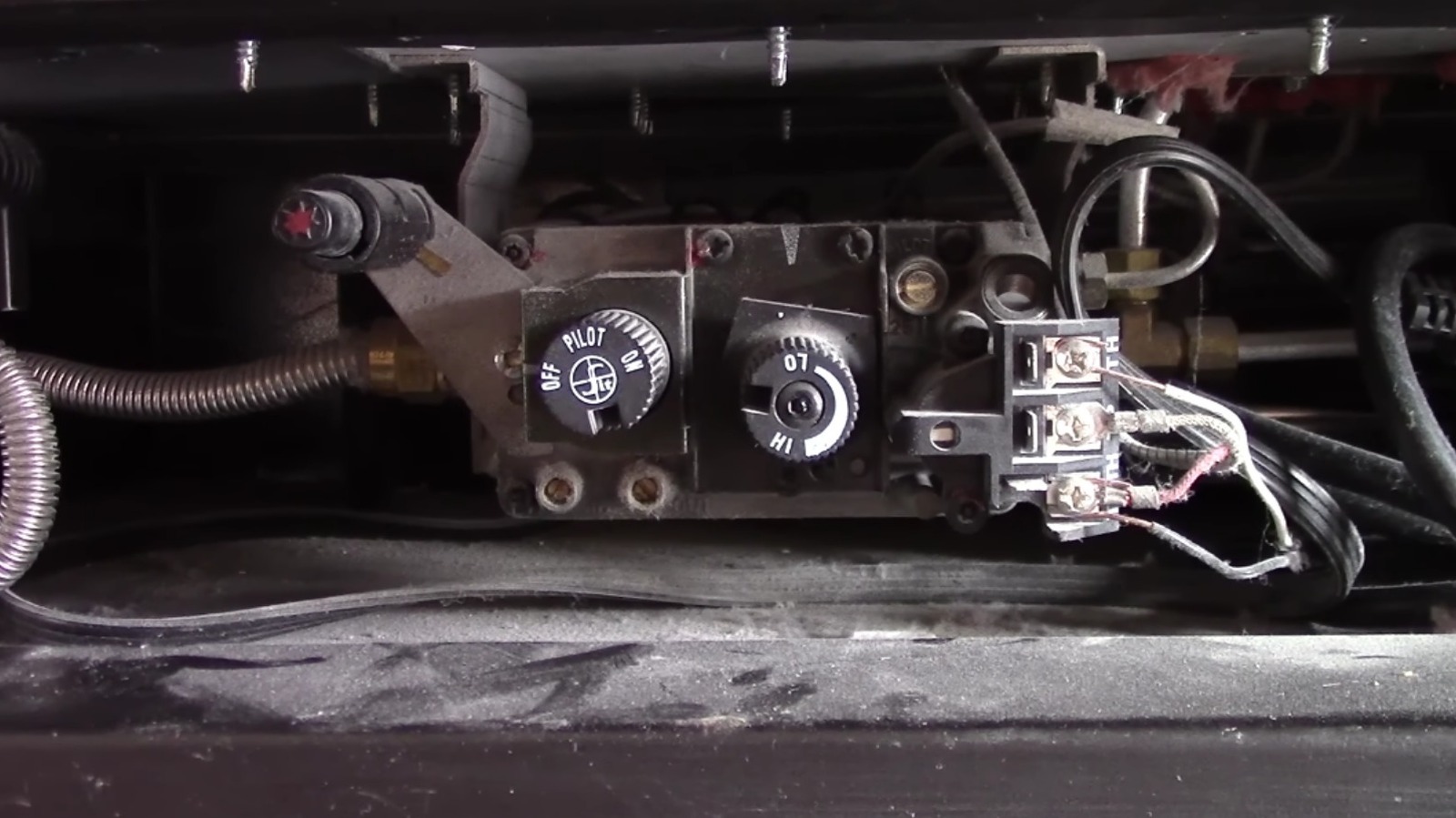
Over the last few decades, the gadgets, vehicles, and technology we use every day have changed in a huge variety of ways. Some of these changes have been foundational, while others have been more subtle. A lot of gas appliances, for instance, have historically been characterized by their pilot light, but this feature is becoming a rarity in more modern models.
Despite their name, pilot lights don’t have nothing to do with allowing airplane pilots to see at night, but rather are the small light that you may see softly glowing within an older appliance like a boiler. They’re a constant small flame that makes it much faster to light the main gas burner of the appliance when needed, without having to do so manually. A small valve or tubular section lets this limited amount of gas out, and a thermocouple is often implemented to electrically keep that valve open, while closing if the flame goes out (thereby preventing a dangerous buildup of gas).
The systems that have employed pilot lights have changed a lot since their inception, and in some cases, they’re no longer required for this role. This is because the firing mechanisms for some gas appliances have become more reliable and efficient. More frequently, you’ll find hot surface igniters or plasma igniters in newer systems; these are quite a novel, modern way of performing that same function. They will typically be made from silicon nitride or silicon carbide, for durability and to better resist the high temperatures that they’ll be exposed to. Let’s take a look at some of the pros and cons of pilot lights, and the specific types of appliances that may or may not use them today.
The vital role of a pilot light in a gas appliance
Gas poses unique dangers when employed in appliances. Primarily, there is potential for leaks or explosions, with the former sometimes remaining undetected until it’s too late. In the 1920s, with gas heating and lighting becoming a standard, there was a need to make it easier and safer to use. One of these means was the standing pilot light, allowing a system like a furnace to be lit far more conveniently. An owner would just need to begin the flow of the gas for the pilot light to start the flame and ignite it.
Needless to say, gas lighting and heating alike has changed a lot in the century since standing pilot lights were first installed. Today, the concept of a pilot light more broadly continues to raise problems. One example of this is their inconsistency. The whole idea is that a pilot light will save the bother of the manual work that otherwise comes with lighting such a furnace, but sometimes (and perhaps quite often if you’re unlucky), the pilot light will go out seemingly of its own accord. It’s impractical, potentially dangerous, and contrary to the point of having it in the first place.
Even when a pilot light is operating exactly as it should, it’s doing just that: Operating 24/7 in order to respond when ever it needs to fire up. Despite gas’s relatively cheaper price than electricity as a utility, this can result in a lot of unnecessary cost. Heating our homes can get very expensive, after all. Because of these issues, they were broadly phased out in more modern gas appliances in favor of other systems.
Other modern alternatives that have begun to replace pilot lights’ utility
Early in 1997, Home Energy magazine conducted an experiment that involved monitoring the gas use of 68 homes with furnaces and gas fireplaces for a full year. The outlet concluded that “in the 30 [homes] where the pilot light was on all year, the pilot accounted for half (48%) of the total gas fireplace fuel consumption. On average, these fireplaces used 31% as much gas as the homes’ central gas furnaces.” It seems, then, that it was important for modern gas appliances to pivot away from pilot lights as they’ve evolved the capacity to do so.
Today’s systems often revolve around an electronic ignition, which fulfils this role in its place. With appliances that use a system like this, there’s no need for a small flame to be lit all the time. Instead, the user activating the appliance causes the system to initiate a small electrical spark. Rather than a pilot light, which would use a small draw of gas all the time, this electronic system will activate only to light the flame, and only when it’s called upon to do so. Energy efficiency is an enormous priority for all appliance manufacturers today, and for their customers. This is one of the primary reasons why this change was made.
This doesn’t mean that these older pilot light systems aren’t still effective and widely used, though, so your gas fireplaces and boilers in particular may well still contain a pilot light if they aren’t newer installs. It’s also common for bigger professional kitchens’ ovens and grills to still use pilot lights, unlike newer models in homes; if you prefer a gas over an electric stove, it’s likely to operate via an electronic ignition system instead.