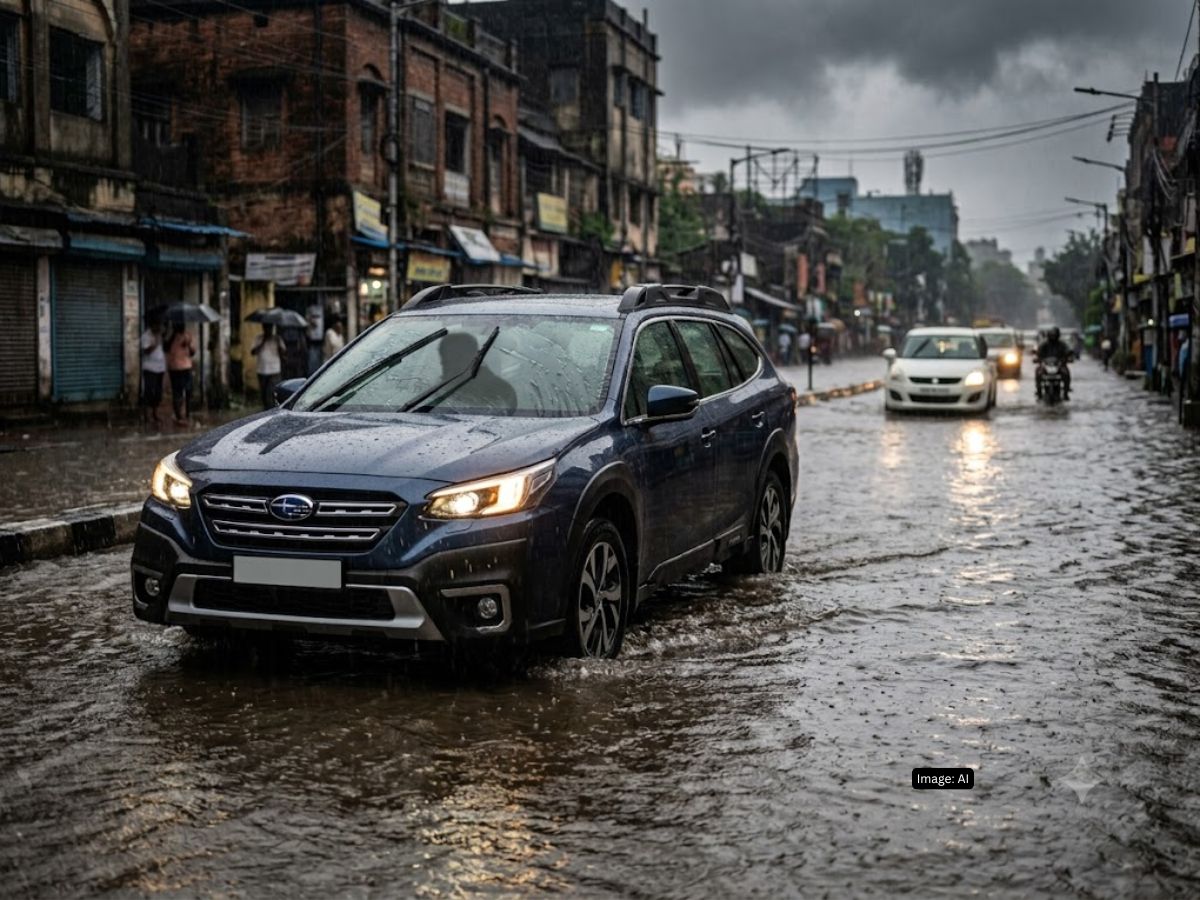
Monsoon season turns ordinary commutes into a test of nerve and judgement. Waterlogged stretches appear overnight, and one wrong move at the wheel can mean a stalled engine, a flooded cabin, or a repair bill that ruins your month. The most common question drivers ask is simple: should you speed up or slow down when you hit a flooded road? The answer, backed by how engines and water actually behave, is neither extreme, and it’s a steady, controlled pace.
Slow, But Not Too Slow
Go too fast through a flooded stretch, and you push up a wave in front of the car. That wave can force water into the air intake and exhaust, and in bad cases straight into the engine’s cylinders. That’s hydro-locking: water doesn’t compress as air does, so the engine seizes up mid-stroke, and the damage inside is usually severe and costly to fix. Go too slow, though, and you run into a different problem: water has time to creep backwards into the exhaust pipe, which can choke the engine and stall it out right there in the middle of the flood.
The trick is to keep it steady somewhere around 10–20 km/h, staying in first or second gear the whole way through. Push the revs a bit above normal, roughly 2,000–3,000 RPM, and keep your foot lightly but firmly on the accelerator instead of easing off. That extra rev range keeps the exhaust pushing air outward the whole time, which stops water from working its way back into the system, while the low speed keeps you from throwing up the kind of splash that fast driving causes.
10 Precautions to Keep Your Vehicle Safe
- Check the water depth before you commit. If it’s above your wheel hubs, don’t risk it — look for another way around.
- Cut the electrical load. Turn off the AC and infotainment system before you enter the water.
- Pick one gear and stick with it. Shifting gears mid-water can cause a brief loss of power at exactly the wrong moment.
- Keep the revs a little higher than idle. This helps maintain exhaust pressure and keeps water from pushing back in.
- Don’t switch off the engine while you’re in it. Restarting mid-flood is what actually pulls water into the cylinders.
- Leave space from the car ahead. Their bow wave can splash straight into your engine bay if you’re following too close.
- Ease off the brakes rather than stamping them. Once you’re through, brake gently a few times to dry out the pads.
- Give your brakes a light test right after you clear the water, before you get back to normal speed.
- Check the oil and air filter afterwards if the water was deep; contamination isn’t always obvious right away.
- Get it looked at by a mechanic if you notice sputtering, a burning smell, or warning lights once you’re through.
When in Doubt, Don’t Drive Through
No set of precautions substitutes for common sense. If the water’s rising, flowing with any real force, or you can already see stalled cars sitting in it, the smarter move is to wait a few minutes or take a different road entirely. Being late is annoying for a day. A flooded engine can set you back lakhs in repairs and leave you stuck regardless of how carefully you follow every other step.
Also Read: 5 Filmmakers Who Are Choosing Fresh Talent Over Bollywood’s Familiar Faces
Khushi Patel is a Senior Sub Editor at NewsX, covering automotive, technology, Lifestyle, entertainment, and mainstream news. She previously worked as a Copy Editor at Times Network and has written automotive editorial content, including comparison pieces, for TimesDrive.
The post Driving Through Flooded Roads? Here’s The Right Speed And 10 Precautions To Protect Your Car appeared first on NewsX.