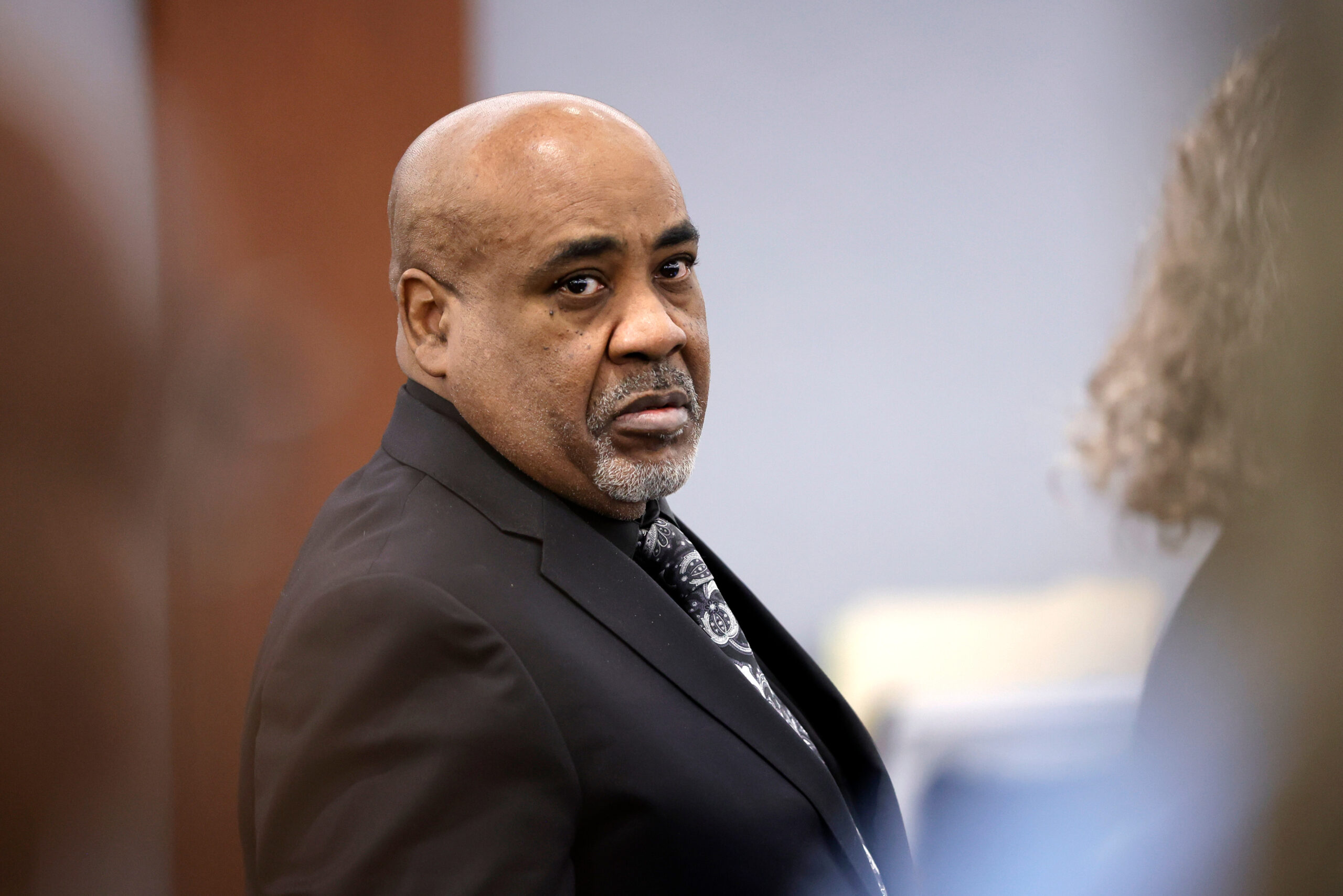
Duane “Keffe D” Davis Convicted of First-Degree Murder in Tupac Shakur Killing/ TezzBuzz/ Washington/ J. Mansour/ A Las Vegas jury convicted Duane “Keffe D” Davis of orchestrating the 1996 killing of rap icon Tupac Shakur. Prosecutors argued that Davis obtained the gun and ordered the retaliatory shooting, although they did not accuse him of pulling the trigger. Davis could receive life in prison when he is sentenced in October.

Quick Look
- Duane “Keffe D” Davis was convicted of first-degree murder with a deadly weapon.
- Jurors deliberated for less than three hours after a nine-day trial.
- Davis, 63, could be sentenced to life in prison.
- Prosecutors said the shooting was retaliation for the beating of Davis’ nephew.
- Shakur was shot in Las Vegas on Sept. 7, 1996, and died six days later.
- Death Row Records co-founder Marion “Suge” Knight was wounded but survived.
- Prosecutors relied heavily on Davis’ memoir and recorded interviews.
- The defense argued that his public accounts were exaggerated to attract attention and make money.
- Davis was the only person charged in the case and the last surviving alleged occupant of the gunman’s vehicle.
- Sentencing is scheduled for October.


Deep Look
Jury convicts Davis in decades-old murder case
A Las Vegas jury found Duane “Keffe D” Davis guilty of first-degree murder with a deadly weapon for orchestrating the 1996 drive-by shooting that killed Tupac Shakur.
The verdict brought a measure of resolution to one of the most closely followed unsolved killings in music history. Davis, 63, could be sentenced to life in prison at his sentencing hearing in October.
Jurors deliberated for less than three hours Monday after a trial that lasted several weeks. Testimony was presented over nine days, with 24 prosecution witnesses and three defense witnesses appearing before a panel of 16 jurors, including four alternates.
After the verdict was announced, Shakur’s sister, Sekyiwa “Set” Shakur, cried and embraced prosecutors. Davis’ son covered his face with one hand.
Prosecutors declined to comment after the verdict. Shakur’s relatives said they would wait until sentencing before making public statements.
Prosecutors said Davis organized a retaliatory attack
Prosecutors alleged that Davis acquired a gun and helped organize the shooting after Shakur and Death Row Records co-founder Marion “Suge” Knight participated in the beating of Davis’ nephew earlier that night.
Chief Deputy District Attorney Binu Palal told jurors during closing arguments that Davis “went hunting” for Shakur and Knight.
“He is responsible of the murder of Tupac Shakur,” Palal said. “Tell him you hear him. Find him guilty.”
The state did not contend that Davis personally fired the shots. Instead, prosecutors argued that he was a powerful gang leader who obtained the weapon, supplied it to the vehicle’s occupants and called for the attack.
They said the younger men inside the car, including Davis’ nephew, would have followed his direction.
Shakur was shot at a Las Vegas intersection
Shakur was in Las Vegas on Sept. 7, 1996, when the vehicle carrying him and Knight stopped at a red light.
A white Cadillac pulled alongside them, and someone inside opened fire. Shakur suffered multiple gunshot wounds and died six days later. He was 25.
Knight was wounded but survived.
No one was charged for decades, leaving the case to generate extensive speculation among hip-hop fans, investigators and true-crime researchers.
Davis eventually drew renewed scrutiny by repeatedly saying in interviews and public appearances that he was inside the Cadillac. He also said he provided the gun to passengers in the back seat and described the shooting as retaliation for the attack on his nephew.
Davis is the only surviving person among the four men prosecutors said were inside the Cadillac.
Davis’ own statements became central evidence
Prosecutors built much of their case around statements Davis made in interviews and in his 2019 memoir, “Compton Street Legend.”
Palal displayed the memoir during closing arguments and played an interview in which Davis encouraged people to purchase the book to learn the “real truth.”
Although the memoir includes a disclaimer saying some details were changed, prosecutors maintained that Davis’ central account of the shooting remained consistent.
In several interviews, Davis said he passed the gun into the Cadillac’s back seat. In other interviews and in his book, he declined to identify the shooter.
Prosecutors acknowledged that Davis’ version of events had changed over time but argued that he consistently placed himself inside the Cadillac from which the fatal shots were fired.
Defense challenged the lack of physical evidence
Defense attorney Michael Sanft argued that prosecutors had no physical evidence proving Davis was in Las Vegas on the night of the killing or that he directed the shooting.
“They have nothing in this case that says that man was here in Las Vegas on Sept. 7, 1996,” Sanft said during closing arguments.
Sanft characterized Davis’ public statements and memoir as exaggerated displays of bravado intended to generate publicity and income rather than provide an accurate confession.
He questioned whether prosecutors had presented evidence showing Davis had issued orders before or after the shooting. The defense also highlighted the absence of phone records or other physical evidence identifying Davis as the person who called for the attack.
Prosecutor Marc DiGiacomo countered by pointing to a scrapbook Davis kept containing news articles about Shakur.
“This guy’s scrapbooking his murder, for God’s sake,” DiGiacomo told jurors.
Gang and music-industry rivalries formed the backdrop
Testimony detailed the hostile relationship between two Los Angeles-area gang factions: Mob Piru and Davis’ South Side Compton Crips.
Witnesses described how the rival groups became connected to competing record companies. Mob Piru was associated with Knight’s Death Row Records, while the South Side Compton Crips were linked to Sean “Diddy” Combs’ Bad Boy Records.
Prosecutors argued that this rivalry helped explain the violence leading up to Shakur’s killing.
The March 1997 shooting death of Bad Boy Records star the Notorious B.I.G. was also mentioned repeatedly during the trial. Law enforcement witnesses testified that Davis was briefly considered a suspect in that killing before investigators ruled him out.
The Notorious B.I.G.’s murder remains unsolved.
Gang enhancement charge to be dismissed
Prosecutors said they would dismiss a separate gang-enhancement allegation because of logistical issues involving witnesses.
The dismissal does not alter Davis’ murder conviction. His potential punishment will be determined at the sentencing hearing scheduled for October.
More on Entertainment