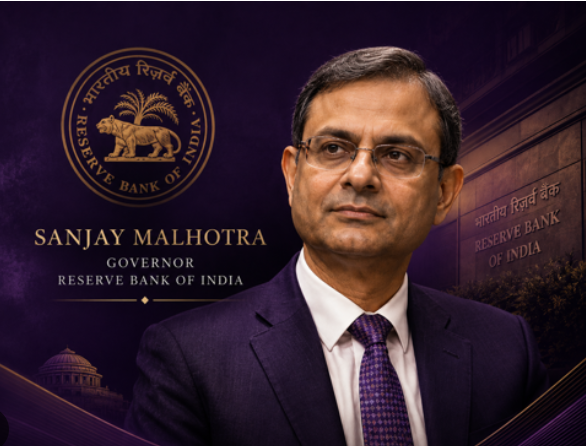
New Delhi: Keeping the repo rate unchanged at 5.25 per cent, the Reserve Bank of India (RBI) on Wednesday projected the country’s GDP growth rate at 6.7 per cent in the current financial year (2026-27), the media reported.
The central bank’s rate-setting Monetary Policy Committee (MPC) kept the benchmark repo rate as well as the policy stance unchanged, as widely anticipated by the market players because of global uncertainties and turbulent geopolitics.
The MPC’s decisions came amid a build-up in inflationary pressures and the possibility of growth moderating due to ripple effects of the ongoing West Asian war, rising crude oil prices, a depreciating Indian rupee and the El Niño effect casting a shadow on the South-West monsoon and the country’s agricultural prospects.
The panel, which met for three days from August three, kept the repo rate on hold at 5.25 per cent, as it did in its last four meetings. Also, the monetary policy stance has been “neutral” in its last seven meetings.
It also took note of headline retail (Consumer Price Index/CPI-based) inflation inching up in June, breaching the MPC’s 4 per cent target for the first time since January 2025, to an 18-month high of 4.4 per cent from 3.9 per cent in May.
RBI Governor Sanjay Malhotra noted that headline inflation is expected to rise further and peak in Q3, primarily due to food and fuel prices, and moderate thereafter.
Growth continues to be supported by resilient demand, sustained manufacturing activity and robust exports.
The central bank marginally bumped up real GDP growth projection for FY27 to 6.7 per cent from earlier estimate of 6.6 per cent. It slightly revised lower the CPI inflation for FY27 to 5.0 per cent from earlier estimate of 5.1 per cent.
It projected the real GDP growth for Q1FY28 projected at 7.3 per cent, and inflation for the same quarter at 5.3 per cent with risks being evenly balanced.
Malhotra noted that the Indian economy has remained resilient amidst persisting global headwinds. High frequency indicators available so far point towards steady domestic demand in Q1FY27.
Private consumption remained robust. Investment continues to be resilient, as suggested by various indicators related to construction, capital goods and bank credit. External demand also sustained, as healthy expansion in services exports was complemented by a rebound in merchandise exports.
“Looking ahead, the turbulent global economic environment is likely to have some bearing on domestic economic activity. Energy prices and supply chain pressures remain elevated and uncertain. The adverse impact is being contained with various supply side measures.
“Even though the situation is still evolving, deficient and uneven south-west monsoon amidst El Nino conditions poses some risks to agriculture sector’s outlook and rural demand. Nevertheless, government’s initiatives pertaining to crop diversification including short duration as well as climate-resilient crops, and water harvesting and conservation, among others, are expected to mitigate the impact,” the RBI chief said.
Also, sustained momentum in services, continuing impact of GST rationalisation, and broadly stable employment conditions should continue to support urban demand.
The Governor emphasised that strong capacity utilisation, robust credit flow and the government’s continued thrust on infrastructure are expected to sustain investment activity. While services exports are expected to sustain, merchandise exports will be supported by the recent trade agreements and thrust on diversification, he added.
Malhotra said that El Nino’s impact on temporal and spatial rainfall distribution in India continues to remain a risk, although proactive supply management and adequate stocks of foodgrains could provide buffers.
“Global oil prices have remained volatile with sharp two-way movements triggered by geopolitical developments, blurring the near-term outlook. Although generalised inflation pressures continue to remain modest so far, the risks of higher food, fuel and other input prices translating into a broad-based increase in inflation persist,” he said.