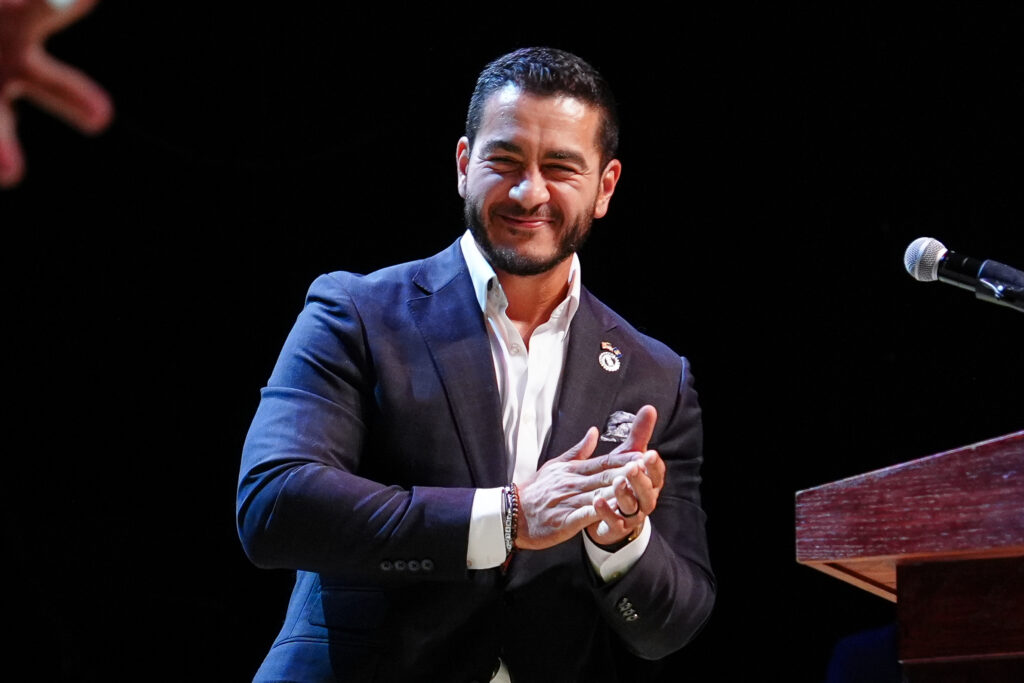
El-Sayed Says Kamala Harris’ Michigan Visit Is About Democratic Unity/ TezzBuzz/ WASHINGTON/ J. Mansour/ Michigan Senate nominee Abdul El-Sayed said Kamala Harris’ Detroit visit was intended to unite Democrats after a divisive primary and the party’s 2024 defeat. Harris planned appearances focused on Black maternal health and mobilizing Black voters, an important Democratic constituency in Detroit. Republican Mike Rogers’ campaign portrayed the former vice president’s visit as evidence that El-Sayed’s campaign needed help.
Quick Look
- El-Sayed described Harris’ visit as part of building a unified Democratic coalition.
- The candidates have differed over U.S. military assistance to Israel.
- El-Sayed has characterized Israel’s actions in Gaza as genocide, a description Israel rejects.
- Harris planned to join a Black maternal-health roundtable.
- She also planned an appearance with the Detroit chapter of the NAACP.
- El-Sayed faces former Republican Rep. Mike Rogers.
- The race could help determine control of the U.S. Senate.
- Some Jewish Democrats remain concerned about El-Sayed’s past positions and comments.
- Harris’ visit is also drawing attention because she is considering another presidential campaign.
- Michigan will be one of the early states in the 2028 Democratic nominating process.

Deep Look
El-Sayed presents Harris visit as unity effort
Democratic U.S. Senate nominee Abdul El-Sayed said Kamala Harris’ campaign visit to Detroit was intended to help bring together the party’s progressive and moderate factions.
Michigan Democrats experienced a closely contested Senate primary earlier in 2026, while divisions over Gaza and other issues contributed to tensions during Harris’ unsuccessful 2024 presidential campaign.
“We’re building an electoral coalition here,” El-Sayed said during an economic event held hours before his scheduled appearance with the former vice president.
Harris endorsed El-Sayed after his narrow primary victory. Tuesday’s visit marked their first scheduled public appearance together.
Gaza policy divided Michigan Democrats
El-Sayed, a progressive physician and former public-health official, has criticized the Biden administration’s military assistance to Israel.
He has described Israel’s military actions in Gaza as genocide against Palestinians. Israel rejects that characterization.
El-Sayed’s position aligns him with many progressive voters and members of Michigan’s large Arab American community. Some of those voters withheld support from Harris in 2024, when Donald Trump narrowly carried Michigan.
El-Sayed minimized his differences with Harris, emphasizing their shared focus on the economic concerns of voters.
The 2024 election “ended where it did because we could not find the places of agreement to be able to bring people together or move in the direction that we need to move,” he said.
Harris could help El-Sayed with Black voters
Harris remains popular among many Black voters, who form a central part of the Democratic coalition in Detroit.
During the August primary, many Black voters supported El-Sayed’s opponent, Rep. Haley Stevens.
El-Sayed said Harris could help him reconnect with those voters and consolidate Democratic support before the general election.
“Her presence here speaking to communities that were really empowered by her voice throughout her political career, I think will help us to continue to bring our coalition together,” El-Sayed said.
Detroit events focus on maternal health and voting
Harris planned to participate with El-Sayed in a roundtable discussion about Black maternal health.
The issue connects with El-Sayed’s professional background as a doctor and former head of the Detroit and Wayne County health departments.
Harris was also scheduled to attend a separate event organized by the Detroit branch of the NAACP.
Her spokesperson previously said the former vice president wanted to help increase voter participation in Michigan during the midterm elections.
Michigan race could affect Senate control
El-Sayed faces Republican nominee Mike Rogers, a former member of Congress who narrowly lost Michigan’s 2024 Senate election.
The candidates are seeking the seat being vacated by retiring Democratic Sen. Gary Peters.
Holding the Michigan seat is important to Democrats’ attempt to win the Senate majority. Even with a victory there, the party would need to gain at least four seats currently held by Republicans.
A Rogers victory would further reduce the number of available paths for Democrats to take control of the chamber.
The race is also being watched as a test of whether progressive candidates can win statewide contests in closely divided states.
Rogers campaign calls visit a sign of weakness
Rogers’ campaign argued that Harris’ appearance showed El-Sayed was struggling to unify his party.
“Abdul is so desperate that he’s parachuting Kamala Harris into Michigan to save his flailing campaign,” spokesperson Alyssa Brouillet said.
Rogers has campaigned in Detroit and sought support from Black voters and moderate Democrats who may be hesitant about El-Sayed’s progressive platform.
His campaign has also attempted to attract Jewish voters concerned about El-Sayed’s positions on Israel and Gaza. Rogers has presented himself as a bipartisan alternative while maintaining support among Republican and Trump-aligned voters.
Jewish Democrats voice concerns
El-Sayed faces continuing questions from some white Jewish voters who have traditionally supported Democratic candidates in Michigan.
“Jews in Michigan are currently scared” by their choices in the Senate race, said Barry Goodman, a Democratic National Committee member and Michigan fundraiser who supported Stevens in the primary.
Goodman described himself and some other Jewish Democrats as “holding our noses and voting for Abdul” because they “believe in the Democratic ticket and they believe that one man can help win the Senate but can’t destroy the Senate.”
He said some moderates were still deciding whether to support Rogers or decline to vote in the Senate contest.
El-Sayed has apologized for some past controversial comments and said he is committed to protecting Jewish communities.
El-Sayed runs to party’s left
El-Sayed supports policies including universal health care and restrictions on American weapons transfers to Israel.
His primary victory over establishment-backed Stevens highlighted divisions between the Democratic Party’s progressive and moderate wings.
Since the primary, prominent Democrats have supported efforts to unite the party around El-Sayed. Former President Barack Obama spoke with him, while former Transportation Secretary Pete Buttigieg campaigned for the broader Democratic ticket in Detroit.
Michigan matters to Harris’ political future
Harris’ Michigan trip is also receiving attention because she has not ruled out seeking the Democratic presidential nomination in 2028.
Michigan is scheduled to hold the fifth presidential-preference contest under the Democratic National Committee’s revised nominating calendar.
Campaigning alongside El-Sayed is notable because Harris has previously had a strained relationship with parts of the party’s progressive wing.
“She probably figures she won’t lose her establishment folks, so maybe she makes gains to her left,” Goodman said.
Harris has said she is in no hurry to announce a 2028 decision. Before the November midterm elections, she also plans campaign appearances in Nevada and Georgia, two other politically significant states.
More on US News