
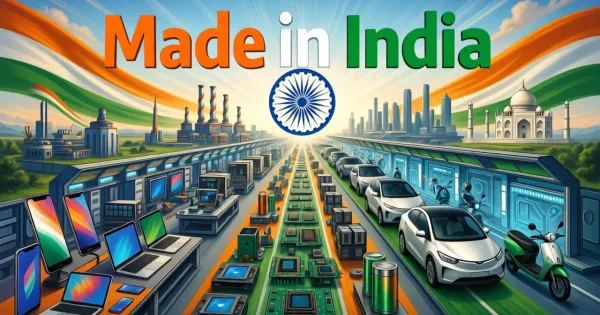
Explained: From smartphones to EVs…the era of Made in India chips begins! Know what is India Semiconductor Mission 2.0 and its benefits

Digital Desk: The Central Government has taken a big step towards making India a global semiconductor hub. The Union Cabinet chaired by Prime Minister Narendra Modi has approved India Semiconductor Mission (ISM) 2.0. Along with this, it has also been decided to upgrade the Domestic Mobile Phone Manufacturing Promotion Scheme (MPMS). The government believes that these decisions will give a new impetus to the electronics manufacturing ecosystem in the country.
What is India Semiconductor Mission 2.0?
The Central Government had launched the India Semiconductor Mission in the year 2021. In the first phase, emphasis was mainly on promoting chip manufacturing and packaging units. Now in the second phase i.e. ISM 2.0, the government’s aim will not be limited to chip manufacturing only, but will also be to give India a strong position in the global semiconductor supply chain.
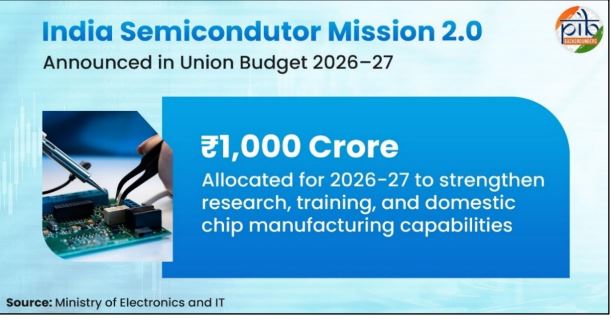
The Ministry of Electronics and Information Technology (MeitY) has approved a proposal of Rs 1.25 lakh crore for this mission. This scheme had already been announced in the Union Budget.
mission focus
| Area | focus |
|---|---|
| Semiconductor Equipment | chip manufacturing equipment |
| Semiconductor Materials | Special Materials and Supply Chain Development |
| Chip Design | Develop full-stack designing capabilities |
| Advanced Manufacturing | Investing in next generation technologies |
| Ecosystem Development | Promotion of domestic industries and startups |
Emphasis will be on full-stack semiconductor ecosystem
Under ISM 2.0, the government will focus on developing full-stack semiconductor intellectual property in India. Under this, special attention will be given to chip design, fabrication, advanced technology development and increasing production capacity. Besides, work will also be done to strengthen India’s participation in the global supply chain.
Estimated to be a market of 100-115 billion dollars by 2030
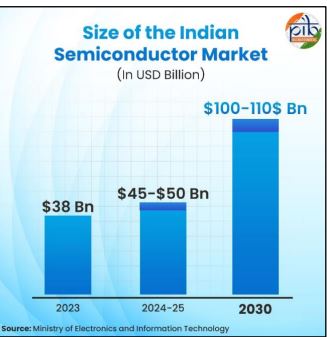
The government estimates that through this mission, India’s semiconductor market can reach $100 to 115 billion by 2030. During the first phase, this market has reached approximately 45 to 50 billion dollars. In such a situation, it is expected to almost double in the next five years.
Startup and high-tech industry will benefit
The biggest benefits of Semiconductor Mission 2.0 are expected to be given to startups related to chip designing, electronics manufacturing, semiconductor devices, automation and high-tech technology. Apart from this, smartphone, electric vehicle (EV), data center, Artificial Intelligence (AI), automation and industrial electronics sectors will also get direct benefits from it.
There are many companies in the stock market like Moschip, SPEL Semiconductor, BEL, Kaynes Tech, CG Power, Dixon Tech, which will benefit from this decision of the government.
What did Union Minister Ashwini Vaishnav say?
Union Minister Ashwini Vaishnav said that seven important decisions were taken in the meeting of the Cabinet and the Cabinet Committee on Economic Affairs (CCEA) chaired by Prime Minister Narendra Modi. Of these, the third, fourth and fifth decisions are related to Semiconductor Mission 2.0, which has received Cabinet approval.
New semiconductor chip plants being established in many states
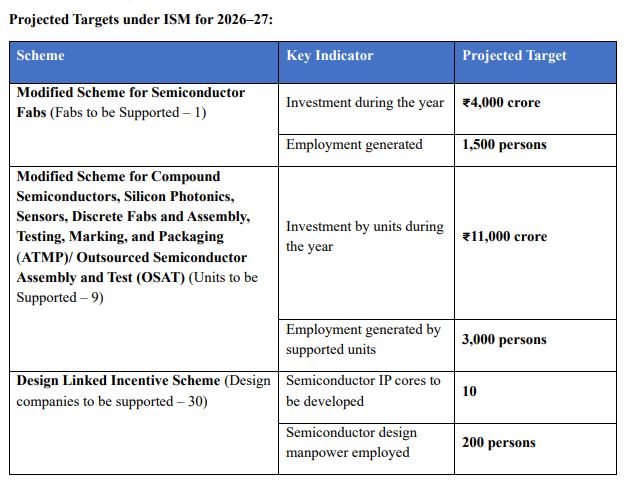
Under the India Semiconductor Mission, new semiconductor chip plants are being developed in Gujarat, Assam, Andhra Pradesh, Uttar Pradesh and Odisha. The initiative aims to establish India as a global chip manufacturing hub and strengthen domestic electronics manufacturing.
The most prominent among these projects is the country’s first commercial semiconductor fabrication (Fab) plant being built in Dholera, Gujarat. The project is being developed in partnership with Tata Electronics and PSMC of Taiwan.
This state-of-the-art plant, being built at a cost of about Rs 91,000 crore, will have the capacity to produce about 50,000 wafers every month. This project will prove to be important for increasing India’s chip manufacturing capacity as well as for electronics, automobile, AI and high-tech industries.
Strong foundation of India’s chip revolution
The Central Government had launched India Semiconductor Mission (ISM) 1.0 in the year 2021. So far, 12 semiconductor and chip manufacturing projects have been approved under this initiative.
Major companies like Micron, Tata Electronics, Kaynes Semicon and CG Semi are involved in these projects. Production has started at some of these units, while Tata Electronics’ state-of-the-art chip fabrication (Fab) plant at Dholera, Gujarat is under construction.
Semiconductor Mission 1.0 created the necessary infrastructure for chip manufacturing in the country, which is now under the Semiconductor Mission Through 2.0, work will be done to increase production capacity, design, research and further strengthen India’s participation in the global supply chain.
Youth will get advanced semiconductor training, new employment opportunities will open.
According to Union Minister Ashwini Vaishnav, with the expansion of the semiconductor industry, a large number of trained youth will be required. In this direction, about 68,000 students in 315 universities of the country have received training in modern chip design. Now under Semiconductor Mission 2.0, engineering students will be provided advanced training facilities related to Fab, clean room technology and semiconductor manufacturing, so that they can be prepared for direct employment as per the needs of the industry.
Achievements of Semiconductor Mission 1.0
The success of the first phase has laid a strong foundation for the second phase in India’s semiconductor sector.
1- Till now 12 big semiconductor manufacturing and packaging projects have been approved.
2- These projects have attracted investment of more than Rs 1.64 lakh crore.
3- These include 1 silicon fab, 1 silicon carbide fab, 1 gallium nitride (GaN) micro LED display fab and 9 chip packaging units.
4- Companies like Micron, Kaynes Semicon and CG Semi have started chip production on a commercial scale in India, while another big unit is preparing to start operation this year.
5- The government has provided financial assistance to chip design projects of 24 startups and MSMEs. Apart from this, state-of-the-art and expensive software used for chip design has been provided free of cost to 105 startups.
What will be the benefit to the common people?
1. Electronic products can become cheaper
Increasing chip manufacturing in the country will reduce dependence on imports. This will reduce import duties and transportation costs, which may impact the prices of smartphones, laptops, automobiles and other electronic products in future.
2. Big employment opportunities
New factories will be set up with huge investment in the semiconductor sector. This is likely to create lakhs of employment opportunities in various sectors including engineers, technicians, machine operators, logistics, research and marketing.
3. National security will be strengthened
Semiconductor chips play an important role in modern defense equipment, missiles, radars and fighter jets. Increasing indigenous chip manufacturing will reduce dependence on foreign technology and will also strengthen sensitive defense systems and data security.
Also read: Supreme Court’s strict comment on CBSE’s digital copy investigation, Expressed concern over the ‘frustration’ of students

Comments are closed.