
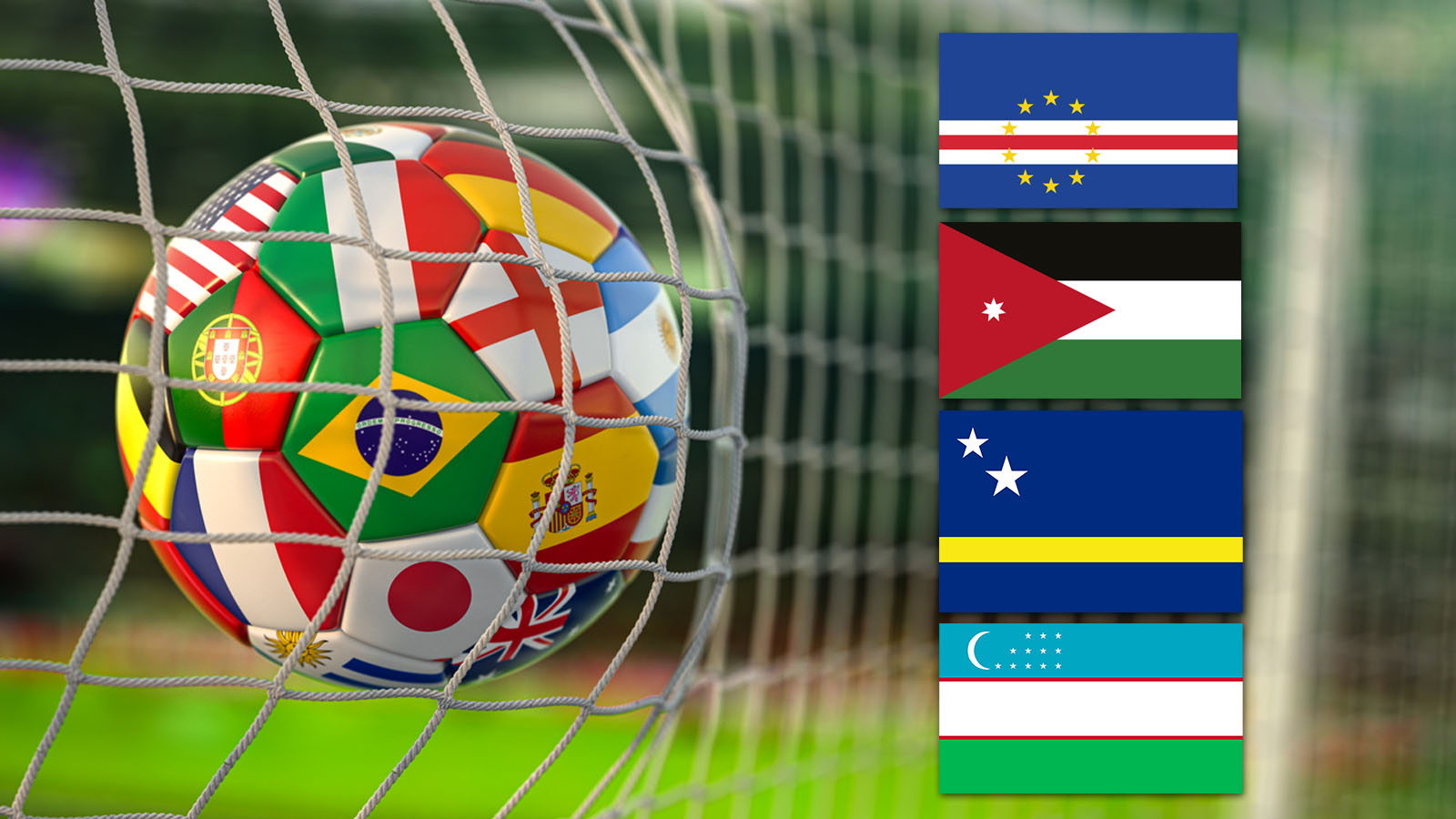
The 4 Davids of FIFA WC 2026 who will take on the Goliaths; one is smaller than Bengaluru

The 2026 FIFA World Cup kicked off on Thursday (June 11) with two matches. On the opening day, co-hosts Mexico defeated South Africa 2-0 while South Korea tamed the Czech Republic 2-1. The current one, the 23rd edition and the biggest ever featuring 48 nations, will see all but one former champions (Italy could not make it this time). However, there will also be some medium powers and a few others that are little heard of in the football world.
Four teams — Curacao, Cape Verde, Jordan and Uzbekistan — are set to make their debut in this World Cup. There are many others, such as the DR Congo, Haiti, Panama, and Qatar, who are making their second appearances, some after a gap of more than 50 years. There will be moments of euphoria and agony as the tournament progresses (104 matches with the final on July 19), but their impacts will last beyond 90 minutes. The United States and Canada are the other two hosts.
The four debutants of WC 2026
♦ Curacao in Group E with Germany, Ivory Coast and Ecuador
♦ Cape Verde in Group H with Spain, Uruguay and Saudi Arabia
♦ Jordan in Group J with Argentina, Algeria and Austria
♦ Uzbekistan in Group K with Portugal, DR Congo and Colombia
Also read: Why in Kerala, World Cup flex wars are reflective of football being a lived experience in the state
Here we take a look at the four debutants and how they are placed in this edition of the marquee contest.
Curaçao — A country smaller than Bengaluru
Of all the stories at the 2026 World Cup, perhaps none is more remarkable than that of Curaçao. With a population of about 156,000, Curaçao is the smallest nation by population (it is an autonomous country within the Kingdom of the Netherlands) to ever qualify for the men’s World Cup. To put that in an Indian perspective, it is smaller than the population of a single ward in many Indian cities.
Curaçao, who are ranked 82nd in FIFA listing and nicknamed Pantera Negra (The Blue Wave), covers a total area of just 444 sq km and is located in the Caribbean Sea, about 55 km off the coast of Venezuela. For comparison, Bengaluru’s urban area spans over 700 sq km — meaning India’s IT capital is physically larger than this entire nation.
Curaçao is making its World Cup debut in this edition, and has been drawn into Group E alongside Ivory Coast, Ecuador and former champions Germany — a baptism by fire for a nation not many football fans had heard about much before the qualifiers.
Cape Verde — An archipelago a little bigger than Goa
With a population of about 5,00,000, the small archipelago off the coast of Senegal in the Atlantic Ocean will become the third-least populous country to participate in a World Cup after Curaçao and Iceland. To draw an Indian parallel, that is roughly the population of Shimla and Gangtok combined, or less than half the population of the city of Mysuru in Karnataka.
Cape Verde’s total land area is around 4,033 sq km — slightly larger than Goa which measures 3,702 sq km. Yet this tiny island nation, officially known as Cabo Verde, qualified with remarkable composure.
Also read: FIFA World Cup 2026 full schedule, venues, times in IST, live TV, streaming details
At the 2026 World Cup, Cape Verde, nicknamed Blue Sharks (Blue Sharks) and ranked 69 in the FIFA order, have been placed in Group H alongside former champions Spain and Uruguay and Saudi Arabia — a tough but prestigious group for a first-ever World Cup appearance.
Jordan — Which has size of a few Indian states combined
Jordan is a mid-sized country by global standards, covering approximately 89,000 sq km — comparable to the combined area of two to three average-sized Indian states. Jordan has a population of more than 11.4 million inhabitants as of 2023. For Indian readers, that is roughly comparable to Bengaluru’s metropolitan population, or a fraction of Uttar Pradesh’s 240 million people.
Jordan, ranked 63 by FIFA, is making its World Cup debut in this edition. Their qualification campaign has been historic. Nicknamed ‘Al Nashama’ (The Chivalrous Ones), they are clubbed with reigning champions Argentina, Algeria and Austria.
Uzbekistan — Central Asia’s giant, but a football newcomer
Uzbekistan is a vast, landlocked nation in Central Asia. Its total area is 447,400 sq km — roughly the size of Rajasthan plus Madhya Pradesh combined. As of January 1, 2024, the permanent population of Uzbekistan stood at 36.8 million — comparable to the population of Tamil Nadu.
Despite its size, Uzbekistan (nicknamed White Wolves Turanians) is an absolute football newcomer. They are guided by a legendary name in the game: Italy World Cup (2006) winner Fabio Cannavaro.
Also read: Iran’s World Cup participation hit by ticket and visa controversies
Uzbekistan, ranked 50 in the world, are in Group K alongside Portugal, DR Congo and Colombia. For a nation playing its first World Cup, they are strong opponents.
The presence of these four teams and many others at the 2026 World Cup is a direct consequence of the football world body’s decision to expand the tournament from 32 to 48 teams. While critics have questioned the quality on offer, the possibilities these nations bring are precisely what make the World Cup unique among all sporting events.

Comments are closed.