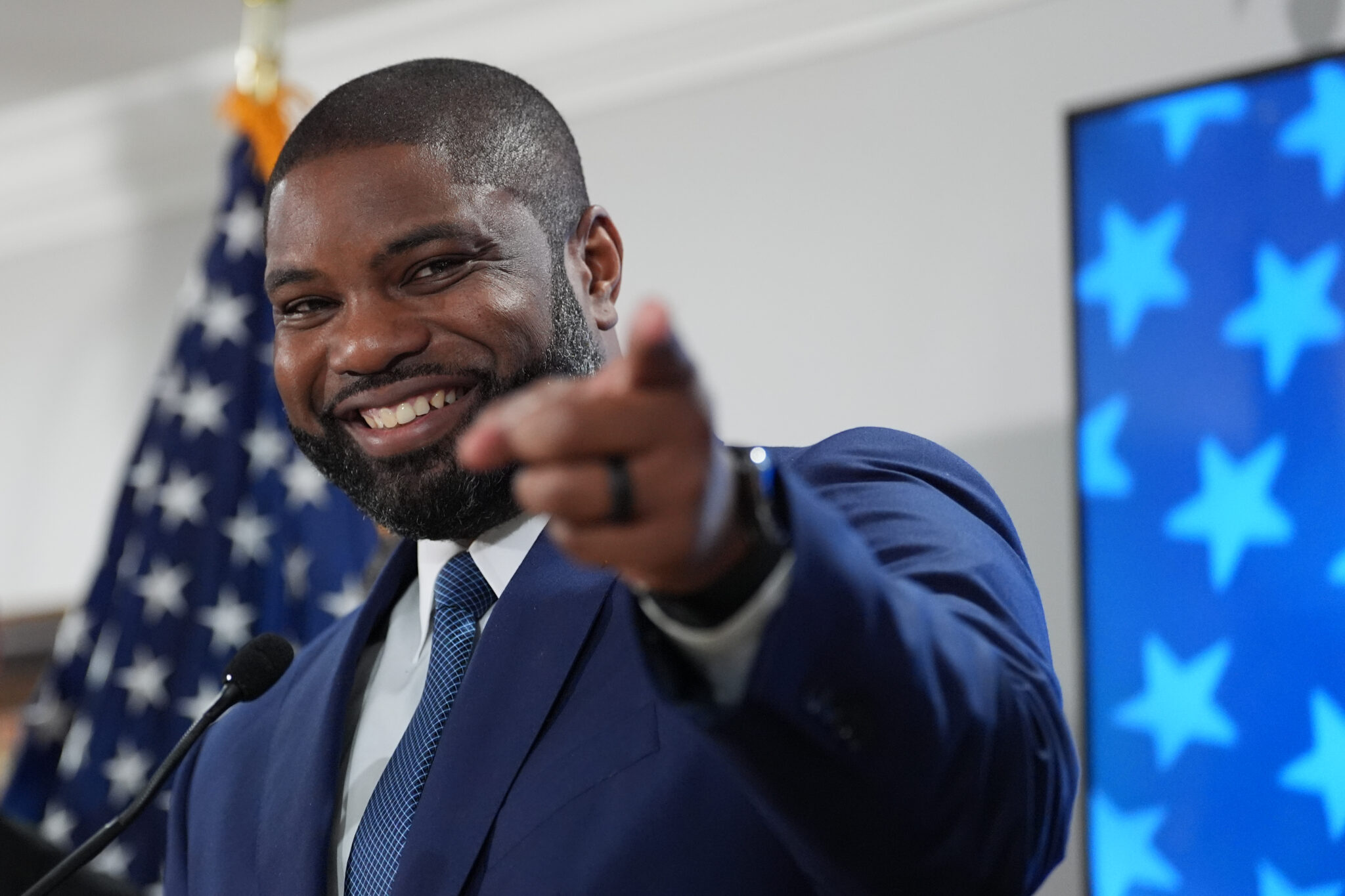
Florida Primaries Test Trump’s Influence in Governor and Congressional Races/ TezzBuzz/ WASHINGTON/ J. Mansour/ Florida voters are selecting nominees for governor, U.S. Senate and Congress in races testing Donald Trump’s influence and Democrats’ hopes of reviving the state as a battleground. Trump-endorsed Rep. Byron Donalds is seeking to become Florida’s first Black governor, while former Republican Rep. David Jolly leads the Democratic field. Redrawn congressional districts have also produced contentious Democratic contests as Republicans attempt to strengthen their advantage before November.


Quick Look
- Byron Donalds is running for the Republican gubernatorial nomination.
- Donalds hopes to become Florida’s first Black governor.
- Trump has endorsed Donalds.
- Lt. Gov. Jay Collins and James Fishback are also competing.
- Former Republican Rep. David Jolly leads the Democratic governor’s field.
- Gov. Ron DeSantis cannot seek a third consecutive term.
- Ashley Moody is seeking the Republican Senate nomination.
- Democrats Angie Nixon and Alex Vindman are competing for the Senate nomination.
- Florida has not elected a Democratic senator since 2012.
- Debbie Wasserman Schultz is seeking a 12th House term.
- She faces four Black opponents in a plurality-Black district.
- Sheila Cherfilus-McCormick is attempting a congressional comeback.
- Cherfilus-McCormick faces a federal indictment involving $5 million.
- Republican Rep. Cory Mills faces three primary challengers.
- DeSantis said he does not support Mills.
- Republican registration now exceeds Democratic registration.
- Turnout could indicate each party’s strength before November.
- Trump carried Miami-Dade County by more than 11 points in 2024.


Deep Look
Florida primaries test Trump’s influence
FORT LAUDERDALE, Fla. — Florida voters are choosing nominees for governor, U.S. Senate and Congress in elections that will measure President Donald Trump’s control over his adopted state.
Rep. Byron Donalds is relying heavily on Trump’s endorsement as he seeks the Republican gubernatorial nomination.
His opponents include Lt. Gov. Jay Collins and political newcomer James Fishback.
On the Democratic side, former Republican congressman David Jolly is the leading candidate.
Open race follows DeSantis era
Republican Gov. Ron DeSantis is barred from seeking a third consecutive term.
DeSantis has alternated between cooperating and clashing with Trump during his years as one of the country’s leading conservative politicians.
The open governor’s race will help determine whether Florida remains firmly under Republican control.
The state has shifted substantially to the right since Trump first won the presidency in 2016.
Donalds seeks historic victory
Donalds is attempting to become Florida’s first Black governor.
Only three Black governors have been elected in U.S. history.
The 47-year-old congressman has generally emphasized his conservative platform more than the historic nature of his candidacy.
His agenda includes tax reductions, changes to insurance regulations and greater price transparency from healthcare providers.
Affordability anchors Donalds’ campaign
“The people of Florida want to make sure that the Florida dream is alive and well into the future,” Donalds said. “Affordability is a problem for all Floridians. It doesn’t matter what your politics are. It doesn’t matter what the color of your skin is.”
His campaign has focused on rising insurance premiums and other costs affecting Florida households.
A convincing Donalds victory would strengthen both his position and Trump’s influence heading into the general election.
Trump-backed gubernatorial candidates have produced mixed results in other 2026 primaries.
Florida governor races can be close
DeSantis won reelection easily in 2022, but his first victory was far narrower.
He captured the governor’s office in 2018 by slightly more than 32,000 votes out of approximately 8.1 million cast.
That history gives Democrats some reason to believe Florida could eventually become competitive again.
However, recent statewide results and voter-registration trends strongly favor Republicans.
Jolly tests party-switching strategy
Jolly is attempting to show that a former Republican can successfully carry the Democratic nomination in Florida.
He became a Trump critic and joined the Democratic Party in 2025.
The strategy has failed before.
Democrats nominated former Republican Gov. Charlie Crist in 2022, but DeSantis defeated him by nearly 20 percentage points.
Senate election completes Rubio’s term
Florida is also holding a special Senate election to complete the remainder of Marco Rubio’s term.
Rubio left the Senate after Trump appointed him secretary of state in 2025.
DeSantis appointed former Florida Attorney General Ashley Moody to fill the seat temporarily.
Moody enters the Republican primary in a strong position and has Trump’s endorsement for the final two years of the term.
DeSantis praised Moody as law-and-order choice
When DeSantis appointed Moody, he described her as a law-and-order prosecutor prepared to help Trump “shut the border.”
He also said she would help address inflation and reform a federal bureaucracy “run amok.”
Moody’s institutional support makes her the Republican favorite.
Any Democratic nominee would face a difficult general election in a state that has not elected a Democratic senator since 2012.
Nixon and Vindman represent Democratic divide
Progressive state lawmaker Angie Nixon is competing against retired Army Lt. Col. Alex Vindman for the Democratic Senate nomination.
Vindman represents the party’s center-left establishment.
He gained national recognition as a National Security Council official who testified during Trump’s first impeachment proceedings in 2019.
The Democratic-controlled House impeached Trump, but the Republican-led Senate acquitted him.
Trump later removed Vindman from his position.
Redistricting reshapes House contests
Florida’s congressional maps were redrawn following a push by DeSantis.
The changes were part of a broader national redistricting campaign intended to strengthen Trump’s prospects in the midterm elections.
The maps reduced the number of left-leaning districts and forced Democrats into more competitive primary contests.
One of the most closely watched involves longtime Rep. Debbie Wasserman Schultz.
Wasserman Schultz seeks 12th term
Wasserman Schultz has served in Congress since 2005 and is seeking a 12th term.
She is competing in Florida’s newly redrawn 20th Congressional District, which has a plurality-Black population.
The district is centered in diverse, heavily Democratic portions of Broward County.
It no longer includes Wasserman Schultz’s hometown of Weston, west of Fort Lauderdale.
Four Black candidates challenge incumbent
Wasserman Schultz is the only white candidate in a primary featuring four Black opponents.
Her rivals argue that the plurality-Black district should elect a Black representative.
Wasserman Schultz says race and personal experience are important but should not outweigh her record and congressional influence.
“Representation matters and lived experience matters. But experience and making sure that you have someone who has the seniority and the seasoning to be able to deliver for a district, it matters as well,” she said.
Cherfilus-McCormick seeks comeback
Former Rep. Sheila Cherfilus-McCormick is among the candidates challenging Wasserman Schultz.
She resigned earlier this year while facing a federal indictment and possible House ethics penalties.
Federal prosecutors accuse Cherfilus-McCormick of stealing $5 million in disaster-relief funding.
She has pleaded not guilty and disputes allegations that she violated House rules.
Cory Mills faces Republican opposition
Republican Rep. Cory Mills is seeking a third term in Florida’s 7th Congressional District.
He faces three primary challengers while denying domestic violence allegations.
DeSantis and other Republicans have withdrawn their support.
“I have not endorsed Cory Mills, and I do not support Cory Mills,” DeSantis said during a recent appearance in the congressman’s district.
Turnout could signal November strength
Registered Republicans now outnumber Democrats in Florida, reversing the state’s previous partisan balance.
That advantage creates an expectation that Republican primary turnout should comfortably exceed Democratic participation.
A close overall result, particularly if Democrats mobilize a larger proportion of their registered voters, could increase Democratic optimism for November.
A dominant Republican showing would suggest that Florida remains resistant to the Democratic turnout gains recorded elsewhere in 2026.
Miami-Dade illustrates Florida’s shift
Miami-Dade County will provide a particularly important measure of the state’s political direction.
Democrats once won the county by large margins.
Trump lost Miami-Dade to Hillary Clinton by 30 percentage points in 2016.
He reduced that deficit to seven points in 2020 before carrying the county by more than 11 points in 2024.
The dramatic shift reflects the broader Republican gains Democrats are trying to reverse.
More on US News