Sanjay Dave, Ahmedabad
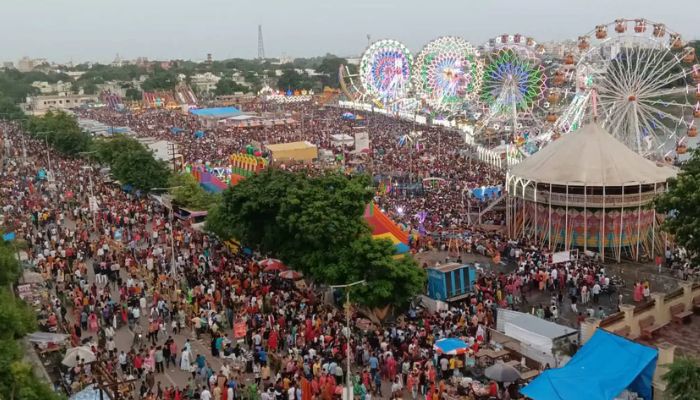
Every state in India has its own different story, different traditions, different customs and systems, while known as the state of commercial and intellectual people, the state of Gujarat is not only recognized as a land of temples, trade and industry, it is also a land where folk culture lives in its villages, communities and centuries-old traditions. Among the most vivid expressions of this cultural heritage are the “Lokmelas” people’s fairs that bring together religion, entertainment, trade, folk art, social interaction and community life in one place. From Tarnetar and Vautha in Saurashtra to Shamlaji, Bhavnath and Chitra-Vichitra Melas, Gujarat’s fairs represent a living cultural tradition rather than just a festival.
How old is the tradition of Lok Mela?There is no single historical date that can be identified as the beginning of the Lok Mela tradition in Gujarat. Different fairs have different origins, and many are rooted in religious pilgrimages, seasonal cycles, local trade and community customs. Some traditions are centuries old. For example, the Shamlaji temple is believed to have existed at least 500 years ago, while the Tarnetar fair is believed to have historically developed 200-250 years ago. This diversity itself explains the strength of the Lok Mela tradition that has evolved naturally with the social and rural life of Gujarat.
Why was Lok Mela held..?Historically, villages were relatively isolated. There were few opportunities for people from different communities and regions to meet. The fair became a natural meeting place. In which religion provided the original attraction, the fair gradually became much more than a religious gathering. People came to pray, but they also came to trade livestock and agricultural goods, buy handicrafts, meet relatives, arrange marriages, enjoy folk performances, and exchange social information.
A good example of this is the Vautha fair. Traditionally known for its cattle trade, the fair combines pilgrimage, commerce, handicrafts, food and cultural activities. Thousands of people camp there, turning the village into a temporary social and economic hub. Many people find employment. This fair, which generates nearly a year’s worth of income, is still popular today.
Why Lok Mela is called rural tradition..?The word Lok means people. The Lok Mela therefore represents a culture created and preserved by ordinary people rather than formal institutions. It has its strongest roots in rural Gujarat as village communities were historically based on collective participation. Folk songs, garba, raas, traditional costumes, handicrafts, livestock trade, local food and rituals all found a common platform in the fair.
For example, Tannetar depicts folk dance, music, traditional clothing, jewelry and community interaction. Its association with the legend of Draupadi’s Swayamvara has also given it a special social dimension, especially for youth and women.
Social importance of Lok Mela..!Folk fairs temporarily break social boundaries. People from different villages, castes, professions and economic backgrounds come together. For example, Shamlaji attracts devotees from Gujarat and Rajasthan and functions simultaneously as a religious, cultural and trade center. The local people of Surashtra gather in Tarnetar Mela.
In modern times, this social role has become more important. Urbanization and digital technology have changed the way people communicate. Yet fairs offer something that technology cannot fully reproduce, the experience of physically meeting people, sharing traditions and celebrating collectively that is traditional folk fairs. Folk fairs are the experience of heritage and culture being alive.
Economic dimension of Lok Mela ..!Folk fairs also create a temporary rural economy. Artisans, farmers, livestock traders, food sellers, transport operators, artists and small shopkeepers all benefit. Handicrafts and traditional products gain customers, while tourism brings outside money to rural areas. Thus a fair is simultaneously a cultural institution, a social market and a platform for rural economic empowerment.
Tradition should evolve, not disappear..!The real challenge today is to adapt the spirit of the Lok Mela to modern times. Better sanitation, safety, waste management, digital promotion and facilities for artisans can strengthen these fairs without losing their traditional character.
After all, the Lok Mela of Gujarat is not just a gathering of people. It is no exaggeration to say that it is a living museum without walls, a market without permanent shops and a cultural school without classrooms. Lok Mela tells the story of rural Gujarat through faith, music, commerce, relationships and celebrations. As long as people continue to gather, sing, trade, pray and celebrate together, the spirit of Gujarat’s Lok Mela will live on. And so will the culture and heritage of the entire state