
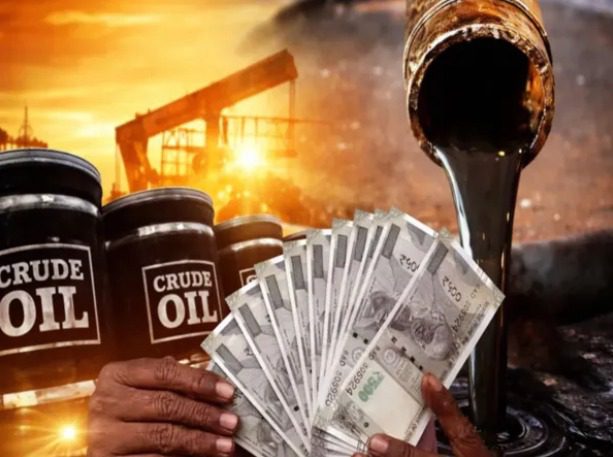
Foreign Currency: How does foreign currency become India’s economic strength? Know its 5 big benefits, why PM Modi appealed to save it

Narendra Modi Has appealed to the citizens of India to reduce the consumption of petrol and diesel, promote work from home and avoid non-essential foreign trips. This appeal of the Prime Minister has come amid increasing tension in West Asia and pressure on the global energy market. He says that if the people of the country save fuel and reduce unnecessary expenditure of foreign exchange, then India’s economy will directly benefit from it.
Now the question arises that why is foreign currency so important? Why does India place so much emphasis on saving it? In fact, foreign exchange is considered a major basis of the economic strength of any country. Its importance increases even more for a large and developing country like India.
Foreign currency refers to the currencies of other countries, such as the US dollar, euro, pound and yen. When India buys crude oil, machines, electronic equipment, medicines or technology from abroad, it has to pay in foreign currency. For this reason, it is very important for India to have adequate foreign exchange reserves.
India is a big importing country. The country imports a large part of its energy needs from abroad. Many essential commodities like crude oil, gas, gold, machinery and electronic chips come from outside. If the country’s foreign exchange becomes less then imports may become expensive, rupee may weaken and inflation may increase. This is why foreign exchange is considered a strong shield of India’s economic security.
1. Foreign currency makes imports easier
The biggest advantage of foreign currency is that India can easily import essential goods. If the country has a strong forex reserve, then there is no problem in purchasing oil, gas, medicines and machines. Due to this, industries keep running, power production is not affected and the transportation system remains smooth. When foreign exchange is low, imports become expensive, the effect of which is directly visible on the general public.
2. Rupee strengthens
When a country has good foreign exchange reserves, confidence in its own currency increases. In case of India, it has a direct impact on the rupee. Due to strong forex reserves, the rupee remains stable and the confidence of foreign investors remains intact. Due to this, imported goods do not become excessively expensive and helps in controlling inflation.
3. Provides a protective shield during times of economic crisis
Situations like war, epidemic or economic recession can arise at any time in the world. At such times, strong foreign exchange reserves act as a security shield for any country. During the Covid pandemic, the world saw how important strong economic preparedness is. Due to India having adequate forex reserves, the country was able to meet its needs.
4. Foreign investment is attracted
Strong foreign exchange reserves improve India’s economic image. Big companies and investors of the world prefer to invest in countries where there is economic stability. Good forex reserves indicate that India is an economically strong and safe market. Due to this, foreign companies invest in India, set up factories and employment opportunities increase.
5. Development plans gain momentum
When the economy remains strong, the government is able to focus more on development work. Strong foreign exchange reserves enable large investments in sectors like railways, roads, digital technology, defense and energy. This also promotes employment and industrial development in the country.
The direct message of Prime Minister Modi’s appeal is that India should be made economically self-reliant and strong. If people will spend less fuel, give preference to local products and foreign dependence will reduce, then the country’s foreign exchange will be saved and India’s economic condition will become stronger.
Experts believe that foreign exchange is not just a matter of government or economy, but it has a direct impact on the lives of common people. Strong foreign exchange reserves keep inflation under control, employment increases and the country is able to face economic crises in a better way.

Comments are closed.