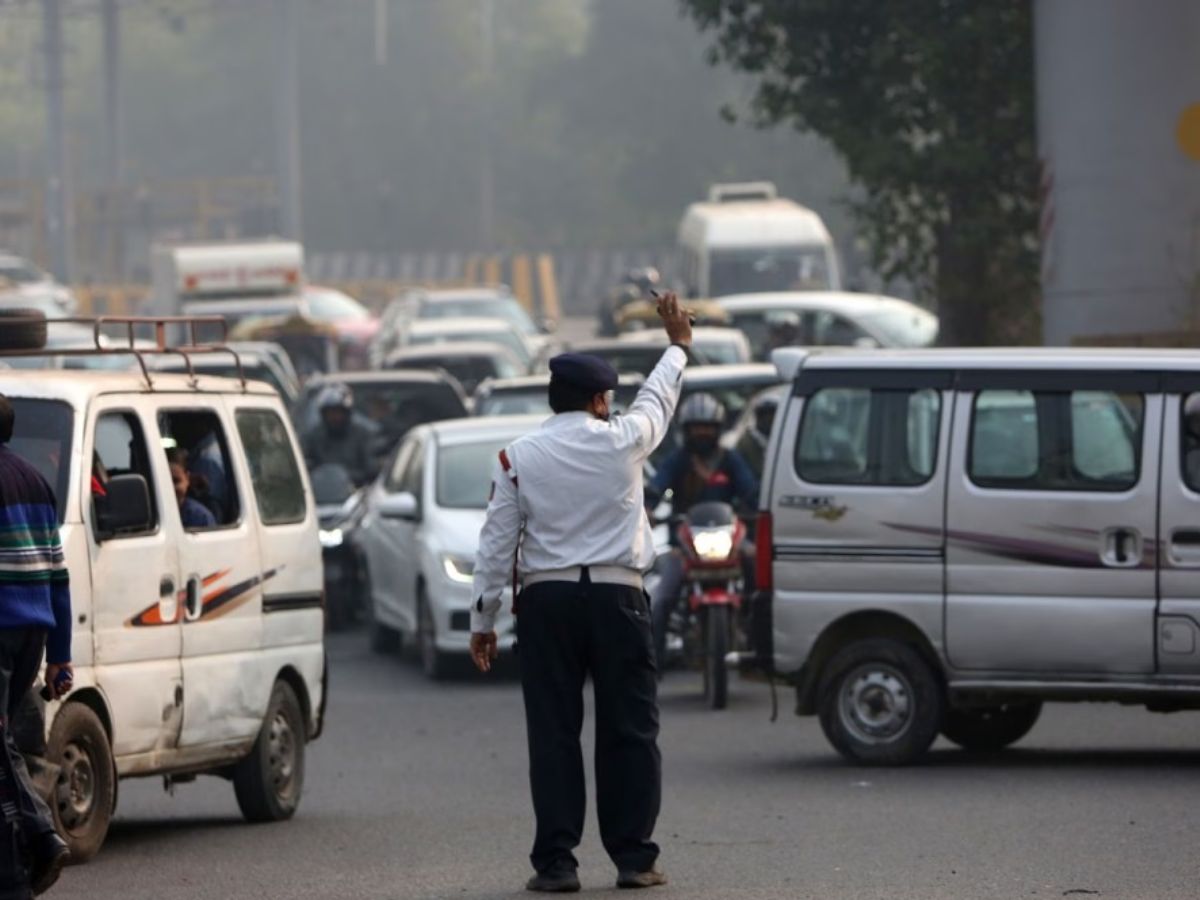
Delhi is preparing for a major change in the way traffic is monitored and managed. The city’s proposed Intelligent Traffic Management System (ITMS) will use cameras, technology and real-time data to keep a closer watch on roads. The system is expected to track stolen vehicles, detect road accidents and identify traffic jams. It will also flag stretches where vehicles suddenly slow down. More than 2,500 cameras are planned in the first phase of the project. Officials said the system will bring several traffic management functions onto a single platform.
How Will Delhi’s New AI Traffic System Work?
The proposed ITMS will give Delhi Traffic Police a real-time view of traffic conditions across the city. The system will monitor vehicle movement through cameras and other traffic infrastructure. If traffic suddenly slows down or comes to a halt, the system can generate an alert.
Police officials will then be able to identify the location and respond faster. The system is also expected to detect road accidents. This could allow traffic officials to reach accident spots sooner and take steps to clear the affected stretch.
Officials said the technology will help traffic police move away from depending only on manual monitoring. The system is planned to work through an integrated Traffic Control and Command Centre. Traffic management, enforcement and public information will be handled through the same platform.
Stolen Vehicles Will Trigger Police Alerts
One of the major features of the new Delhi traffic system will be stolen vehicle tracking. Once a vehicle theft is reported and an FIR is registered, information about the vehicle will be sent to the traffic system. Joint Commissioner of Police (Traffic) Sanjay Tyagi explained how the system will work.
“If a vehicle is stolen and an FIR is registered at the concerned police station, an alert will be sent through the Crime and Criminal Tracking Network and Systems (CCTNS) to the traffic inspector (TI) responsible for the area.”
The system will be connected with Delhi Police’s CCTNS. It will also be integrated with the Centre’s e-Sarathi and VAHAN platforms. This could allow traffic officials to predict where a stolen vehicle may move next. If the vehicle continues to travel within Delhi, the concerned traffic zone can receive an alert about its expected movement.
“The ZO will then coordinate with the local police to take necessary legal action,” Tyagi said.
Delhi Will Get Real-Time Traffic Jam Alerts
Traffic jams are another major focus of the project. The ITMS will monitor road speeds and traffic movement. If vehicles begin moving much slower than normal, the system can flag the stretch.
It can also alert officials when traffic comes to a complete stop. These alerts will be sent to the traffic inspector responsible for that area. Police teams can then reach the location and take steps to manage the situation. The system is also expected to help police plan diversions when required.
Officials said the technology will provide real-time information about traffic jams, slow-moving roads and accidents. This could help reduce the time taken to respond to traffic disruptions.
More Than 2,500 Cameras Planned Across Delhi
The first phase of the project will include more than 2,500 cameras. It will also have 1,092 adaptive traffic control systems and 1,029 enforcement locations, according to officials. Adaptive traffic systems can respond to actual traffic conditions instead of relying only on fixed signal timings.
The project will be implemented in three phases. Each phase will move forward only after testing, commissioning and performance assessment of the previous phase. Officials said this approach aims to ensure the system works properly before it is expanded further.
Why Delhi Needs An AI-Based Traffic System
Delhi has a large and growing number of vehicles. Traffic police also face manpower limitations. The Delhi Traffic Police currently has around 5,000 personnel, against a sanctioned strength of 6,500. At the same time, Delhi records around 95-100 vehicle thefts every day, according to police data. Around 35,000-40,000 vehicle theft cases are registered in the city every year. In 2025, Delhi Police registered about 35,014 such cases. Officials said the city still depends heavily on fixed-time traffic signals and manual intervention.
“Due to this, congestion is reported across the city at several stretches and due to limited number of officials available with the unit, commuters suffer,” an official said.
The new system aims to change this by allowing traffic management to respond to what is happening on the roads in real time.
AI Traffic Management Could Also Help Emergency Vehicles
Delhi has been working towards using AI and digital systems to improve traffic flow and emergency response. Earlier plans for the ITMS also focused on synchronising traffic signals and helping emergency vehicles such as ambulances and fire tenders move faster through congested roads.
The wider push towards AI-based traffic management is also in line with recommendations from a parliamentary panel, which called for greater use of intelligent traffic systems for real-time monitoring and traffic management.
For Delhi commuters, the bigger change could be simple: traffic problems may no longer have to wait for a police team to spot them first. The new system is being designed to identify problems as they happen and alert officials immediately.
Sudeep Singh Rawat is a Copy Editor at NewsX Digital with over five years of experience in digital journalism. He covers national and international news, with a focus on politics, crime, technology, public affairs, and trending topics. Before joining NewsX Digital, he worked with Business Standard, The Sunday Guardian, and other digital media organisations. His reporting focuses on breaking news, enterprise stories, and explainers that inform readers through accurate, balanced, and context-driven journalism.
The post From Stolen Cars To Traffic Jams, Delhi’s New AI System Will Watch It All With 2,500 Cameras appeared first on NewsX.