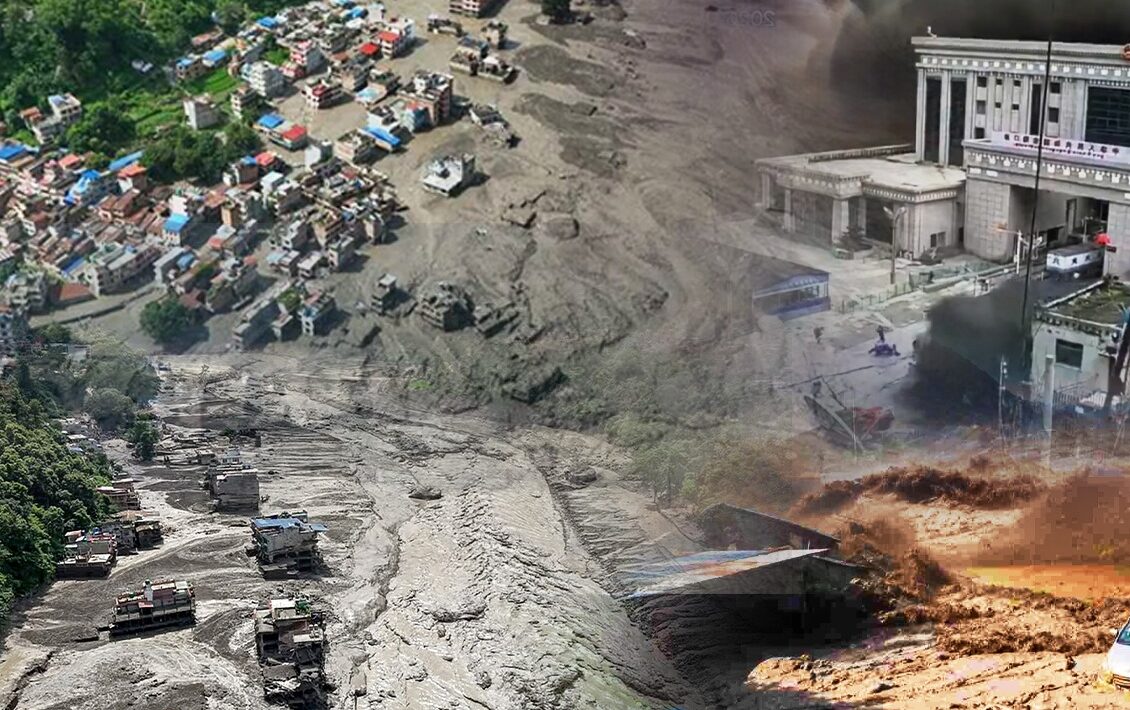
The morning of 26 August 2026 brought such a tragedy for Nepal, whose pictures and figures will continue to scare people for a long time. Bhotekoshi river in Rasuwa district bordering China suddenly became a flood of death. Within a few minutes, the flow of water became so strong that people did not get time to recover, come out of their homes and protect their families.
Within no time, roads disappeared, vehicles were washed away in water and there was hue and cry in many settlements. The death toll from this accident has crossed 150. So there is an alert in many districts of Uttar Pradesh and Bihar of India, that is, anything can happen in the area around the river at any time, while the Chief Ministers of both the states are keeping an eye on it. With this, let us know the sequence of events of the entire disaster and what has happened till now.
- The whole picture changed in a few minutes- On the morning of 26th August, the water level of Bhotekoshi river in Rasuwa district suddenly increased. The strong current that arrived around 9 o’clock local time did not even give people a chance to recover. Within no time, roads, vehicles and many structures were submerged in water.
- How much has the death toll reached so far in Nepal flood disaster? According to Nepal’s Prime Minister Balen Shah, 98 people have died so far in this horrific flood incident. So according to some reports the death toll has crossed 150. According to Nepal Tourism Board, 403 people are still missing. Of these, 62 are said to be Nepalese and 341 are foreign nationals.
- 133 Indians among missing foreign nationals- Among the 403 missing people, 133 Indian citizens are also said to be included. After this news, the concern of those families in India has also increased, whose relatives were present in Nepal and now they are not able to contact them.
- Suddenly water came from Tibet region of China- Rasuwa is adjacent to the Tibet region of China. According to initial details of the officials, a sudden strong flow of water from Tibet side came towards Nepal and caused havoc in Bhotekoshi river. China’s official media CCTV has also given information about the damage in Tibet.
- Bhotekoshi became a stream of destruction- In Timure and Syafrubesi areas, water showed its effect very quickly. Houses, vehicles and other structures present on the banks of the river were hit by it. Road and connectivity systems were affected at many places, due to which relief teams also had to face difficulties.
- Fear of earthquake and avalanche- Nepal’s Foreign Minister Shishir Khanal told the House of Representatives that the avalanche along with the earthquake could be a possible reason behind the disaster in Rasuwa. However, the final scientific reason for the incident is not yet clear. It is necessary to investigate other possibilities including breaking of the glacial lake.
- The impact of flood increased further- The water of Bhotekoshi river further moved towards Trishuli river basin. Due to this, caution was issued for many areas including Nuwakot, Dhading, Gorkha and Chitwan. People living on the river banks were advised to move to safe places.
- Nepal deployed army and police- Prime Minister Balen Shah called an emergency meeting and reviewed the situation. Nepal Government has deployed Nepal Army, Armed Police Force and Nepal Police in relief and rescue operations. Helicopters have also been sent to the affected areas.
- India sent 10 tons of relief material- India has sent 10 tons of humanitarian aid, disaster relief material and essential medicines to help Nepal. Foreign Minister S. Expressing condolences to the families of the deceased, Jaishankar said that India stands with Nepal in this hour of crisis. At the same time, a group of 36 members who went from Kerala to Nepal is said to be safe.
- How is the situation in Nepal at present? On the latest situation in the flood affected areas, Rashtriya Swatantra Party (RSP) spokesperson Jagdish Kharel said that Nepal is going through a very painful situation at this time. He claimed that the sudden flood caused by the bursting of the glacial lake from Tibet has caused massive damage to life and property in Nepal. He said that more than six districts including Rasuwa, Nuwakot, Gorkha, Dhading and Chitwan have been badly affected. Most of the infrastructure present on the river banks has been damaged. Search, rescue and relief operations are being carried out rapidly under the leadership of the government and all related mechanisms have been sent to the affected areas and engaged in relief work.