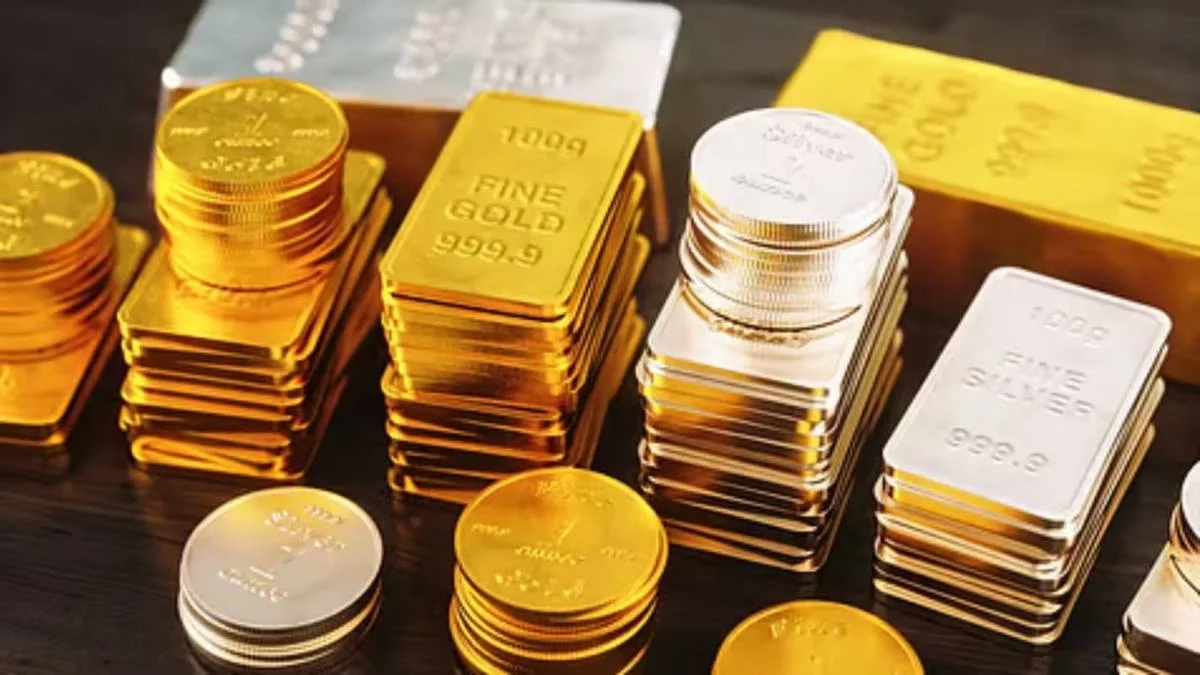
Business Desk- Gold Import GST Rule: The demand for gold and silver in India remains strong. They are consumed extensively especially in the jewelery industry. But import of precious metals in large quantities from abroad is also a matter of concern for the government.
Now a big change related to the import of gold, silver and platinum can come to the fore. The GST Council may consider a proposal to end the GST exemption given to banks and some designated agencies.
If this proposal is approved, banks and designated agencies will also have to pay 3% IGST on importing gold, silver and platinum. Its effect may be visible in future on Precious Metals Price and domestic Bullion Market.
Why do banks get GST exemption now?
Currently, 3% IGST is levied on import of gold, silver and platinum in India. However, banks and some designated agencies appointed by the government are exempted from this tax on import of these metals.
This system was implemented in the year 2017. At that time precious metals were imported only through select routes. The objective of the government at that time was to make business easier and keep the import process organized.
Now the market situation has changed. For this reason, the government is reviewing this old system and a proposal has come forward to end the GST exemption given to banks and designated agencies.
Discussion may take place in GST Council on October 7
This proposal can be discussed in the GST Council meeting to be held on October 7. The GST Council consists of finance ministers of the Center and states.
If the Council decides to withdraw the GST exemption, banks and designated agencies will also have to pay 3% IGST while importing gold, silver and platinum.
This change will also reduce the existing difference in tax matters between banks and bullion exchanges.
Why is the government strict on gold import?
India is the second largest gold consumer in the world after China. The major demand for gold coming into the country comes from the Jewelery Industry. Apart from this, people also buy gold for investment.
But excessive import of gold and other precious metals puts pressure on the country’s foreign currency. This is why the government has already taken several steps to control imports.
In May, the government had increased the import duty on gold and silver from 6% to 15%. Whereas the import duty on Platinum was increased from 6.4% to 15.4%.
How expensive can gold be for common people?
Now the biggest question is that if the GST Council ends the 3% IGST exemption, will it affect the common customer or not.
According to some experts, after the end of the exemption, the cost of gold coming in the domestic market may increase. This is likely to have a direct impact on the gold price and an increase of up to 3% may be seen.
However, the final impact will depend on how much of the additional cost of the tax is borne by importers, traders and consumers. Therefore, this cannot be seen as a definite 3% increase in the price of gold right now.
At present, everyone’s eyes are on the GST Council Meeting of 7th October. The decision of the Council will make it clear whether the old GST exemption given to banks and designated agencies continues or they will also have to pay 3% IGST on Gold, Silver and Platinum Import.