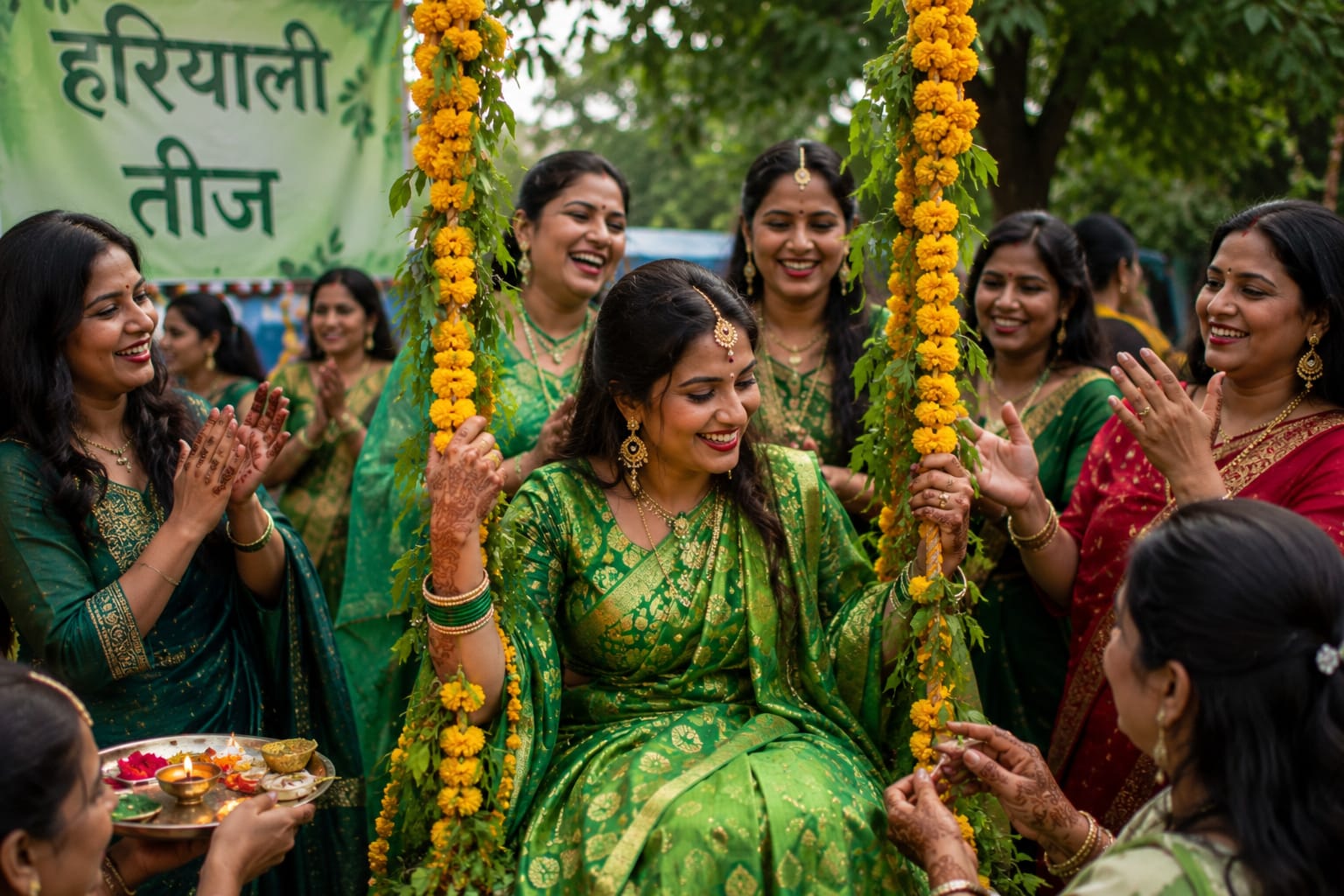
Hariyali Teej is one of the most prominent and joyous festivals of the month of Shravan. It is primarily celebrated by women on the third day of the bright fortnight of the month of Shravan. Celebrated amidst lush greenery, drizzling rain, and the beauty of nature, this festival symbolizes love, devotion, and eternal good fortune. Married women observe a fast on this day, praying for their husbands’ long life, a happy married life, and the well-being of their families.
Unmarried women fast and worship with the hope of finding a suitable life partner like Lord Shiva. On Hariyali Teej, Lord Shiva and Goddess Parvati are worshipped with rituals. Women also swing on swings, sing traditional Sawan songs and Malhar, and enjoy the festival with great enthusiasm.
Celebration of the divine union of Shiva and Parvati
According to religious beliefs, Hariyali Teej is celebrated to commemorate the sacred union of Lord Shiva and Goddess Parvati. According to mythology, Goddess Parvati performed rigorous penance for many years to obtain Lord Shiva as her husband. Pleased with her unwavering devotion and arduous practice, Lord Shiva accepted her as his better half on the third day of the bright fortnight of Shravan. For this reason, Hariyali Teej is considered a symbol of eternal good fortune, love, and an unbreakable marital bond. This festival also conveys the message of strengthening trust, dedication, and mutual respect between husband and wife.
Tradition of Hariyali Teej
The festival of Hariyali Teej is deeply rooted in Indian folk culture and traditions. On this day, women wear green clothes, green bangles, apply mehendi on their hands, and adorn themselves with sixteen adornments to seek the blessings of Goddess Parvati. Swings are hung from trees in villages and cities, where women and young girls swing with their friends and sing traditional songs of the month of Sawan. This festival is considered not only a symbol of religious faith but also of social harmony and family affection.
The tradition of Sinjara
The tradition of sending Sinjara to newly married women on Hariyali Teej holds special significance. After marriage, the daughter is called back to her parents’ home during the first month of Sawan. The in-laws send Sinjara, consisting of clothes, jewelry, cosmetics, henna, bangles, Ghevar, Phani, and other sweets. This tradition is considered a symbol of affection and respect for the daughter.