
Arvind Jayatilak
Author
The exposure of health risks related to arsenic and chromium in groundwater in many areas of the country is very scary and worrying. This has been revealed by the facts of the recently published Indian Medical Journal. In this medical journal review of 63 studies analyzed, the risk of cancer regarding arsenic has emerged as the biggest concern.
The study estimated that 49 percent of adults and 60 percent of children from drinking water containing arsenic were likely to have other potentially non-cancerous health risks. Children are also at risk from skin contact with contaminated water. In studies assessing cancer risk, 72 percent of adults and 69 percent of children exposed to arsenic found the risk through drinking water exceeded the prescribed limit.
In the case of chromium, this figure was 50 percent in adults and 56 percent in children. Also worrying is the fact that groundwater has been found to have higher non-cancerous health risks than surface water. Talking about the states of the country, the risk of arsenic has increased in many areas including Punjab, Haryana, Delhi, West Bengal, Bihar and Jammu and Kashmir. In many districts of Punjab, the risk of cancer due to arsenic contaminated ground water is more than the prescribed limit. If you notice, this is not the first time that the dangers arising from contaminated groundwater have been revealed.
According to the report, Delhi's drinking water samples did not meet any of the 19 criteria. If we look closely, the situation in most of the states of the country is more or less similar. Researchers from Duke University of America have already claimed that the amount of harmful uranium in India's groundwater exceeds the World Health Organization standards. This research was published in the journal 'Environmental Science and Technology Letters', in which it was claimed that there was dangerous level of uranium in the groundwater of 16 states of India.
The World Health Organization has considered 30 micrograms of uranium per liter of drinking water as safe for India, while the amount of uranium in India's groundwater is much higher. Last year itself, the science magazine Nature Geoscience had also revealed that approximately 60 percent of the groundwater in the plains of the Indus and Ganga rivers has been contaminated. The situation is such that at some places the groundwater has become more saline than the limit, and at some places the amount of arsenic in it has reached dangerous levels.
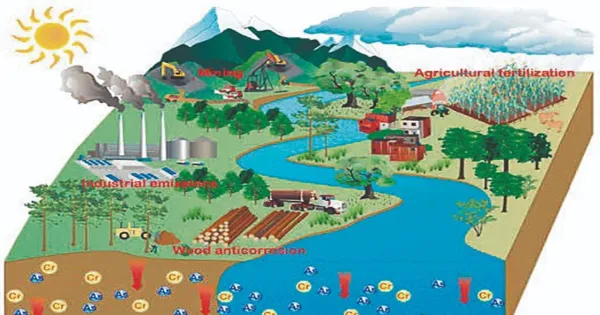
The data states that a large part of the groundwater present at a depth of 200 meters has been contaminated, while 23 percent of the groundwater has become highly saline. The amount of arsenic in 37 percent groundwater has reached dangerous levels. Arsenic is a poisonous element, which is naturally found in groundwater, but due to excessive mining and use of fertilizers, the amount of arsenic in groundwater is continuously increasing. Due to its use, one has to face problems like diarrhea, vomiting, bloody vomit, blood in urine, hair fall and stomach ache. Also, lungs, skin, kidney and liver are affected by it.
Dangerous disease-causing organisms are found in contaminated groundwater, which adversely affects health. Viruses found in contaminated groundwater cause diseases like jaundice, polio, gastroenteritis and smallpox, while bacteria cause diarrhoea, dysentery, intermittent fever, cholera, gonorrhea and tuberculosis. Apart from arsenic, the amount of cadmium, lead, mercury, nickel and silver also increases in contaminated groundwater, which proves to be extremely dangerous for health.
Excess of iron, manganese, calcium, barium, boron and other salts like nitrate, sulphate, borate and carbonate etc. in contaminated groundwater also has adverse effects on human health. According to statistics, every eight seconds a child is dying due to consumption of contaminated groundwater. Every year more than five million people are dying due to consumption of contaminated groundwater. It has to be understood that groundwater is an important source of water supply, which should be properly utilized and conserved.
The total annual replenishable groundwater resources in the country is 433 cubic km. Accepting 34 BCM of water for natural seepage, the net annual groundwater availability value for the entire country is 399 BCM. The annual groundwater value is 231 BCM, of which 213 BCM is for irrigation use and 18 BCM is for domestic and industrial use. Apart from drinking water, groundwater also proves helpful in maintaining moisture in the earth. The plants and crops growing on earth are also nourished by this water. It is also important to know here that compared to other countries, the annual consumption of fresh and clean water in India is more.
Various measures have been taken from time to time to effectively implement water conservation and management programs in the country. The Central Water Commission was formed in 1945, which, in collaboration with the states, carries out the development, control, conservation and coordination of water resources throughout the country. The Central Ground Water Board was formed in 1970.
National Water Board was formed in 1980 and Advisory Council for Artificial Recharge of Ground Water was formed in 2006. National Water Policy was prepared in 2012 under which it was ensured that there will be direct use of rainfall to increase water availability and efforts will be made to reduce unavoidable evapotranspiration. (These are the personal views of the author)