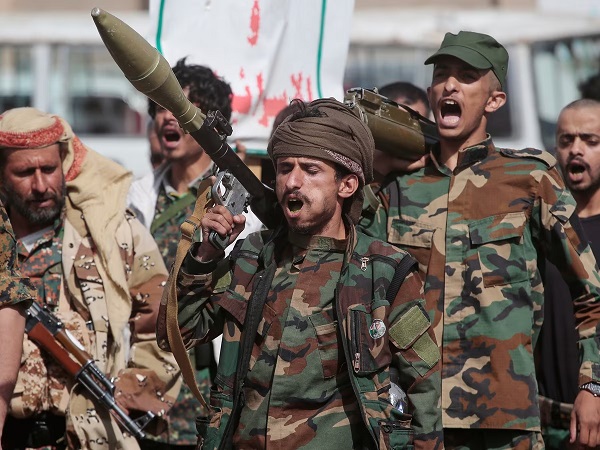
New Delhi. The military strength of Yemen's Houthi rebels has increased rapidly in the last decade. According to the assessment of United Nations experts, the number of Houthi fighters was about 30 thousand in 2015, which increased to about 2.2 lakh in 2022 and to about 3.5 lakh in 2024. However, this number cannot be considered as a completely verified standing army strength. UN experts also did not independently verify the new recruitment figures.
Therefore, it would not be correct to see the increase from 30 thousand to 3.5 lakh as a story of direct recruitment only. This may include regular fighters, local and tribal supporters, reserve forces and wider military mobilization networks. In the analyses, many reasons have been cited for the strength of the Houthis, such as control over a large part of Yemen, the ongoing war for years, local political networks, ideological mobilization, recruitment campaigns started after the Gaza war and military assistance from Iran.
The organization became stronger after the capture of Sana.
The Houthi movement captured the capital Sanaa in 2014 and established control over large parts of northwestern Yemen. After this, his hold on the administration, local institutions and social networks in the areas under his control became stronger. This system later became the basis for youth outreach and military mobilization.
The long-running political and military conflict in Yemen also gave the Houthis the opportunity to continuously mobilize people in their sphere of influence. During the war the organization presented itself as a movement fighting against foreign intervention.
War against Saudi Arabia became the basis of recruitment
After the Saudi Arabia-led military intervention began in 2015, the Houthis publicized airstrikes and military actions as foreign invasion. The prolonged struggle gave the organization a strong narrative to mobilize its supporters.
Even after a ceasefire between the US and the Houthis in 2025, the organization focused on reorganizing its military structure and increasing recruitment. According to analysis by the Middle East Institute, the narrative of 'victory in the resistance' against the US was used to promote internal mobilization and recruitment.
'Al-Aqsa Flood' campaign intensified after Gaza war
The Houthis linked their campaign to support for Palestine and Gaza after the Israel-Hamas war began in October 2023. During this period, the organization conducted a military training and recruitment campaign named 'Al-Aqsa Flood'.
Citing United Nations assessments, the Middle East Institute said the number of Houthi fighters would increase from around 2.2 lakh in 2022 to 3.5 lakh in 2024. This increase has been linked to the emotional and political atmosphere created by the 'Al-Aqsa Flood' recruitment campaign and the Gaza War.
According to the report of Yemen Center for Strategic Studies, tribal leaders and local communities also played a role in these training campaigns. Thousands of people participated in such training programs in the initial phase.
Allegations of forced recruitment also
The Houthis' growing military strength does not just involve voluntary recruitment. UN experts have also noted reports of child recruitment and forced integration of foreign migrants. The UN report said several thousand people, including children, were reported to have been recruited into Houthi forces after November 2023. However, experts had not independently verified the total number of new recruitment figures of 3.5 lakh.
According to analysts, for this reason it is more appropriate to see the figure of 3.5 lakh as a comprehensive militarized system of Houthis, and not to consider every person equally as a regular soldier deployed on the active front.
Military capability increased with the help of Iran
Iran's role in increasing the power of Houthis is also considered important. According to UN experts and other analyses, the Houthis have received arms, training, technical assistance and intelligence support from Iran and other allies in the region. This significantly increased the missile and drone capabilities of the organization.
According to the Middle East Institute, there is information about receiving parts and technical assistance related to missile and drone systems from Iran. The Houthis assemble parts of these systems in Yemen.
However, Iranian aid was primarily directed at the Houthis. firepower It is seen by adding to increase. Local power, economic control, social networks, ideological propaganda and years of war are also important factors behind the mobilization of a large number of fighters. Therefore, viewing the Houthis only as an Iran-controlled organization does not tell the full picture of Yemen's local politics.
Benefit was also gained from the division of opposing groups
Yemen's pro-government forces, southern separatists and various tribal and militia groups opposing the Houthis did not remain united for long. The groups supported by Saudi Arabia and the UAE have their own interests. There have also been differences of opinion regarding separatism and national unity in South Yemen.
This fragmentation gave the Houthis an opportunity to strengthen their military infrastructure and mobilize new recruits in areas under their control. Recent analyzes have also cited the inconsistency of the pro-government camp as a reason for the growth of the Houthis.
Essence of the story of 30 thousand to 3.5 lakh
Thus, it is difficult to understand the Houthis' current strength solely from sudden large-scale recruitment. Control of Sanaa and large parts of north-western Yemen, years of war, a narrative of resistance against Saudi and Western intervention, the 'Al-Aqsa Flood' campaign after the Gaza war, local military training, alleged forced recruitment and military-technical assistance from Iran have combined to transform the Houthis into a large military network.
The figure of 3.5 lakh is an important estimate, but it would not be appropriate to consider it as the number of a fully verified active standing army. UN experts themselves said the new recruitment figures were not independently verified.