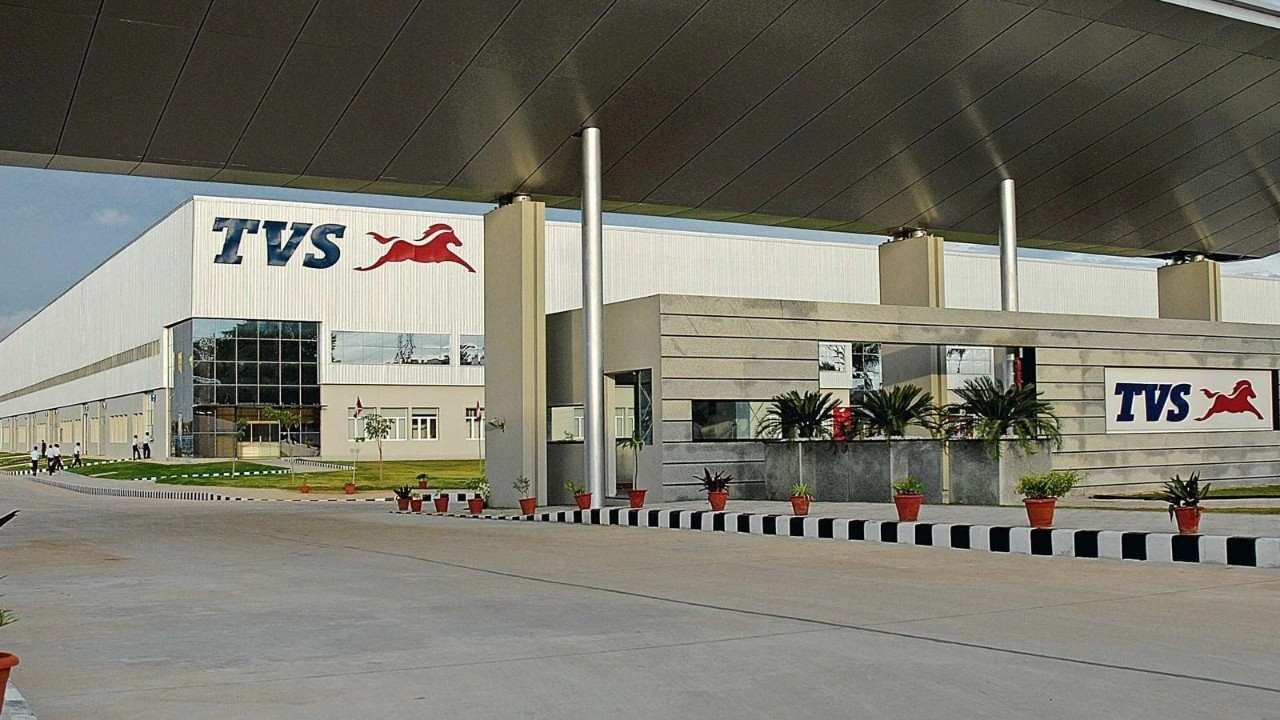
Whenever we hear the name of the Managing Director (MD) or CEO of a big company, we often assume that he will also be the biggest owner of the company. You should know that the corporate world doesn't work like this. Having the responsibility of running a company and having rights over the company's shares are two different things. Differences have deepened within the Srinivasan family of TVS Group over the ongoing division of family assets and business.
To understand this in simple words, even if a family member does not get a position in the company, his shareholding does not automatically get lost. Recently, the controversy related to TVS family and the report of corporate governance firm InGovern have again brought this difference into the limelight.
Also read: Silver became expensive by 87% in 2 years on Dhanteras, how much did the prices increase in 10 years?
Ownership, Control and Management
To understand the structure of any company, it is most important to understand the difference between these three words. Ownership rights in a company are determined by how many shares the company holds. The number of shares held by a person, family or trust will have the same economic interest in the company.
Control means who has influence over major decisions of the company. Such as appointment of the board of directors or strategic decisions. This is decided not only by the number of shares but also by voting rights and agreements. Management means handling day-to-day operations. This work is done by CEO, MD and senior officers.
Let us understand this with an example. Suppose in a company, A holds 40% shares and B holds 20% shares while C has been made the MD of the company. Here A and B are the owners i.e. shareholders of the company while C is only running the company. C has management responsibility but this does not mean that he is the largest shareholder. Similarly, just because A holds the majority of shares does not mean that it will have direct interference in day-to-day decisions.
Understand from the case of TVS
To understand the TVS case, one has to look at the structures of two different companies. Like TVS Holdings is the main company. Similarly, TVS Motor Company is a vehicle manufacturing operating company. A major stake in TVS Motor is held through TVS Holdings. As per September 2026 data, the total promoter stake in TVS Holdings is 74.45%. In this, VS Trust has the largest stake of 66.55%.
Venu Srinivasan is the trustee of this trust. It is important to keep in mind here that having shares in the name of a trust, being a trustee of a trust and being a beneficiary of a trust are three different things. The trust's shareholding cannot be directly termed as personal shareholding of Venu Srinivasan. In April 2025, Venu Srinivasan transferred 6.79% shares of TVS Holdings to the trust. Meanwhile, Sudarshan Venu was given 'Significant Beneficial Owner' (SBO) through the trust but this does not mean that 66.55% shares came directly in his name. SBO and legal ownership are different things.
Also read: Stock market made a huge jump, bank-IT shares rose; Know the price of gold and silver
Management achieved through corporate process
Sudarshan Venu got the responsibility of TVS not just through a family decision but through a fixed corporate process. Shareholders approved appointing him as MD for 5 years through postal ballot (97.05% votes) on 20 October 2023. After the approval of the Board, he took over the post of Chairman and MD from 25 August 2025.
If Lakshmi Venu is not on the board of TVS Motor, it does not mean that she is out of business. She is the Vice Chairperson of TAFE (Tractors and Farm Equipment Limited) and the MD of Sundaram-Clayton Limited. Does ownership cease when management leaves the office?
The direct answer to this is no. If a person holds 10% shares of the company. He is also the MD of the company and later the board removes him from the post of MD, then his responsibility for day-to-day work will end but 10% of his shares will remain with him. Shareholding remains in place until the shares are legally transferred. Similarly, just by becoming MD one does not automatically get shares in the company.
What was said in the InGovern report?
Corporate governance research firm InGovern released a report on the TVS family controversy on 1 November 2026. The report said that an MoU was signed between the family members (Venu Srinivasan, Mallika Srinivasan, Lakshmi Venu and Sudarshan Venu) on March 21, 2024. This information was given to the stock exchange on 22 March 2024. Detailed terms were not disclosed to the exchange. Therefore, it does not automatically prove that the final distribution of property or economic interests has taken place. Sudarshan Venu's managerial appointments have been made through a formal process, but this does not automatically resolve the family dispute over distribution of property.
Also read: Cyber attack on Binance crypto exchange, fear of theft of Rs 50,000 crore
It is worth noting that the firm clarified that it has not examined the MoU nor is it giving a legal decision on the claim of any party. According to him, mere increase in the valuation of the business does not constitute a ground for reopening a former family agreement, unless the terms of the agreement or the law permit it. We have to understand that when a company is listed in the stock market, the internal dispute of the promoter family is not just their personal matter. This may impact the company's governance, decisions and the interests of small investors.