Aircraft engines come in a number of types and sizes. Because their operating principles differ so broadly, comparing their hour counts directly would be misleading. Perhaps the simplest way to express engine hour limits is to group aircraft powerplants into three categories: small piston engines, turboprops, and commercial turbofans.
The four-and six-cylinder piston engines found on small, single-engine aircraft commonly have TBO figures in the 1,200-to-2,400-hour range. As a rule of thumb, around 2,000 hours has traditionally been their high-time milestone. Notably, for this class of engine, calendar age is considered just as important as flight hours. These engines often sit unused for long stretches, which keeps their hours low but doesn’t stop corrosion and material degradation over time.
Larger turboprops, by contrast, typically have TBO intervals of roughly 3,000 hours, and some can be extended to as much as 6,000 hours, depending on the model and maintenance program. These engines are the workhorses of short-to medium-range civil and tactical military aviation, and like all turbine engines, they are constrained by life-limited parts, or LLPs. Components like turbine disks, compressor disks, and hubs weaken with repeated use. Therefore, each one has a mandatory maximum lifespan, usually measured in cycles. Once a part hits that limit, it must be permanently retired and scrapped, regardless of its physical condition.
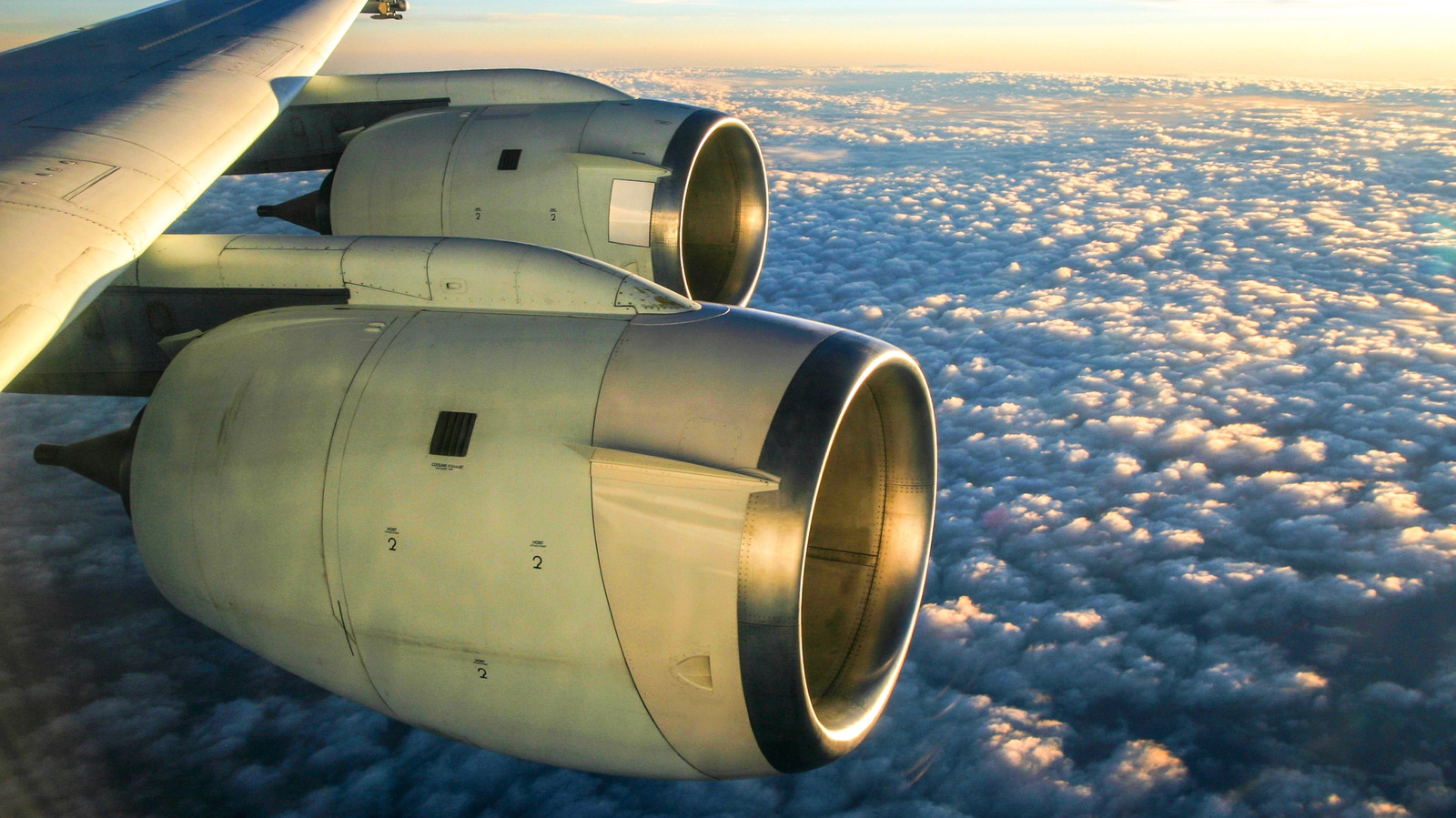
Finally, there are commercial jet engines. Built for consistent use and a long (and profitable) life, large turbofans may tick up a total number of life hours as high as 150,000. Rather than following a fixed TBO, they are maintained based on condition, and they tend to undergo a Ship of Theseus-level shop visit around every 20,000 to 30,000 hours. What’s notable about this type is that both engine flight hours and flight cycles are tracked, with LLP limits based on cycles. A flight cycle is one takeoff and one landing, and each one subjects the engine to significant thermal and mechanical stress.