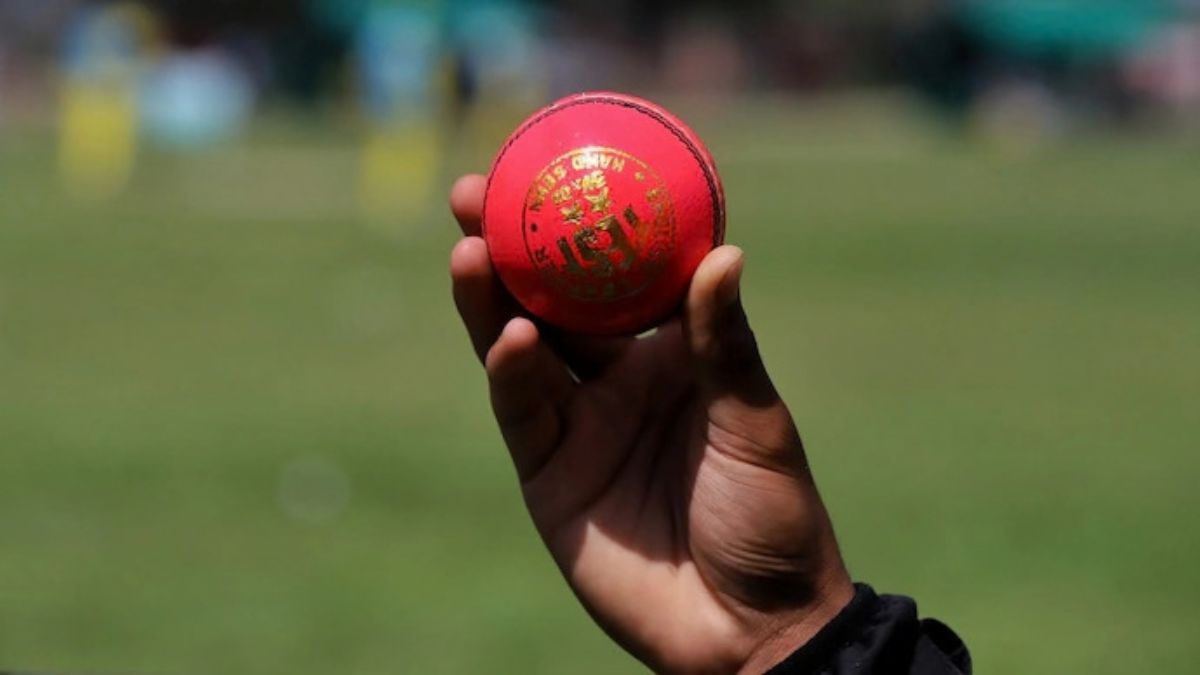
The International Cricket Council (ICC) has introduced a number of changes to the playing conditions for international cricket, which will come into effect for matches starting on or after October 1. Included among the changes are a trial of using a pink ball in day Test matches to help limit the amount of play lost due to poor light.
The ICC has also introduced stricter penalties for batters wasting time between deliveries in men's cricket, with multiple violations ultimately resulting in five penalty runs being awarded to the batting side.
ICC introduces pink-ball trial for daytime Tests
Teams are now able to agree to use a pink ball in a daytime Test if they feel it could help reduce interruptions from poor light, with both teams needing to agree.
Once the decision has been made, the ball color can't be changed during the Test. In other words, you wouldn't be able to change a red ball for a pink ball halfway through the match.
The trial is aimed at addressing the huge amount of playing time lost due to bad light, which has frequently affected Test matches, particularly in the late afternoon.
Batters will be handed stricter penalties for time-wasting. The ICC has also tightened up the rules around batters wasting time by taking too long to be ready for the next delivery.
A batter who hasn't been ready in the prescribed time will be warned for the first offense, then receive a final warning for the second. A third offense (and any subsequent offences) will result in five penalty runs for the fielding team. Repeated time-wasting could also result in more disciplinary action under the ICC Code of Conduct.
It caused huge controversy in the 2025 Lord's Test between India and England. India captain Shubman Gill had accused his opposite number, Zak Crawley, of deliberately confronting him after Crawley and Ben Duckett arrived late at the crease in an attempt to see out the final over of the day.
ICC introduces new ball specifications for women's cricket
The ICC has introduced tighter specifications governing the size and weight of balls used in women's international cricket.
Three separate sets of specifications will now apply to men's, women's and junior cricket. Previously, manufacturers have often produced one ball specification for use in women's and junior cricket.
ICC clarifies overthrow and 'ball finally settled' rules
The governing body has also sought to clarify what an overthrow involves.
Under the new interpretation, an overthrow will involve an attempt to direct the ball towards the stumps to prevent runs or complete a run-out. A misfield, whether a fielder is attempting to stop the ball or pass it to another fielder, will not be classified as an overthrow.
The ICC has also revised its interpretation of when a ball is “finally settled”. The ball doesn't necessarily need to be in the hands of the bowler or the wicketkeeper for it to be considered settled.
For run-outs and stumpings, meanwhile, fielders must have complete control of the ball – simply contacting the ball with a hand while breaking the stumps will not be enough.
The final over of the day can now be completed. Another big change relates to the final over of the day's play in Test cricket.
A wicket during the final over will no longer bring play to an end if the over hasn't been completed, and the remaining deliveries will now be bowled on the same day, provided the weather and playing conditions permit.
The ICC said the change is intended to prevent the waste of time, as the pitches often have to be re-laid at the end of the innings.
Also read: India Cricket Schedule October 2026: Asian Games Final, West Indies T20Is and New Zealand Tour
T20Is will now have a fixed 15-minute interval between innings, although this can be reduced to a minimum of 10 minutes if playing time has been lost.
The ODI and T20I playing conditions have also been aligned so that the head coach, or a designated member of the coaching staff, is allowed to enter the field during the drinks intervals.
Meanwhile, the trial concerning leg-side wides has now been made a permanent part of the ODI and T20I playing conditions.
The new playing conditions apply to international series beginning on or after October 1. Series that were already underway before the changes came into effect will continue to be played under the previous regulations.