Opposition seeks President’s intervention
A delegation of Opposition leaders proceeded to Rashtrapati Bhavan to submit their concerns, while other INDIA bloc MPs staged a sit-in at Vijay Chowk after police stopped their march. The Opposition has accused the Election Commission of India (ECI) of failing to address concerns over the Special Intensive Revision (SIR) of electoral rolls.
The leaders called for Kumar’s removal, suspension of the SIR exercise and restoration of 13.8 crore names that they claimed had been deleted from electoral rolls. They also demanded a return to ballot paper-based elections and the repeal of a legal provision granting immunity to the Chief Election Commissioner and other election commissioners for certain acts performed in office.
The Opposition has argued that the revision process could affect eligible voters’ ability to exercise their franchise. The Election Commission, however, has maintained that the exercise follows established legal procedures.
Election Commission cites electoral roll verification
The ECI has said that 13.39 crore electors were flagged under categories including absent, shifted, dead and duplicate during the electoral roll revision process. These classifications are part of the verification exercise, and the figures do not by themselves establish that all the names were deleted improperly.
The Opposition has questioned the transparency and implementation of the process, demanding explanations over the treatment of voters whose names were flagged. The dispute has intensified political tensions between the ruling establishment and opposition parties over the management of electoral rolls.
Opposition raises concerns over election commissioners’ objections
The Opposition has also cited an Indian Express report claiming that Election Commissioners Sukhbir Singh Sandhu and Vivek Joshi raised objections at least 14 times during the preceding 10 months, with most of the reported objections relating to the SIR exercise.
The report has added to the Opposition’s demand for greater scrutiny of the Election Commission’s decisions. However, the reported objections and the Opposition’s allegations remain separate from any formal finding that the electoral process was conducted unlawfully.
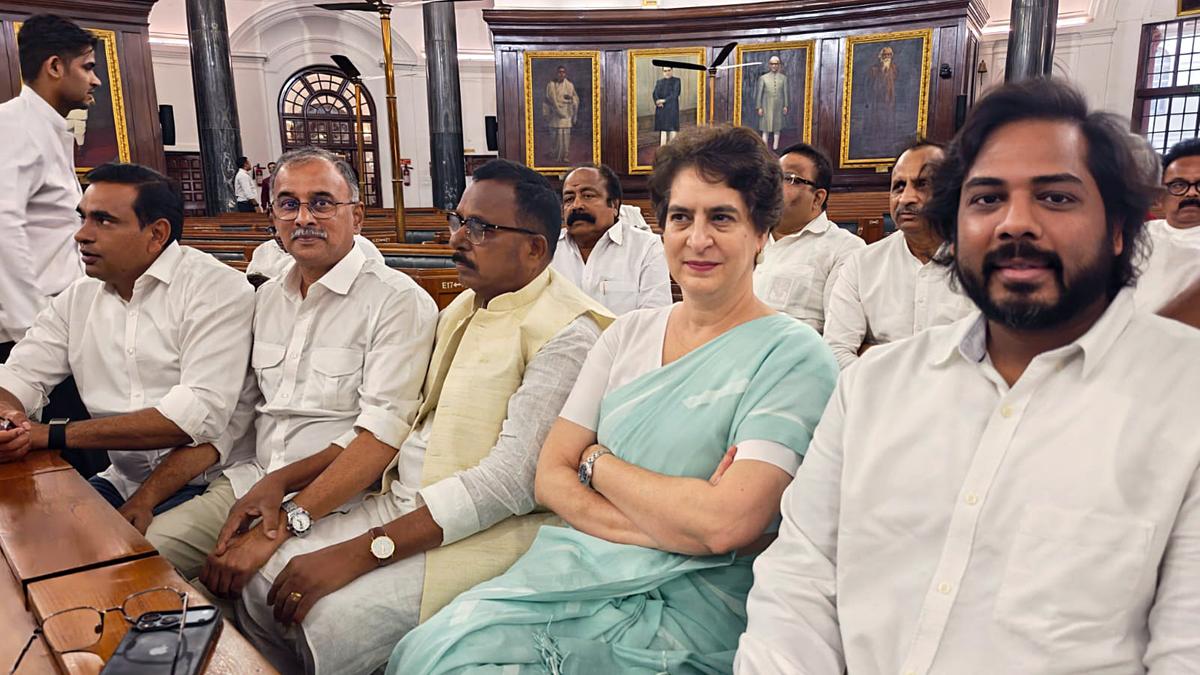
Congress leader Rahul Gandhi also referred to Jawaharlal Nehru’s 1947 speech in the Central Hall during the protest-related proceedings. Congress president Mallikarjun Kharge criticized the restrictions surrounding the demonstration and alleged that the government was afraid of the opposition’s campaign.
Protest restrictions and legal challenges
The protest took place amid restrictions on movement and public gatherings in parts of central Delhi. Police stopped the march at Vijay Chowk, while restrictions on transport services and the cancellation of trains were also cited by Opposition leaders as obstacles to their demonstration.
The Indian Youth Congress has separately approached the Delhi High Court over the police’s refusal to permit a peaceful assembly at designated locations. The court listed the matter for October 12.
Why the dispute matters
The confrontation centers on the independence of the Election Commission, the transparency of electoral roll revisions and the safeguards available to eligible voters. Electoral rolls determine who can participate in elections, making the accuracy of voter lists and the procedures used to revise them important to public confidence in the democratic process.
The Opposition’s demands place pressure on the Election Commission to explain its verification procedures and address concerns about potentially affected voters. The Commission’s position is that electoral roll revisions are carried out under the existing legal framework. The central question remains whether the concerns raised by political parties can be resolved through transparent verification, official explanations and the available legal mechanisms.rsonal opinions of readers and not that of Mathrubhumi.