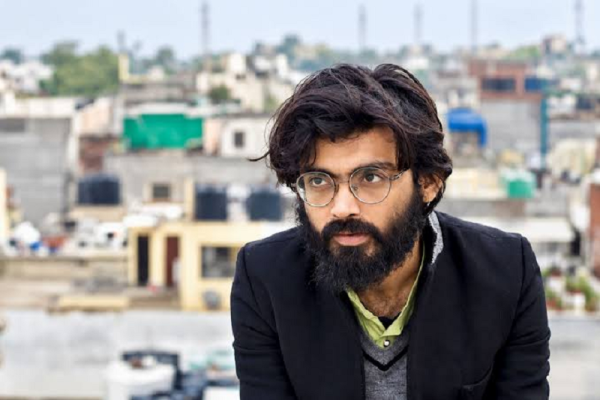
New Delhi . The remarks of a government commission of the United States regarding Sharjeel Imam have created a new controversy between India and America. The United States Commission on International Religious Freedom has described Sharjeel Imam as a person detained for advocating religious freedom. Expressing strong protest against this comment, India has made it clear that no foreign commission has the right to pass judgment on the constitutional rights of Indian citizens.
India's Ambassador to the US Vinay Mohan Kwatra described the commission's comments as biased, based on incomplete information and affected by prejudice. He said that such comments of the Commission cannot weaken India's constitutional commitment to religious freedom and equal rights to all religions. He also advised the Commission to consider its own biases instead of commenting on others.
The controversy started when USCIRF shared a post related to Sharjeel Imam on social media. In this, describing him as a Muslim man, it was said that he has been kept in custody because of advocating religious freedom in India. The Commission had also shared the link to his profile on its website. In response, the Indian Ambassador raised questions about the jurisdiction of the Commission and the impartiality of its assessment.
USCIRF was established under the International Religious Freedom Act of 1998. This is an independent and bipartisan commission of America, whose job is to assess the status of religious freedom in different countries. The Commission gives policy suggestions on this subject to the US President, Secretary of State and Congress. Its website also publishes profiles of individuals whom the Commission considers to be detained in cases related to religious freedom.
According to the commission's website, Sharjeel Imam was detained on 28 January 2020. USCIRF claims that his arrest was due to his advocacy of religious freedom in protest against the Citizenship Amendment Act (CAA). The Commission has described the protests of December 2019 and January 2020 as peaceful. However, his profile also mentions charge categories like criminal conspiracy, hate speech, murder, attempt to murder, terrorism and sedition against the Imam.
Sharjeel Imam is an alumnus and researcher of Jawaharlal Nehru University. There was controversy over some of his speeches during the anti-CAA protests in December 2019. Delhi Police alleges that an attempt was made to instigate people and create communal tension through his speeches. Cases were also registered against him over alleged statements related to the blockade of the Chicken Neck Corridor connecting Assam and Northeast India with the rest of the country.
After his arrest in January 2020, his name was also included in FIR number 59/2020 related to the alleged larger conspiracy in the riots in North-East Delhi in February 2020. 54 people were killed and a large number of people were injured in this violence. Police allege that the riots were planned under the guise of anti-CAA and NRC protests and Imam was playing an important role in it. A case is registered against him under many serious sections including UAPA. However, Imam has been denying these allegations and describes his speeches as part of democratic protests.
He has not got any relief even on the bail front. On January 5, 2026, the Supreme Court had rejected the bail pleas of Sharjeel Imam and Omar Khalid in the case of alleged conspiracy of Delhi riots. After this, on 30 September 2026, Delhi High Court also refused to grant relief. Imam challenged the High Court's decision in the Supreme Court on 5 November 2026. The issue of prolonged detention and delay in trial has been raised in his petition.
There have been differences of opinion between India and USCIRF in the past regarding religious freedom. The Commission has been expressing concern over the situation of minorities in India and issues like CAA, while India has rejected its assessments as biased. The latest comment on Sharjeel Imam has once again brought this old difference into discussion.