
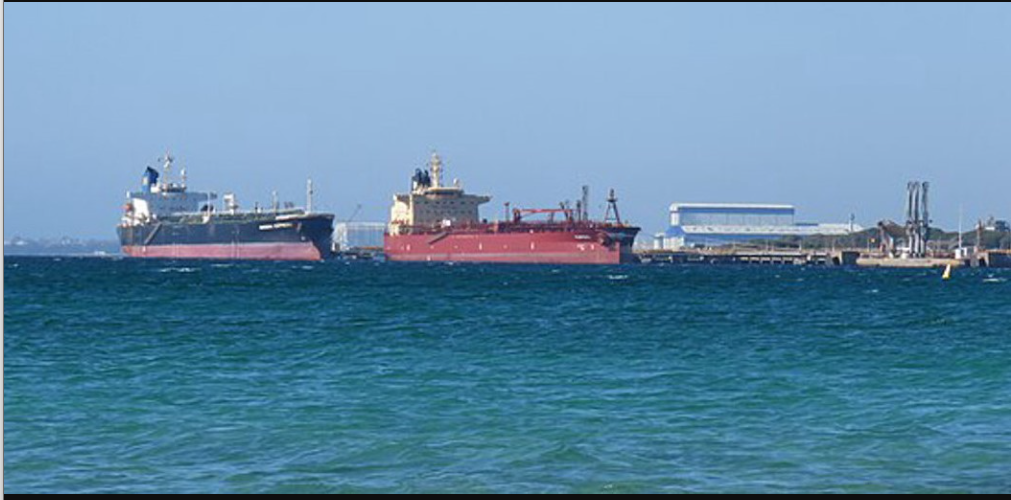

NEW DELHI, Apr 22: The Union government on Wednesday firmly dismissed reports suggesting that Indian vessels made payments, either in cash or crypto currency, to Iran to secure safe passage through the Strait of Hormuz.
Officials termed such claims as baseless amid heightened tensions in the strategically vital region. The clarification follows an incident on April 18, when two India-flagged vessels were forced to retreat after Iranian forces opened fire as they attempted to pass through the Strait of Hormuz. The development triggered concern within maritime circles and raised questions about safety in one of the world’s busiest energy shipment routes.
An audio clip that surfaced from the Indian tanker Sanmar Herald captured the captain urging Iranian forces to stop firing despite prior clearance. “This is motor vessel, Sanmar Herald. You gave me clearance to go, my name is second on your list… You are firing now. Let me turn back.”
Amid speculation linking the incident to a crypto currency scam, the government categorically denied any such connection. Reports had suggested that fraudsters were offering fake safe passage deals to ship-owners in exchange for crypto payments.
Mukesh Mangal, Additional Secretary in the Ministry of Ports, Shipping and Waterways, rejected these claims. “News is spreading about a reported payment by the captain of the vessel Sanmar Herald in US dollar to persons claiming to represent the Islamic Revolutionary Guard Corps (IRGC) Navy to grant passage, and fell victim to cyber criminals. We spoke with the owner of the vessel, and he confirmed that it is fake news and no such incident had happened,” he added.
He reiterated that there was no verified information indicating any payment by Indian vessels for safe passage. “As we have been telling in past also, we do not have any new data, any confirmation on any of our vessels has paid money to any of the authorities for this purpose,” Mangal added.
Chennai-based Sanmar Shipping also issued a statement rejecting the claims. “It has come to our attention that there have been reports on social media about Sanmar Shipping’s very large crude carrier, Sanmar Herald, flying the Indian flag, falling prey to a crypto currency scam. We would like to clarify that these reports are completely false,” the statement read. The company said it is working closely with Indian authorities to ensure safe navigation of its vessels.
Meanwhile, contrary to US President Donald Trump’s claim that America ‘totally controls’ the Strait of Hormuz and that the blockade strategy had been a ‘tremendous success,’ media reports claim that at least 34 tankers with links to Iran have transited past the US blockade. On April 13, the US imposed a blockade that was supposed to ‘completely halt’ economic trade going in and out of Iran by sea and those vessels carrying goods that could be used by Iran in the war against the US and Israel.
So far, only one container ship in the Gulf of Oman has been detained by US forces and one sanctioned tanker boarded in the Indo-Pacific. The US Central Command said on Tuesday that the American forces have “directed 28 vessels to turn around or return to port” since the start of the blockade.
Of the 34 ships that have circumvented the blockade, at least 19 are tankers linked to Iran that have exited the Gulf. The other 15 have entered the Gulf from the Arabian Sea, heading towards Iran.
Among the vessels that left, at least six were confirmed to be transporting Iranian crude oil, collectively carrying approximately 10.7 million barrels. Given that Iranian oil generally trades at a discount to Brent crude because of international sanctions, a conservative estimate of $10 per barrel below market price would place the total revenue from these shipments at roughly $910 million.
One of the vessels, Dorena, which is an Iranian-flagged supertanker, transited past the US blockade after turning off the transponder, which is a device that signals location and identity. According to Vortexa, which provides real-time data on global waterborne oil and gas movements, the laden vessel left Iranian waters on April 17, after which two other oil tankers sailed past on April 20.
The Dorena then engaged in a ship-to-ship transfer of oil with another sanctioned vessel off the coast of Malaysia to mask the origin of oil. Other sanctioned tankers have entered the Gulf from the Gulf of Oman, such as Murlikishan and Alicia, which were sanctioned by the US last year. These two ships crossed the Strait of Hormuz on April 14 and sailed to the northern end of the Gulf.
(Rohit Kumar)

Comments are closed.