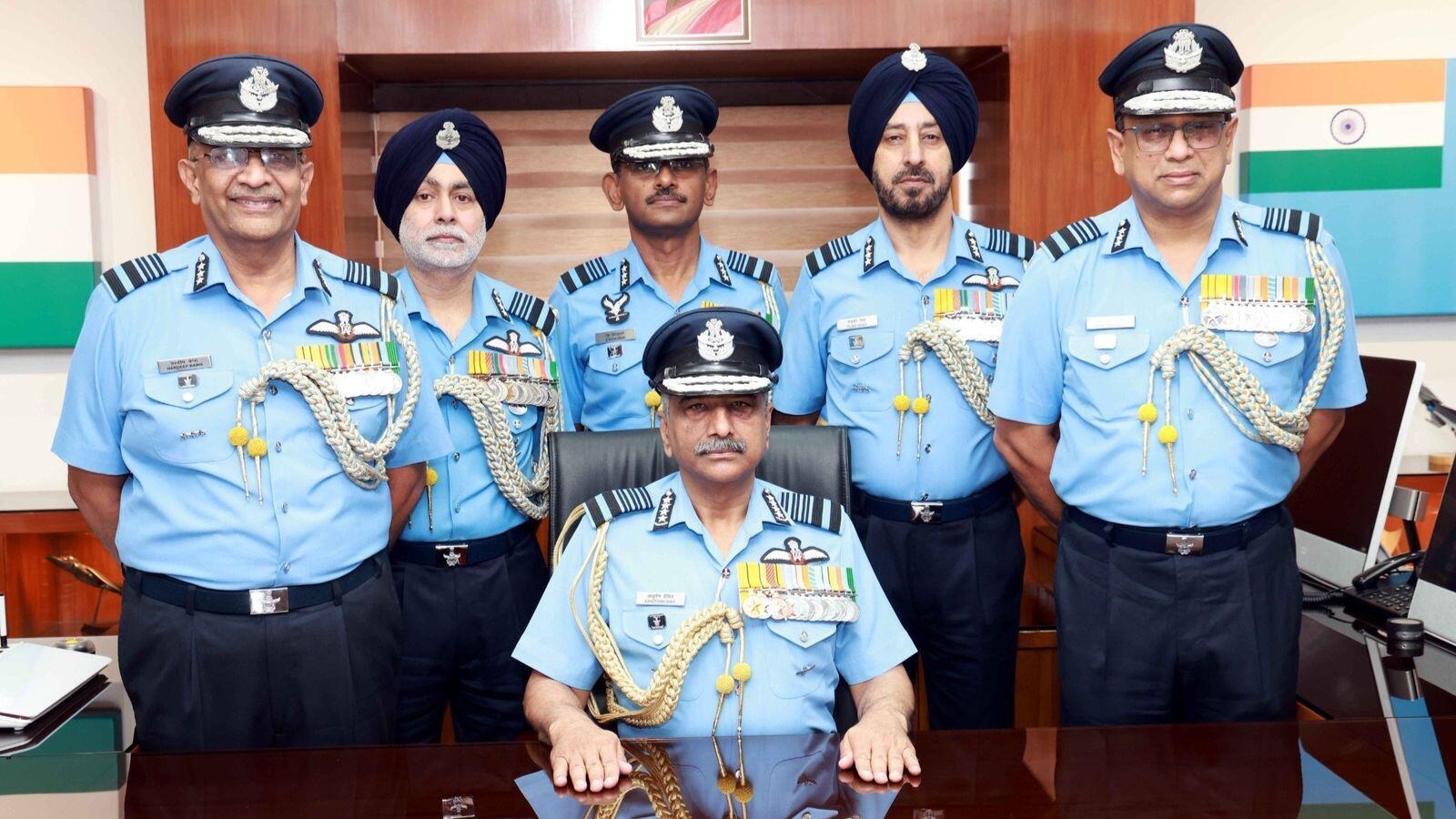
The Indian Air Force (IAF) has now moved beyond traditional warfare styles into a new era of modern warfare operations driven by space, drone technology and Artificial Intelligence (AI). Outlining the country's air defense priorities and strategic strategy, Air Chief Marshal Amar Preet Singh (AP Singh) has made it clear that future wars will not be limited to just the roar of fighter planes in the sky, but they will be won by the synergy of algorithms, unmanned systems and space-based assets. The Air Chief's 'VAYU' mantra presents a historic roadmap towards making the country's sovereignty impenetrable on every front. With this new vision, the Indian Air Force has given a clear message to the enemies that India is fully prepared and prepared to give a befitting reply to any new or traditional security challenge. New Air Chief Marshal's vision on future warfare and technology integration Today's global security situation and recent international conflicts have made it clear that the nature of war is changing overnight. Along with land and sky, now cyber and space have become the new battlefield. After assuming charge, Air Chief Marshal AP Singh has laid maximum emphasis on adapting the combat capability of the Air Force to modern needs. He believes that in the coming times, only that country will gain an edge whose Air Force will be at the forefront in the use of technology. The Indian Air Force is now integrating Autonomous Weapons, indigenous surveillance drones and AI-based intelligence processing into its core operations. Acquiring real-time data through satellites in space and transmitting it to attack platforms in seconds is the most important pillar of this strategy. This change is not just theoretical, but it is being implemented in every small and big base and operational setup of the Indian Air Force. What is Air Force Chief's VAYU mantra and modern strategy? To implement the future strategy of the Air Force in an easy and effective manner, work is being done on 'VAYU' framework. This mantra summarizes the restructuring and modern strategic thinking of the Indian Air Force: V – Vigilance: To maintain round-the-clock surveillance of India's borders through satellites, radar networks and drone surveillance, so that any unexpected activity can be detected across the border. A – Adaptability: Quickly updating your war policies in response to rapidly changing technology and new enemy techniques. Y – Yielding Power (Decisive Firepower): To develop the ability to completely neutralize enemy attacking targets in minimum time and by hitting targets accurately. U – Unmanned Integration (Integration of Drones and AI): Enabling swarm drones and AI systems to work together with manned combat aircraft. This four-point approach will not only strengthen the Air Force on the Indian Ocean and northern borders, but will also give India an upper hand in future multi-domain operations. India's new leap in drones, artificial intelligence and space warfare Along with conventional warships, unmanned aerial vehicles (UAVs) and combat drones are now dictating the tone of war. The Indian Air Force is developing advanced drone technology in collaboration with indigenous defense startups and DRDO under its 'Make in India' and 'Atmanirbhar Bharat' initiatives. AI is being used not only in flying planes but also in analyzing huge data, jamming enemy air defense systems and planning precision guided missile attacks. Along with this, the Indian Air Force, in collaboration with the Defense Space Agency (DSA), is moving rapidly towards securing its assets in space and providing direct benefits to fighter jets from real-time reconnaissance inputs from space. From anti-satellite capabilities to security of satellite communications, India is now empowering itself on every aspect of space warfare. The message of India's preparedness in the northern borders and Indo-Pacific region, this technological leap of the Indian Air Force is very important amidst the challenge of two-front threat with China and Pakistan. On the LAC from Ladakh to Arunachal Pradesh, the Indian Air Force has kept Rafale, Sukhoi-30 MKI, Tejas and S-400 air defense systems fully ready in its front lines. From this new vision of the Air Chief Marshal, it is clear that the Indian Air Force is giving priority to deterrence capability rather than adopting only a defensive stance. The induction of indigenous Light Combat Aircraft 'Tejas Mark 1A' and Prachanda Light Combat Helicopter into the fleet is proof that India has now moved towards being completely self-reliant for its air defense needs. Under the leadership of Air Chief Marshal AP Singh, the Air Force is ready to respond to every challenge that will come against India's sovereignty.