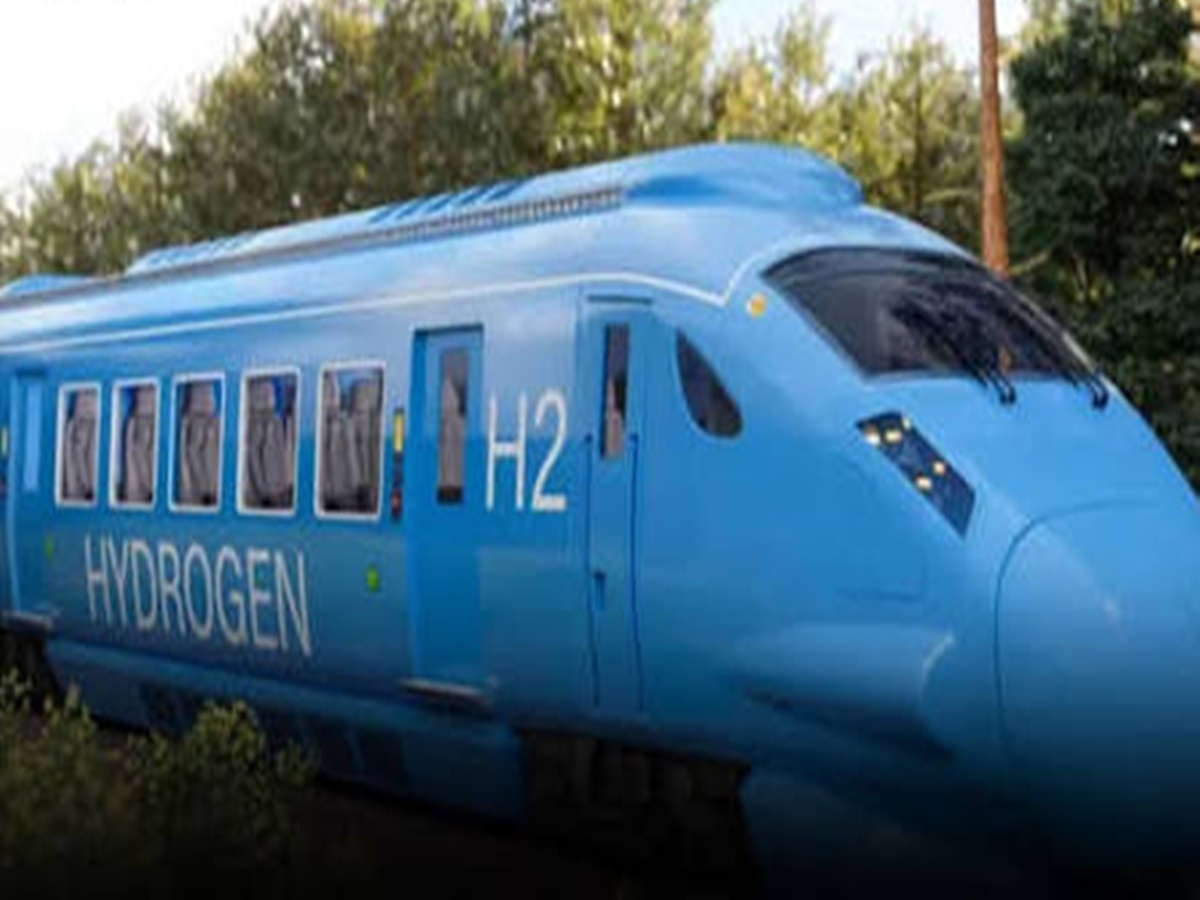
When Prime Minister Narendra Modi flagged off India’s first hydrogen-powered train, the moment marked more than the launch of a new railway service. It signalled the beginning of an ambitious experiment that could reshape how certain parts of the country’s vast rail network are powered in the future.
Operating under Indian Railways’ “Hydrogen for Heritage” initiative, the project has moved green hydrogen from research labs and policy discussions to actual railway tracks.
The first hydrogen-powered train is operating on the 89-km Jind-Sonipat route under Northern Railway, linking Jind Junction, Gohana Junction and Sonipat, along with several other stops on the corridor.
But while successfully running one hydrogen train is an important milestone, a much bigger challenge lies ahead: Can India expand this technology from a pilot project to hundreds of trains?
Experts believe it is possible, but only with a carefully planned approach. Hydrogen is unlikely to replace India’s largely electrified railway system. Instead, it may become a specialised solution for routes where conventional electrification is difficult, costly or impractical.
What Is a Hydrogen-Powered Train?
Unlike conventional diesel locomotives or electric trains that draw power from overhead wires, hydrogen trains generate electricity onboard.
Hydrogen is stored in tanks on the train and supplied to a fuel cell, where it reacts with oxygen to produce electricity. The process powers the train and releases water vapour as the primary tailpipe emission.
This makes hydrogen trains a potentially cleaner alternative for routes that cannot easily be electrified.
However, the technology requires far more than simply manufacturing a hydrogen locomotive. A complete ecosystem is needed to produce, transport, compress, store and safely refuel hydrogen.
According to Vipul Kumar, Partner and Managing Director (India) at Xynteo, the biggest challenge is not any single part of the system but integrating every element into a reliable network.
India currently does not have a dedicated hydrogen pipeline infrastructure. As a result, railway routes using hydrogen trains may initially require local hydrogen production facilities or dependable supply chains, along with storage systems, refuelling stations, compression equipment and specially trained personnel.
The pilot has demonstrated that the train can operate. The next major test is whether the entire ecosystem supporting it can be replicated efficiently across multiple locations.
Why Hydrogen Is Unlikely to Replace Electric Trains
The launch of the hydrogen train has raised questions about whether the technology could eventually replace conventional electric locomotives across India.
Experts say that scenario is unlikely.
India has already electrified nearly 99% of its broad-gauge railway network, making it one of the largest electrified rail systems in the world. Where overhead electrification is already available, electric trains remain significantly more efficient because power moves directly from the grid to the train’s traction system.
Hydrogen involves additional energy conversions. Electricity is first used to produce hydrogen through electrolysis, and the hydrogen is then converted back into electricity inside a fuel cell. These extra stages result in energy losses.
For this reason, conventional electric trains are expected to remain the preferred option on heavily used and already-electrified routes.
Instead, hydrogen could play a complementary role.
Former DRDO scientist and Chancellor of Amity University Chhattisgarh, Dr W Selvamurthy, believes hydrogen technology could be particularly useful on routes where extensive electrification is technically difficult or economically unviable.
These may include:
- Heritage railway routes
- Mountain and hilly regions
- Remote border areas
- Low-density passenger corridors
- Strategic routes in Ladakh and the Northeast
Such specialised applications could help Indian Railways gain operational experience without spending heavily on hydrogen systems where existing electric infrastructure already works efficiently.
The Biggest Challenge: Making Hydrogen Affordable
Cost remains one of the most significant obstacles to the wider adoption of hydrogen trains.
At present, green hydrogen is considerably more expensive than conventional electricity and diesel. Estimates generally place green hydrogen costs in India at around $5 to $10 per kilogram, while wider commercial viability for transport applications may require prices to fall closer to $1 per kilogram.
The challenge is not limited to producing hydrogen.
Railways also need to consider the cost of compressing, transporting, storing and dispensing the fuel. The final delivered price of hydrogen will ultimately determine whether large-scale railway operations are financially sustainable.
Dr Selvamurthy believes advances in technology could help bring costs down significantly over the next few years.
Researchers and engineers are exploring several lower-cost methods of hydrogen production, including:
- Photocatalysis
- Photoelectrochemical technology
- Wastewater-based electrolysis
- Advanced catalysts
Developing safer and more efficient hydrogen storage and transport technologies will also be essential.
With successful commercial scaling of these technologies, experts believe the cost of green hydrogen could decline sharply, potentially moving closer to $2 per kilogram in the coming years.
India Needs an Entire Hydrogen Ecosystem
For hydrogen-powered railways to succeed, buying or manufacturing trains will only be one part of the investment.
The larger challenge will be building the infrastructure around them.
Hydrogen refuelling stations, electrolysers, maintenance facilities, storage systems and safety mechanisms must be developed before the technology can operate at scale.
The infrastructure needs are similar to the requirements of electric vehicles, which depend on an extensive charging network. Hydrogen trains will require dedicated refuelling facilities designed according to route distances, fuel requirements and train endurance.
Experts suggest that India should avoid developing isolated hydrogen assets without a broader strategy.
Instead, the country could create integrated hydrogen hubs combining renewable electricity generation, water treatment, electrolysers, hydrogen production, compression, storage and refuelling at strategically selected locations.
This route-based approach could improve utilisation and reduce the risk of expensive infrastructure remaining underused because only a few trains operate in a particular area.
Why Green Hydrogen Must Be Powered by Renewable Energy
Hydrogen can only deliver major environmental benefits when it is produced using renewable energy.
If electricity generated from fossil fuels is used to power electrolysis, the overall climate advantage of hydrogen is significantly reduced.
India’s National Green Hydrogen Mission aims to build an annual production capacity of 5 million tonnes of green hydrogen. Achieving this goal could require around 125 GW of dedicated renewable energy capacity.
Railways would account for only a relatively small portion of this future hydrogen demand.
The real challenge will be coordinating renewable energy generation with hydrogen production, storage and refuelling infrastructure.
Without proper planning, large-scale electrolysis could place additional pressure on the power system, particularly during periods of high electricity demand.
For hydrogen rail to become genuinely sustainable, renewable power and hydrogen infrastructure will need to grow together.
A Gradual Expansion Is More Realistic
Experts do not expect India to move rapidly from one hydrogen train to hundreds.
A phased rollout is considered the more practical approach.
The next stage could involve establishing a small number of additional hydrogen clusters on heritage railways, remote corridors and mountainous regions. Larger deployment is more likely after 2030, when hydrogen production costs may fall, fuel-cell technology improves and shared infrastructure becomes more commercially viable.
Indian Railways’ broader programme aims to deploy 35 “Hydrogen for Heritage” trainsets, making the current project only the first step in a much longer transition.
Hydrogen Rail Could Create Benefits Beyond Trains
The impact of hydrogen technology may eventually extend far beyond the railway sector.
As production methods, fuel cells and storage technologies improve, hydrogen could also support cleaner alternatives for:
- Heavy-duty trucks
- Ships
- Aircraft
- Defence and commercial drones
- Steel and cement industries
- Other energy-intensive sectors
India’s investment in hydrogen trains could therefore help accelerate the development of a much larger clean-energy ecosystem.
The Real Journey Has Only Just Begun
India’s first hydrogen-powered train is an important technological achievement, but running a single train is very different from operating a nationwide hydrogen railway network.
The real test will be building an integrated system that connects renewable energy, hydrogen production, storage, transportation, refuelling and railway operations.
Hydrogen is unlikely to replace conventional electric trains across India’s already-electrified network. Its strongest role may be in the areas where overhead electrification is difficult or uneconomical.
If India succeeds in creating a reliable and affordable hydrogen ecosystem, the technology could become an important part of the country’s clean mobility strategy.
The first hydrogen train may already be on the tracks, but the far more challenging journey is still ahead.