
BYD is preparing to bring its premium Denza brand to India by the end of 2026, and the Z9 GT will be its performance flagship. The all-electric shooting brake is expected to arrive as a completely built-up import with an estimated price of Rs 1.2 crore to Rs 1.5 crore.
The headline number is its tri-motor output. Denza officially rates the latest Z9 GT EV at 850kW, equivalent to 1,156PS or roughly 1,140bhp. One motor drives the front axle while two motors power the rear wheels. Combined torque is rated at 1,210Nm.
Despite weighing close to 2.9 tonnes, the Z9 GT can accelerate from 0-100kph in 2.7 seconds and reach a claimed top speed of 270kph.
The Z9 GT uses a 122.5kWh second-generation Blade battery integrated into the vehicle structure through BYD’s cell-to-body construction. Denza claims around 600km of WLTP range for the EV.
The car is also one of the first global models from the BYD Group to use its latest Flash Charging technology. In markets where the required charging equipment is available, the system can accept up to 1,500kW through a single connector. Denza claims a 10-70 percent charge in five minutes and 10-97 percent in nine minutes.
Those figures need some context for India. A 1.5MW charger is far beyond the output of the public fast chargers currently used by most electric cars here. The Z9 GT’s headline charging time therefore depends on access to BYD’s specialised Flash Charging infrastructure. Denza has not yet detailed such a charging network for India.
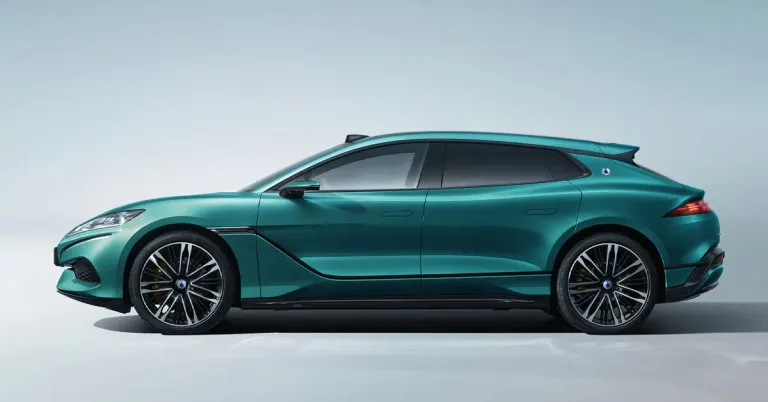
The Z9 GT is a large car even by luxury-car standards. It measures 5,180mm long and 1,990mm wide, with a 3,125mm wheelbase. The five-door fastback body gives it more luggage-carrying flexibility than a conventional performance sedan.
Denza’s e3 platform uses independent control of the three motors along with rear-wheel steering. The rear wheels can steer significantly enough to reduce the turning circle of this 5.18-metre car, and the system also enables a sideways crab-style movement in specific situations.
Air suspension is part of the package, while the European specification also lists carbon-ceramic brakes. The cabin follows the screen-heavy approach seen in other BYD Group products. Five displays span the dashboard area, including separate screens for the camera-based exterior mirrors on versions equipped with them.
The four outer seats offer functions such as heating, ventilation, massage and adjustable thigh support, while the rear seats can recline. Powered doors and Level 2 driver-assistance features are also available.
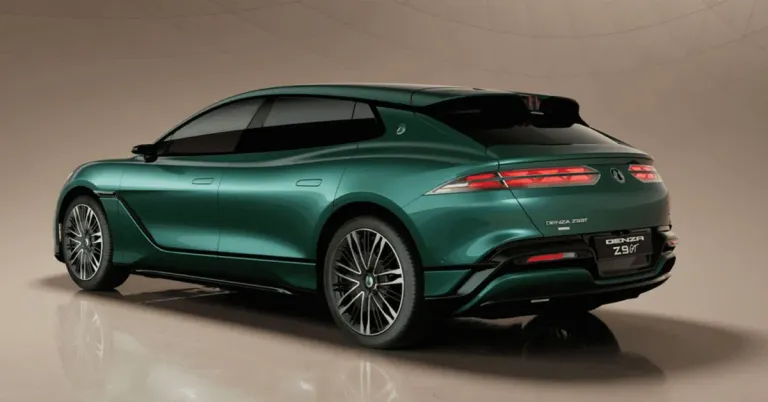
Denza started in 2010 as a joint venture between BYD and Daimler, now Mercedes-Benz Group. Mercedes later exited, and Denza is now fully controlled by BYD. The brand has since been moved upmarket and is expanding outside China.
For India, Denza is expected to sit above BYD’s existing Atto 3, eMAX 7, Seal and Sealion 7 range rather than share the same showroom identity. The Z9 GT and the D9 luxury MPV are expected to be the first two models, with separate Denza outlets initially focused on major luxury-car markets such as Delhi-NCR and Mumbai.
At its expected price, the Z9 GT will enter a small performance-EV niche where the Porsche Taycan is the closest established alternative in body style and intent. Denza will not have the badge familiarity of the German luxury brands, so the Z9 GT’s case will rest heavily on its performance, cabin technology and charging capability.
For now, the most unusual part of the launch is simple: a 1,140bhp five-door electric GT, priced around Rs 1.2 crore upwards, is expected to be on sale before the end of 2026.