
India’s Most Unsafe Cars in 2026: Citroën e-C3, Eeco & S-Presso Ranked – Breaking News & Live Updates Today

The focus on automotive safety in India has intensified significantly as of May 2026. While the industry is moving toward higher standards with the implementation of Bharat NCAP (BNCAP)several popular models have historically struggled in the Global NCAP (GNCAP) “Safer Cars for India” tests.
Understanding which cars scored poorly is essential for buyers who prioritize structural integrity and passenger protection. Here is a breakdown of the models that have received the lowest safety ratings. We have analyzed the crash test reports for these budget-friendly models, focusing on body shell integrity and occupant protection zones. From the surprising result of the Citroën e-C3 to the long-standing challenges of the Maruti Eecothis report highlights where these vehicles fall short.
1. Citroën e-C3
Despite being a modern electric vehicle launched in a safety-conscious era, the e-C3 shocked the market by scoring 0 stars for Adult Occupant Protection. It is a rare example of a new-age EV failing to meet basic structural safety benchmarks.
The Failure: The test noted a weak body structure and inadequate protection for the driver’s chest.
Child Safety: It managed only 1 star for child occupant protection, citing a lack of ISOFIX child seat mounts and poor protection in side impacts.
GNCAP Verdict: The body shell was rated as “unstable” and incapable of withstanding further loadings.
2. Maruti Suzuki Eeco
The Eeco remains one of India’s best-selling vans due to its utility, but it continues to be one of the least safe vehicles on the road. Even with the addition of mandatory dual airbags, its basic design lacks modern “crumple zones.”
The Failure: Received 0 stars inGNCAP. The report highlighted that the driver’s chest is at high risk of fatal injury due to the steering column’s movement during impact.
Structural Integrity: The footwell area and the overall body shell were both rated as unstable.
Usage Risk: Because it is often used as a 7-seater family vehicle or school van, its low safety rating is a major concern for passenger transport.
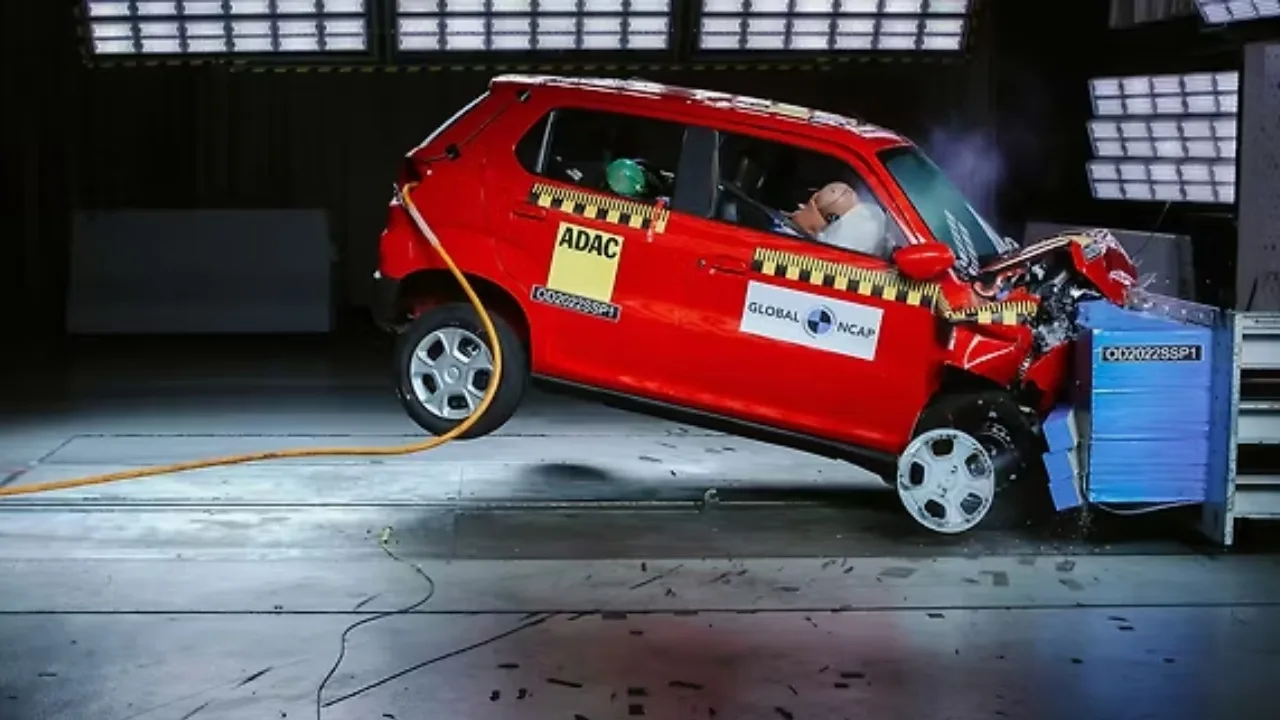
3. Maruti Suzuki S-Presso
The S-Presso’s safety journey has been a rollercoaster. It initially scored 0 starsbut after Maruti updated it with dual airbags and seatbelt pretensioners, its rating climbed to 1 star.
Remaining Weakness: Despite the airbags, the footwell area remains unstable. In high-speed frontal collisions, the structure does not adequately prevent the engine components from intruding into the cabin.
Side Impact: Protection for the head and chest during side-impact tests was found to be marginal.
4. Renault Kwid
The Kwid revolutionized the entry-level segment with its SUV-like looks, but it has historically struggled with crash tests. Over the years, it has fluctuated between 0 and 1 star depending on the safety features included at the time of testing.
The Failure: Currently holds a 1-star rating. While the driver’s head protection was rated “Good,” the chest and knee protection were “Weak.”
Child Safety: Scored poorly because it lacked three-point seatbelts for all passengers and proper child restraint system (CRS) compatibility in older versions.
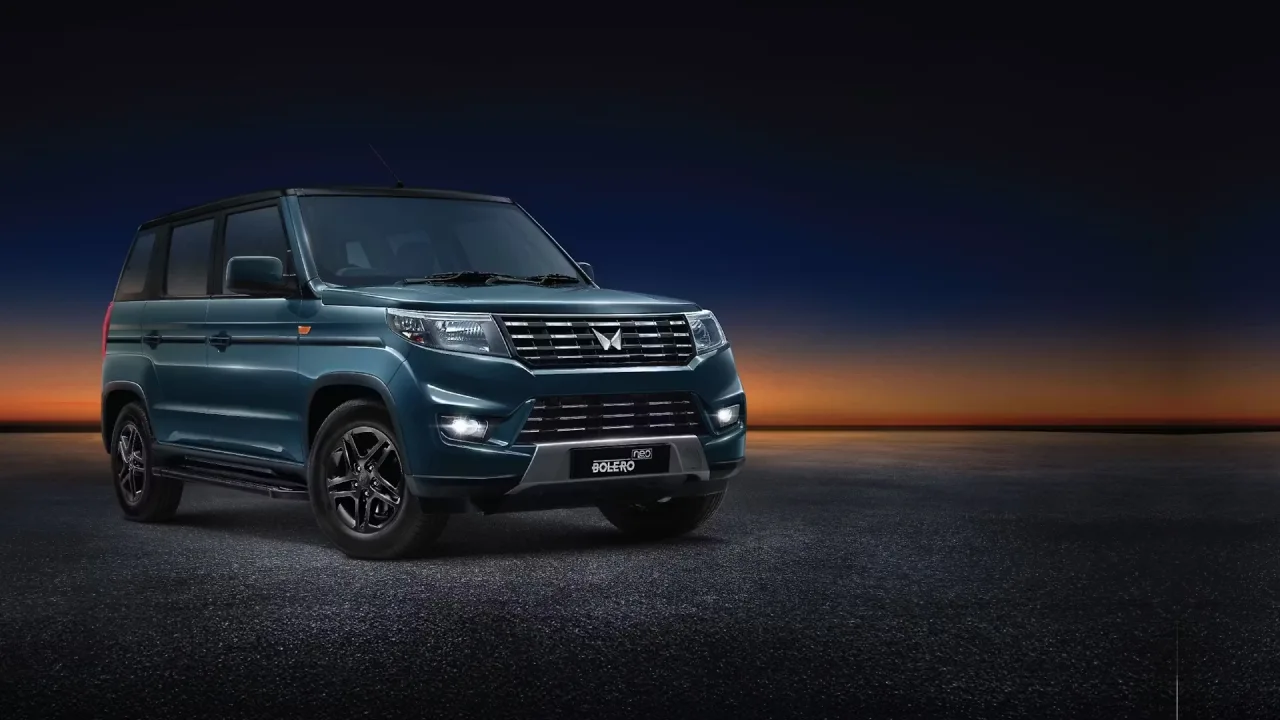
5. Mahindra Bolero Neo
Often perceived as an “indestructible” tank-like vehicle due to its heavy metal body, the Bolero Neo actually performed poorly in the controlled environment of a crash lab, receiving only a 1-star rating.
The Failure: The “body-on-frame” construction, while durable for off-roading, did not manage crash energy well. It received low marks for side impact and child occupant protection.
Equipment: The absence of side curtain airbags and an unstable structure during the frontal offset test contributed to the low score.
Pros & Cons
| Pros | Cons |
| Affordability: These cars provide mobility to millions who might otherwise be on two-wheelers. | Structural Instability: “0-Star” ratings often mean the car’s frame can collapse in a crash. |
| Low Maintenance: Engines and parts for the Eeco and Kwid are cheap and easy to fix. | High Risk: Poor chest and leg protection can lead to permanent disability even in mid-speed crashes. |
| City Maneuverability: Compact sizes make them excellent for tight urban traffic. | Outdated Platforms: Many of these cars are built on platforms that are 10-15 years old. |
Should you buy these cars?
Avoid these models if you frequently drive on highways or at speeds above 60 km/h. On Indian highways, structural integrity is your only real defence.
Consider these models ONLY if your usage is strictly low-speed city commuting (under 40 km/h) and your budget absolutely prevents you from moving up to a 4-star or 5-star vehicle like the Tata Punch or Maruti Brezza.
Technical Specifications
| Model | Adult Rating | Child Rating | Body Shell Status |
| Citroën e-C3 | 0 Star | 1 Star | Unstable |
| Maruti Eeco | 0 Star | 0 Star | Unstable |
| Maruti S-Presso | 1 Star | 0 Star | Unstable |
| Renault Kwid | 1 Star | 1 Star | Unstable |
| Bolero Neo | 1 Star | 1 Star | Unstable |

Comments are closed.