
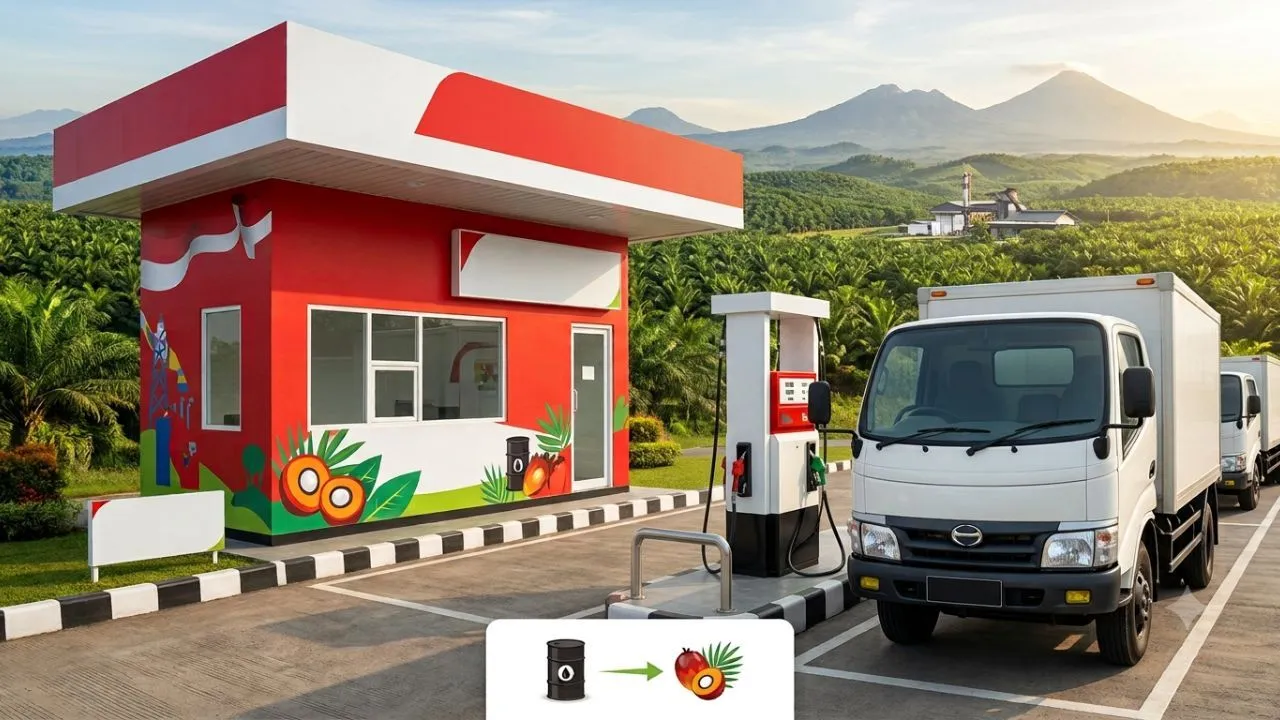

Indonesia B50 Biodiesel Policy: Indonesia has taken a big and important step towards becoming self-reliant in the energy sector. The country has now started implementing the B50 biodiesel policy, under which up to 50 percent of palm oil-based biodiesel will be mixed in diesel fuel. This decision is being considered as a strategic change towards reducing dependence on crude oil and strengthening domestic energy resources.
The government says that the objective of this policy is not only to change the fuel mix, but also to strengthen the energy security of the country and reduce the import bill. For a long time, Indonesia has been dependent on the international market for its diesel needs, but now it is trying to gradually reduce this dependence.
What is B50 biodiesel?
Under the B50 policy, 50% biodiesel and 50% conventional diesel will be mixed in diesel. Biodiesel is primarily produced from palm oil, which Indonesia produces on a large scale. The move is an extension of the existing B40 policy, in which 40% biodiesel blending has already been implemented.
The government believes that after reaching this new level, a huge demand for diesel in the country will be met, which will significantly reduce the dependence on foreign oil.
Strategy towards energy self-sufficiency
Indonesia is one of the world’s largest palm oil producers, and the government now wants to use this natural resource on a large scale for energy production. Its objective is not only to reduce fuel imports but also to promote domestic agriculture and industries.
According to experts, this step is a major change in the country’s energy policy, which may affect oil imports to a great extent in the future.
Also read: Will E20 petrol damage the engine? Government made big disclosure on viral claims, know the whole truth
Economic impact and challenges
While on one hand the palm oil industry is expected to get huge benefits from this policy, on the other hand some challenges may also arise. Maintaining a balance between crude oil prices in the international market and biodiesel production costs will be an important challenge for the government.
Apart from this, large-scale production and maintaining stable supply chain are also considered essential for the success of this policy. The government is supporting this scheme with tax incentives and other economic measures so that its impact is balanced.
future direction
The government of Indonesia aims to further reduce its dependence on fossil fuels in the coming years. B50 biodiesel policy is being considered as part of this long strategy, which will rapidly take the country towards energy self-sufficiency.
If this policy is successful, it could prove to be a significant change not only for Indonesia but also for the global energy market, as it could also impact the policies of other countries in the world regarding biofuels.

Comments are closed.