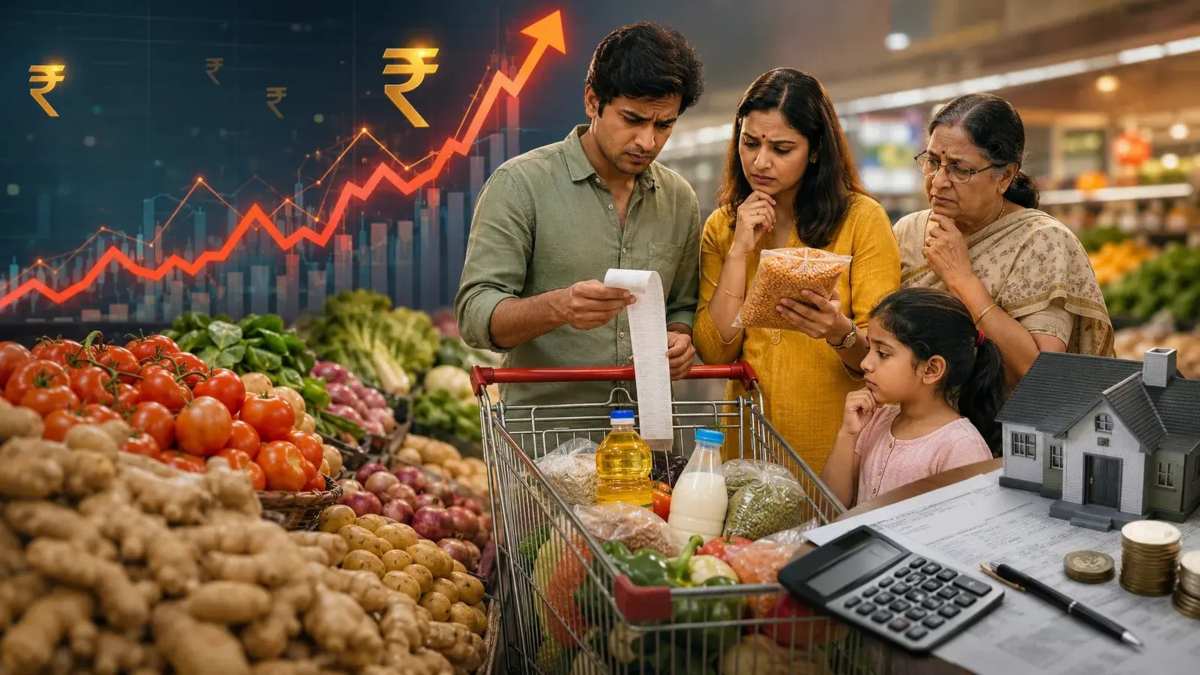
Business Desk – Inflation Rises in India 2026: The pressure of inflation on the common man’s kitchen is steadily increasing. In the past five months, almost every essential food item has become more expensive. Between February 28th and August 3rd, i.e., in about five months, the prices of 15 out of 16 major food items have increased.
The highest inflation has been seen in pulses and edible oils. Experts say prices may rise further during upcoming festivals like Raksha Bandhan, Janmashtami, Ganeshotsav, Navratri, and Diwali.
Almost every essential ration item has become expensive in the last 5 months.
According to data from the Consumer Affairs Department’s Price Monitoring System, prices of 15 out of 16 major ration items have risen over the past five months. During this period, prices of daily essentials like pulses, edible oil, milk, sugar, and rice have consistently risen.
According to the report, the price spike began on February 28. This was the time when tensions and conflict between the US, Iran, and Israel escalated, impacting global commodity markets and Indian food prices.
The biggest increase in pulses and oil
In the last five months, the highest rise was seen in pulses and edible oils.
Gram dal: Expensive by Rs 4.65 per kg
Arhar dal: Expensive by Rs 5.96 per kg
Urad dal: Expensive by Rs 5.71 per kg
Moong dal: Expensive by Rs 4.55 per kg
Edible oil: Expensive by about Rs 6
Mustard oil: Expensive by Rs 7.56 per litre
Milk, sugar and rice also became expensive
Milk: Expensive by Rs 3 per litre
Sugar: Expensive by Rs 2.25 per kg
Rice: Expensive by Rs 1.57 per kg
Salt: Expensive by Rs 0.85 per kg
What is the reason for sugar becoming expensive?
According to experts, the rising sugar prices are largely due to the ever-increasing demand for sugarcane for ethanol production. Furthermore, relatively low sugar production is keeping market prices under pressure.
Why did the dough remain almost stable?
On the other hand, strong government procurement and adequate government stockpiles have kept wheat in the market in good supply. This is why flour prices have seen only a slight increase.
Festive season may increase inflation from August
Experts believe that the festive season, starting in August, could boost demand for food items. Consumption of pulses, edible oils, sugar, and other food products increases during Rakshabandhan, Janmashtami, Ganeshotsav, Navratri, and Diwali. If international prices don’t ease and import costs remain high, prices could rise further in the coming months.
Weak monsoon is also a big reason
This year’s weak and uneven monsoon is being considered a major reason for the rise in pulse prices. By the end of July, the area sown for kharif pulses was approximately 7% lower than last year. This has raised fears of decreased production and increased imports, which is impacting market prices.
Iran crisis and global market impact
According to Dr. Manoranjan Sharma, Chief Economist at Infomeric Ratings, prices of pulses and edible oils remain under pressure. He explained that a weak monsoon has raised concerns about pulse production.
India, meanwhile, relies heavily on imports for edible oils. Rising international palm oil and soy oil prices, along with ongoing geopolitical tensions in West Asia, have increased import costs. Consequently, prices of edible oils and pulses remain high in the domestic market.