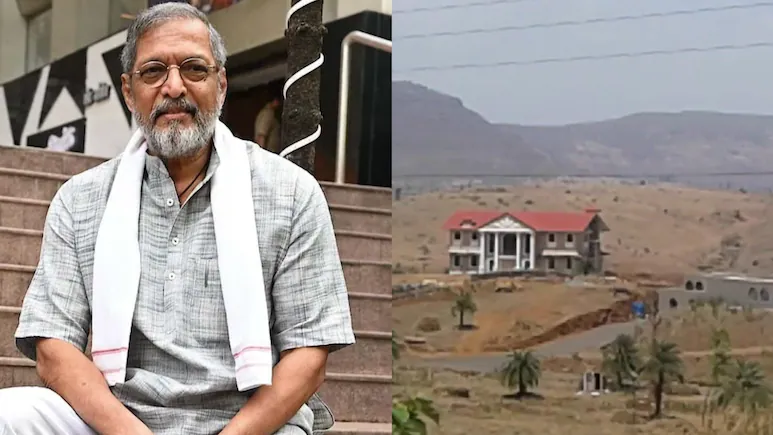
Pune: Away from the spotlight and the demanding schedules of the film industry, Nana Patekar found comfort in a quieter life centred on farming, nature and animals. The veteran actor, who died at the age of 75 on October 8, 2026, spent considerable time at his farmhouse near Khadakwasla, on the outskirts of Pune, where he could step away from the attention that accompanied his decades-long career.
Spread across a reported 27 acres, the property reflected a lifestyle quite different from the lavish homes often associated with Bollywood celebrities. According to The Economic Times, the farmhouse featured wooden interiors, terracotta flooring, exposed wooden beams and extensive greenery. With seven rooms and a large hall, the property offered space for a life closer to the countryside.
For Patekar, the farmhouse was more than a retreat from Mumbai. It was a place where he could pursue his interest in agriculture, spend time with animals and enjoy the routines of rural life.
A 27-acre property away from Bollywood’s spotlight
Nana Patekar built a reputation in Indian cinema through intense performances and memorable characters. Away from the screen, however, he was known for preferring a relatively simple lifestyle.
His farmhouse near Khadakwasla offered a contrast to the pace of Mumbai, where film shoots, public appearances and professional commitments often demand constant attention. The property’s rustic design, natural surroundings and understated interiors reflected his preference for a less ostentatious way of living.
The farmhouse reportedly had seven rooms, a spacious hall, wooden furniture, terracotta floors and exposed ceiling beams. Rather than relying on elaborate luxury finishes, its design drew on traditional materials and the surrounding landscape.
Greenery across the property added to its rural character, making it a place where Patekar could spend extended periods away from the film industry.
Reports about the farmhouse have also highlighted the actor’s connection with the land. The property was not simply a holiday home reserved for occasional visits; its agricultural use formed an important part of his life outside cinema.
Farming was more than a hobby for Nana Patekar
Patekar’s interest in farming went beyond owning a large plot of land. He spoke in interviews about cultivating crops and spending time working on the farm.
The crops associated with his agricultural activities included rice, wheat, bajra, onions and garlic. Other reports about the property have also mentioned wheat, paddy and pulses.
Farming gave the actor an opportunity to engage in work that was removed from the routines of film production. Instead of spending his time in front of cameras or attending industry events, he could focus on the land and the practical responsibilities involved in cultivation.
His interest in rural life also reflected a broader preference for simplicity. Despite his success in Hindi and Marathi cinema, Patekar often spoke about finding satisfaction in activities that had little to do with celebrity status.
The farmhouse therefore represented a different side of the actor: one associated with agriculture, the outdoors and a more grounded daily routine.
Five dogs, 12 cows and two bullocks
Animals were another important part of Patekar’s life at the farmhouse.
During a 2023 interview with Filmfare, the actor recalled spending the COVID-19 lockdown at the property. He spoke about being surrounded by five dogs, 12 cows and two bullocks.
The account offered a glimpse into the environment he enjoyed during a period when lockdown restrictions kept many people away from their usual routines.
For Patekar, the farmhouse provided space to spend time outdoors and care for animals while remaining away from the pressures of the film industry.
The presence of livestock also complemented his interest in farming, bringing agricultural work and animal care together as part of the rural lifestyle he preferred.
His description of life at the property suggested that its appeal lay not in its size alone, but in the freedom it offered to follow everyday interests without the demands of public life.
‘I live in a village now’: His preference for rural life
Patekar’s own comments about the countryside offered an insight into why the farmhouse mattered to him.
When asked whether he missed working on film sets, he said he did not, adding: “I live in a village now.”
The remark captured his attachment to a way of life that was different from the fast-moving world of cinema. While acting remained a defining part of his career, he also valued the opportunity to step away from work and spend time in an environment where farming and daily routines took precedence.
His preference for rural living stood out because of the contrast with his professional identity. Patekar was known for powerful performances and a commanding screen presence, yet he described a personal life in which the ordinary activities of the countryside offered satisfaction.
The farmhouse allowed him to maintain that separation between his public career and his private interests.
A quiet retreat that reflected his values
The property near Khadakwasla became closely associated with Patekar’s preference for simplicity. Its traditional interiors, open surroundings and agricultural land reflected a lifestyle that did not depend on the trappings of celebrity.
His reported farming activities and the animals he kept there added to the sense that the property was a working rural retreat rather than simply an extravagant second home.
Patekar’s life beyond films also included social work. He co-founded the Naam Foundation with actor Makarand Anaspure in 2015 to support farmers affected by drought and to work on water conservation in Maharashtra. His interest in agriculture and the difficulties faced by farming communities became an important part of his public life alongside his acting career.
That connection between farming and helping rural communities added another dimension to his relationship with the countryside.
Nana Patekar’s final farewell at his Pune farmhouse
The farmhouse also became part of the actor’s final journey. Following his death in Goa on October 8, Patekar’s last rites were held at his Pune farmhouse in Donje, with state honours, according to reports.
The location carried a particular significance given how closely the property was associated with his life away from cinema. The place where he had spent time farming and enjoying rural surroundings became the setting for his final farewell.
Nana Patekar’s legacy will continue to be shaped by his performances across Hindi and Marathi cinema. Yet the story of his farmhouse offers a glimpse of the person behind those roles: an actor who found fulfilment in cultivating land, caring for animals and spending time away from the spotlight.
For a man who spent decades in the public eye, the 27-acre property near Pune represented a different measure of success — the freedom to live simply, remain connected to the land and find peace beyond the cameras.