Iran Attacks Gulf Neighbors After Renewed US Military Strikes, Oil Tops $95/ TezzBuzz/ WASHINGTON/ J. Mansour/ Iran fired missiles and drones toward U.S. allies and military sites across the Gulf following renewed American strikes on Iranian targets. Gulf states reported intercepting attacks, while an Iranian drone hit a residential complex in Kuwait without causing casualties. Iranian officials said a U.S. strike on a wedding killed five people as renewed fighting pushed Brent crude above $95 a barrel.

Quick Look
- Iran attacked U.S. allies and sites across the Gulf following Tuesday’s American strikes.
- Bahrain said its defenses intercepted incoming Iranian fire.
- An Iranian drone hit a residential complex in Kuwait City, causing a fire but no casualties.
- Kurdish forces said they intercepted 10 explosive drones near Irbil, Iraq.
- Iran said American bases in Irbil had been targeted.
- Hezbollah launched two explosive drones toward Israeli soldiers in southern Lebanon.
- Jordan intercepted Iranian missiles targeting an alleged U.S. base.
- CENTCOM said it struck Iranian air defenses, radars and maritime assets.
- Iranian officials said a strike on a wedding killed five people and wounded at least 68.
- Iran also reported 14 members of the Revolutionary Guard and Basij forces killed.
- Two Filipino sailors were killed in an attack on a ship in the Strait of Hormuz.
- Brent crude climbed above $95 a barrel.
- Pakistan said it remained engaged with Washington and Tehran about restarting talks.


Deep Look
Iran retaliates across the Gulf
Iran fired missiles and drones toward U.S. allies and military sites across the Gulf early Wednesday following renewed American bombardment of Iranian targets.
The exchange ended a monthlong pause in direct fighting and intensified concerns that the intermittent six-month war could escalate into a broader regional conflict.
The renewed hostilities have disrupted global energy markets, strained U.S. military resources and created political difficulties for President Donald Trump’s Republican Party ahead of the November midterm elections.
Hamidreza Azizi, a senior Iran analyst at the Crisis Group, warned that neither side could remain indefinitely between a ceasefire and full-scale war.
“At some point, one of the sides may see a need to escalate in order to break this cycle,” he said. “So that could bring the two sides to a point that they have been trying to avoid until now, which is a full-scale war.”
Kuwait residential complex hit by drone
Kuwait’s government communications center said an Iranian drone struck a residential complex in the capital at dawn Wednesday.
The impact caused a fire, which authorities contained. No casualties were reported.
Kuwait had also intercepted Iranian drones late Tuesday, according to its military.
The attacks represented a direct escalation against a Gulf country hosting American forces and maintaining close defense ties with Washington.
Bahrain intercepts incoming fire
Bahrain said its air-defense systems intercepted incoming Iranian fire early Wednesday.
The country’s military accused Tehran of carrying out “attacks targeting civilians.”
Bahrain hosts the U.S. Navy’s 5th Fleet, making it a strategically important center for American operations in the Persian Gulf and surrounding waters.
There were no immediate reports of casualties or significant damage.
Iran threatens a broader strategy
Mohsen Rezaei, the recently appointed head of Iran’s Supreme National Security Council, threatened further action across military, diplomatic and economic fronts.
“You will soon see that Iran’s new strategy on the battlefield, in diplomacy, and in confronting the economic blockade will shatter your foundations,” Rezaei wrote on X.
The statement indicated that Tehran’s response could extend beyond direct military strikes as it confronts an American blockade and widening sanctions.
Drones intercepted near Irbil
In Iraq, the Kurdistan Region’s Counter-Terrorism Directorate said it intercepted 10 explosive-laden drones near Irbil.
Iranian state television reported that American bases in Irbil had been targeted.
Iran-backed armed groups remain active in Iraq, raising concerns that the conflict could further destabilize the country or draw proxy forces into direct confrontations with American troops.
No casualties were immediately reported from the drone attacks.
Hezbollah launches drones in Lebanon
Israel’s military said Iran-backed Hezbollah fired two explosive drones toward Israeli soldiers in southern Lebanon.
The military said the attacks caused no casualties.
The incident demonstrated the risk of renewed U.S.-Iran fighting activating armed groups aligned with Tehran elsewhere in the Middle East.
CENTCOM outlines targets in Iran
U.S. Central Command said Tuesday’s strikes focused on Iranian military targets.
The targets included air-defense installations, radar systems and maritime assets.
CENTCOM said the operation responded to Iranian attempts to attack commercial vessels in the Strait of Hormuz and American troops deployed across the Middle East.
Trump offered an additional explanation, saying U.S. forces waited until Iran had nearly completed rebuilding a radar system before destroying it.
“We waited until it was almost built and then we hit it,” Trump said.
Fighting resumed over the weekend
The latest escalation began during the weekend when the U.S. military struck Iranian rocket launchers on an island in the Strait of Hormuz.
CENTCOM said Iran had planned to use the launchers to deploy mines into the waterway.
Iran retaliated by firing missiles toward American bases in Jordan. Jordanian forces intercepted the incoming missiles.
The United Arab Emirates also reported intercepting an Iranian drone over its waters Monday.
Those exchanges abruptly ended a month without military action between Washington and Tehran.
Iranian officials report wedding casualties
Iranian officials said a U.S. strike hit a home hosting a wedding in Kuhestak, a small coastal town overlooking the Strait of Hormuz.
At least five people were killed, including two women and two children ages 4 and 16, officials said. At least 68 others were wounded.
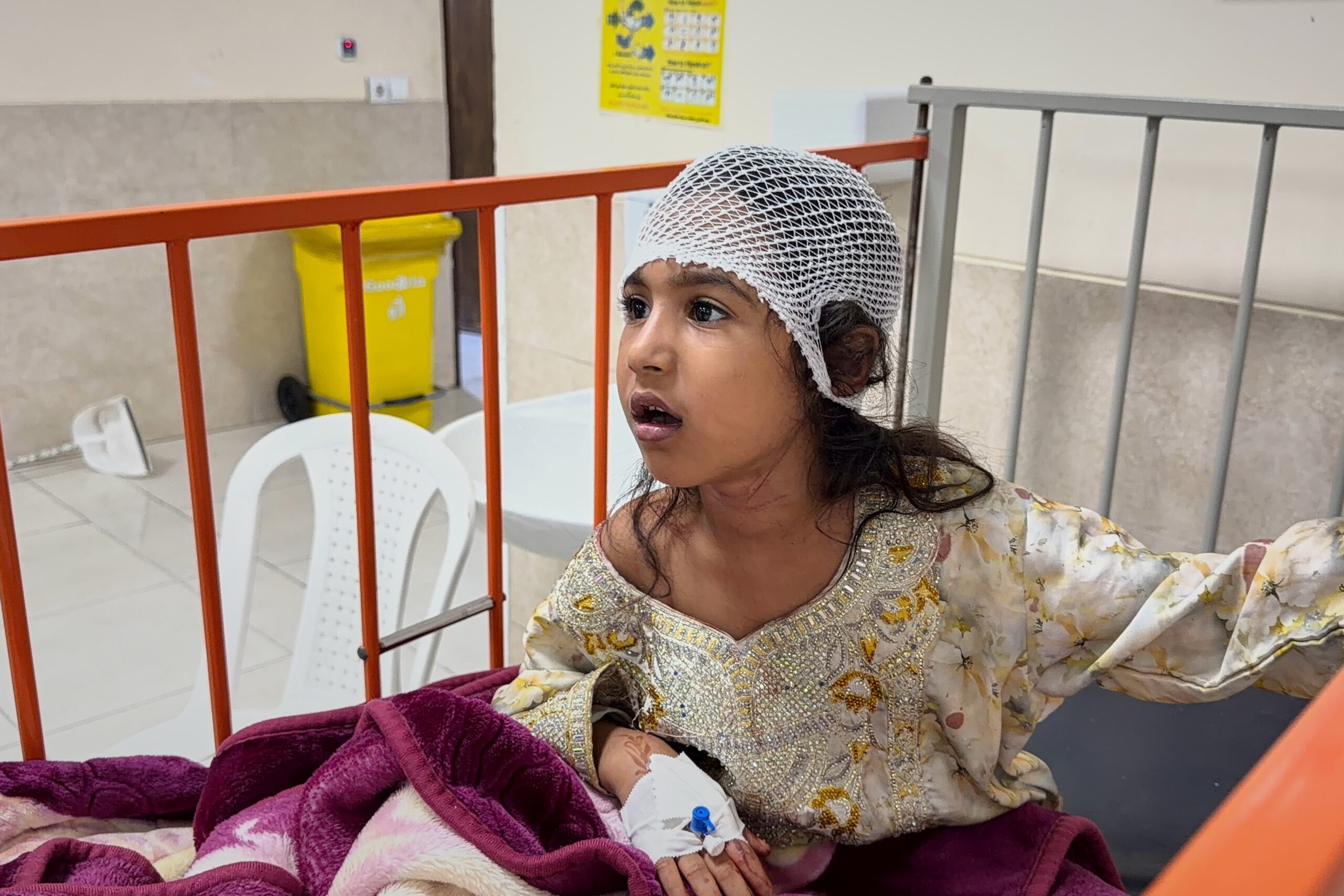
Images distributed by Iran’s semiofficial Tasnim news agency showed injured children receiving treatment at a hospital in nearby Minab.
Iranian Red Crescent footage showed rescue crews entering a damaged home surrounded by debris. A hole was visible in the roof of one house in the densely populated neighborhood.
The casualty reports could not immediately be independently verified.
“Make no mistake: these crimes will not go unpunished,” Ebrahim Azizi, chairperson of the Iranian parliament’s National Security and Foreign Policy Committee, wrote on X.
US says it does not target civilians
The U.S. military said it was aware of reports that civilians were killed in Kuhestak.
It said American forces “never targets civilians.”
CENTCOM did not immediately confirm whether it had struck the home or disclose whether an intended military target was located nearby.
During the opening day of the war, more than 100 children were killed when a U.S. missile hit a primary school in Minab, approximately 18 miles from Kuhestak.
Iran reports military deaths
Iran said four members of the Islamic Revolutionary Guard Corps and 10 members of the Guard’s volunteer Basij forces were killed in the American attacks.
Tehran did not immediately provide a complete assessment of damage to its military facilities.
The casualties added to reports of civilian deaths and injuries from strikes across southern Iran.
Strait of Hormuz remains largely closed
The Strait of Hormuz remains severely restricted despite repeated statements from Washington that the waterway is open.
Only a small number of ships pass through each day, and Iran has regularly attacked vessels attempting the journey.
Before the U.S. and Israel attacked Iran on Feb. 28, approximately one-fifth of the world’s traded oil traveled through the strait.
Tehran largely closed the waterway after the war began, creating significant disruption for global shipping and energy markets.
Two sailors killed in vessel attack
Saudi shipping company Bahri said two Filipino sailors were killed when their vessel was attacked late Monday while traveling through the Strait of Hormuz.
The company did not immediately provide full details about the attack or identify those responsible.
The deaths underscore the growing danger faced by civilian crews operating in the strategically important waterway.
Oil rises above $95
Brent crude, the international oil benchmark, climbed above $95 per barrel after fighting resumed.
The price was more than 30% higher than at the start of the war.
Reduced shipping through Hormuz and repeated attacks on commercial vessels have heightened fears of further disruptions to global energy supplies.
Higher oil prices have also raised transportation, manufacturing and consumer costs, contributing to inflation in the United States and elsewhere.
Economic pressure has failed to produce agreement
During the monthlong military lull, Washington increased economic pressure on Iran in an effort to secure concessions and fully reopen the Strait of Hormuz.
Iran is struggling with surging inflation, economic contraction and a collapsing currency.
Despite the pressure, Tehran has not agreed to Washington’s demands, while the Trump administration has resumed military action.
U.S. forces are also operating under pressure as supplies of advanced air-defense interceptors decline after months of defending American troops and allies.
Pakistan continues diplomatic effort
A ceasefire agreement reached in June collapsed soon afterward amid renewed exchanges of strikes.
Pakistan, which helped mediate the earlier agreement, said Wednesday that it remained in contact with both Washington and Tehran in an effort to restart negotiations.
Trump, however, said late Tuesday that he would not force Iran back to the negotiating table.
“I couldn’t care less if they sign a worthless, to them, agreement. I like our position now much better, with almost total control of the Hormuz Strait, and their economy totally collapsing. They are just playing out the inevitable. When are the Iranian people going to rise up and fight?” Trump wrote on social media.
He also warned that if Iran continued retaliating, “they will be hit again at a much harder and higher level.”
More on US News