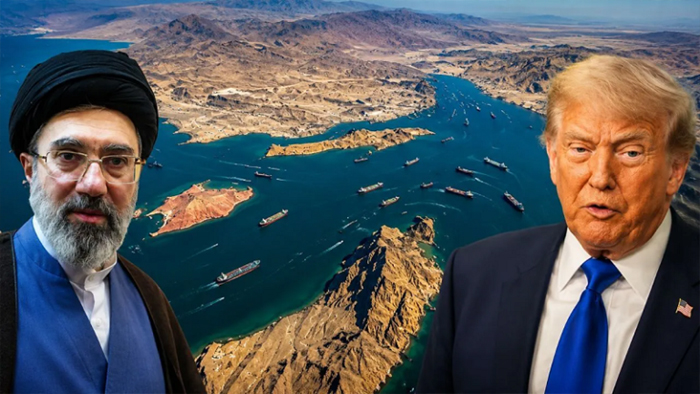
New Delhi. Tension continues between Iran and America regarding the Strait of Hormuz. Meanwhile, Iran’s Islamic Revolutionary Guard Corps (IRGC) has clarified that this important sea route will be reopened only when America fully accepts all the conditions of Iran. On the other hand, talks on a new protocol regarding the movement of ships are also progressing between Iran and Oman and both the countries are claiming to be close to an agreement.
IRGC spokesman Sardar Mohebi stated that the reopening of the Strait of Hormuz would depend on certain arrangements and conditions. He clarified that the conditions presented to the US are different from those currently being negotiated with Oman. According to Iran, the US must stop interfering in regional negotiations and fully accept its demands.
Talks are underway between Iran and Oman to develop a new mechanism for shipping through the Strait of Hormuz. Iranian Foreign Minister Abbas Araghchi has stated that the two countries are very close to reaching an agreement on a new shipping protocol. However, he also indicated that even with this agreement, some additional conditions must be met before the Strait can be fully opened.
Iran’s key demands include an end to US threats, a halt to military action against Iran and its regional allies, and the withdrawal of naval and air forces involved in the blockade. Iran has also demanded compensation from the US for losses incurred during the conflict.
Iran also wants sanctions against it lifted and frozen Iranian assets released. These conditions clearly indicate that Tehran views the opening of the Strait of Hormuz as more than just a matter of facilitating maritime traffic. It also addresses broader political, economic, and security concerns.
Iranian President Masoud Pezeshkian on Saturday described the current situation as a good time to move forward toward a deal. However, he also clarified that Iran will not compromise on the rights of its citizens. He called for maintaining confidence in domestic capabilities and the public, and stressed the need to adopt a sensitive and compassionate approach towards citizens.
The Strait of Hormuz is a vital route for global maritime trade and energy supplies. Any disruption to shipping could impact regional trade and the international energy market. This is why the ongoing tensions between Iran and the United States over this sea route are under constant scrutiny.
Meanwhile, allegations have surfaced of missile and drone attacks against Iran-backed Houthi rebels in the Yemeni city of Marib. According to the Yemeni side, these attacks targeted residential areas and camps for displaced people. Two people were killed and 14 injured in the attacks. Yemeni officials have warned of retaliation. However, the decision to fully reopen the Strait of Hormuz is linked to broader conditions. The US stance and negotiations on Iran’s demands will be crucial in determining the future course of action.