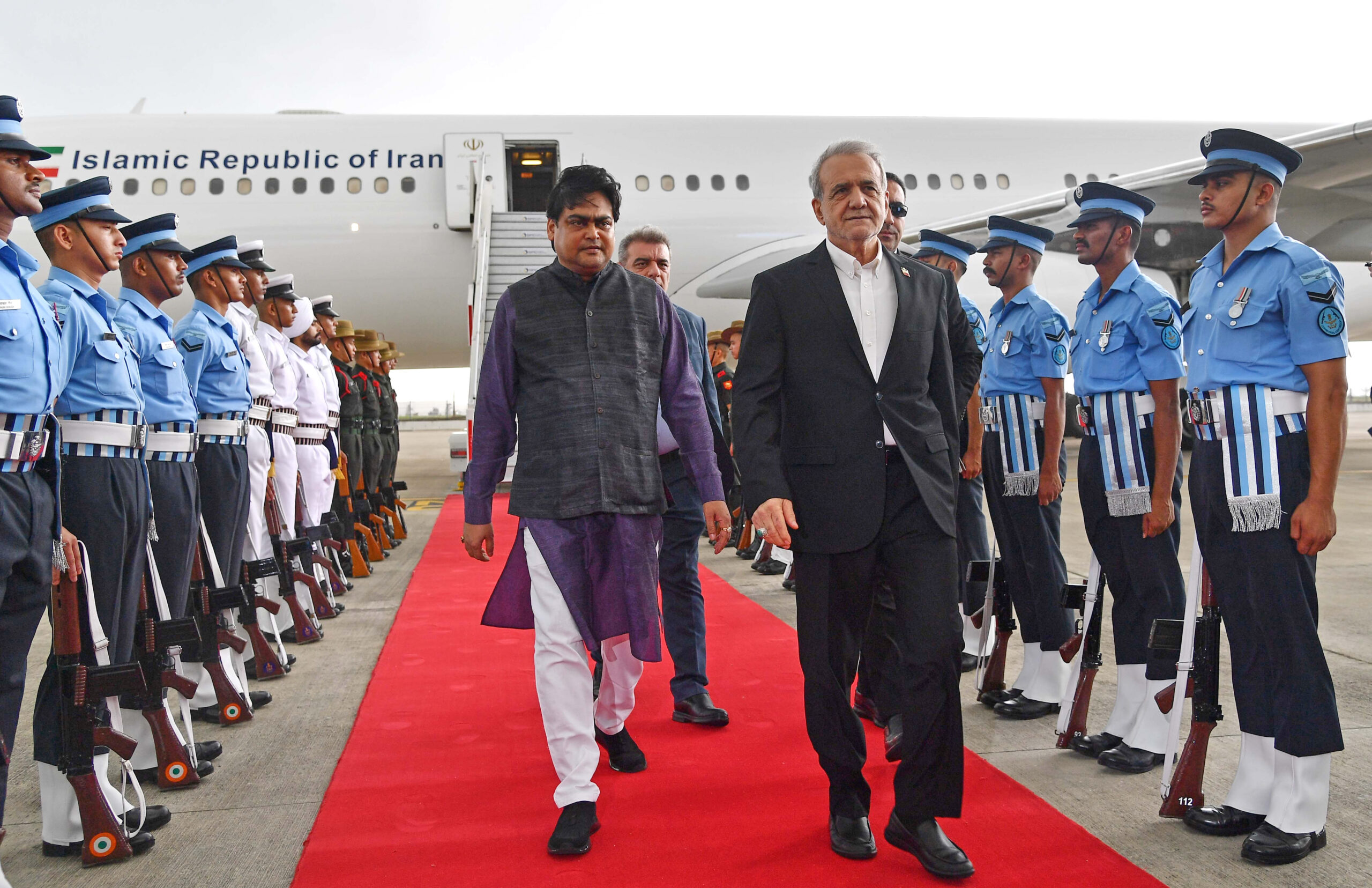
Iran Rejects Negotiations as US Blockade and Saudi Pipeline Crisis Escalate/ TezzBuzz/ WASHINGTON/ J. Mansour/ A senior Iranian lawmaker said Tehran will not negotiate with Washington until the United States accepts all of Iran’s conditions. The statement came as U.S. Central Command reported redirecting 100 commercial vessels during its blockade of Iranian ports. Regional tensions also increased after drones launched from Iraq struck Saudi Arabia’s East-West oil pipeline.

Quick Look
- Iranian lawmaker Ebrahim Azizi rejected negotiations under current conditions.
- Iran is demanding an end to U.S. military action and the naval blockade.
- Tehran also wants U.S. forces withdrawn and sanctions removed.
- Iran has demanded compensation and the release of frozen assets.
- CENTCOM said its blockade has redirected 100 commercial vessels.
- Saudi Arabia temporarily closed its East-West oil pipeline after drone attacks.
- The attacks originated from Iraqi territory, according to Saudi and Iraqi officials.
- Iraq closed two border crossings with Iran and dismissed security commanders.
- Pakistan condemned the pipeline attack and reported civilian injuries.
- President Donald Trump said Iran was “probably” responsible but presented no public evidence.
Deep Look
Iranian Official Rejects Negotiations With Washington
A senior Iranian official said Saturday that Tehran will not resume negotiations with the United States unless Washington first agrees to all of Iran’s stated conditions.
Ebrahim Azizi, chairman of the Iranian parliament’s National Security and Foreign Policy Commission, said talks would serve no purpose without prior American acceptance of Tehran’s demands.
“As long as the American side does not accept all of Iran’s conditions, dialogue and negotiation are of no use,” Azizi wrote on X.
“No negotiations. Until Iran’s terms are met, talks are futile,” he added.
Azizi did not specify the conditions in his statement. Iran has previously outlined a series of military, economic and diplomatic demands connected to the conflict and the disruption of shipping through the Strait of Hormuz. Iranian state media also reported Saturday that Tehran would not hold negotiations until the United States accepted its terms.
Iran Outlined Six Conditions
Mohammad Baqer Zulqader, secretary of Iran’s Supreme National Security Council, previously presented six broad demands that he said must be addressed before the Strait of Hormuz can fully reopen.
Iran wants the United States to end military action against Tehran and Iranian allies in Lebanon, the Palestinian territories, Yemen and Iraq. It has also called for an end to threats against Iran and statements Tehran views as insulting to the country’s religious and national institutions.
Additional demands include lifting the U.S. naval blockade, withdrawing American naval and air forces from Iran, compensating the country for damage caused during two wars, removing sanctions and releasing frozen Iranian assets without conditions.
The United States has not agreed to those demands. Disagreement over control of the Strait of Hormuz remains a major obstacle to diplomatic efforts, according to current reporting on the conflict.
CENTCOM Reports Blockade Milestone
Azizi’s statement came as U.S. Central Command announced a new milestone in its continuing blockade of Iranian ports.
“CENTCOM forces have redirected 100 commercial vessels over the past 60 days since America resumed the steel wall blockade against Iran,” CENTCOM wrote on X.
“ZERO ships have passed through the blockade without U.S. forces allowing,” it added. “American service members remain laser focused on this mission.”
The military operation has restricted commercial traffic connected to Iranian ports while allowing some vessels to proceed with U.S. authorization.
CENTCOM previously reported that American forces had redirected 100 vessels during an earlier phase of the operation while disabling several others and permitting authorized ships to pass.
Saudi Pipeline Attack Deepens Regional Crisis
Tensions intensified after several drones launched from Iraq struck Saudi Arabia’s East-West oil pipeline in the Riyadh and Medina regions.
Saudi Arabia temporarily shut down the pipeline as a precaution while officials assessed and repaired the damage. The attack caused injuries and property damage, according to the Saudi government.
The approximately 1,200-kilometer pipeline transports crude oil from Saudi Arabia’s eastern production areas to the Red Sea port of Yanbu. It has become particularly important because it allows the kingdom to bypass the disrupted Strait of Hormuz.
The route has carried between 4 million and 5 million barrels of oil daily during the conflict, making its closure a significant concern for global energy supplies.
Saudi Arabia said it would refrain from immediately retaliating after the Iraqi government requested time to investigate and prevent additional attacks.
“The Kingdom clarifies that, following a request from the prime minister of Iraq to give the brotherly Iraqi government the opportunity to take the necessary measures to prevent attacks launched from Iraqi territory against Saudi Arabia and neighboring countries, the Kingdom has opted not to respond at this stage and to support the efforts of the Iraqi government.”
The kingdom nevertheless reserved the right to take measures to protect its territory, residents and infrastructure.
Trump Says Iran Was Probably Responsible
President Donald Trump said Saturday that he believed Iran was likely responsible for the pipeline attackalthough he did not present evidence directly connecting Tehran to the drones.
Trump made the comments while speaking to reporters in Ireland. He also said Yemen’s Iran-aligned Houthi movement had contacted his administration and indicated that it did not want a direct confrontation with the United States.
Iran has long supported armed groups in Iraq and Yemen, but responsibility for the pipeline attack had not been conclusively established publicly. Saudi Arabia identified Iraq as the launch point rather than directly naming the organization responsible.
Iraq Closes Border Crossings and Opens Investigation
Iraq confirmed that the drones targeting the Saudi pipeline were launched from its territory.
Prime Minister Ali al-Zaidi ordered an investigation into the operations command in Maysan province and dismissed its commander. His government later announced that the provincial police chief had also been removed.
Iraq also temporarily closed two border crossings with Iran while authorities investigated security breaches and searched for those responsible for the attacks. One of the affected crossings was Shalamcheh, which connects Iran with southern Iraq.
Maysan province borders Iran and includes areas where Iranian-backed armed groups operate. An Iraqi militia accused of involvement denied responsibility, according to the Associated Press.
Pakistan Condemns Drone Strikes
Pakistan, which has sought to mediate between the United States and Iran during the conflict, condemned the attacks on Saudi infrastructure.
The Pakistani Foreign Ministry described them as “reprehensible drone attacks” that damaged the pipeline and caused “injuries to civilians.”
“Pakistan has been and will continue to make earnest efforts for achieving lasting peace and stability in the region,” the ministry added.
The attack has heightened concerns about energy security as conflict affects both the Strait of Hormuz and Red Sea shipping routes. Iran-aligned Houthi forces have also expanded their control near the Bab el-Mandeb Strait, creating additional risks for Saudi oil exports and international maritime traffic.
For more world news
More on US News