
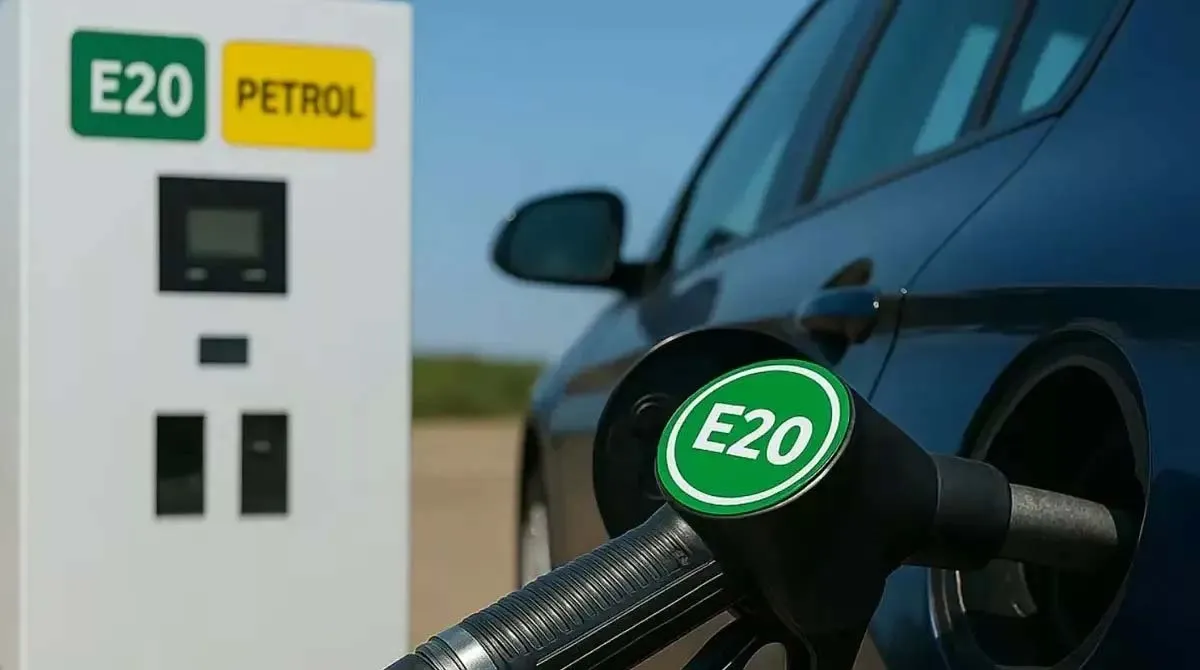
Is E20 petrol really ruining your car’s engine? The government told the whole truth in Parliament

These days, there is a debate going on across the country regarding E20 petrol and ethanol-blended fuel. Due to fake videos and all kinds of misleading information going viral on social media, common drivers are worried about their vehicles. Meanwhile, India has achieved its E20 target several years ahead of schedule and the government has made it clear that the sale of E20 petrol has been made completely mandatory across the country from April 1, 2026. So is your car’s engine really getting damaged by this petrol? Let us know what big disclosure the government has made on this.
The government has not done any formal assessment of E20 vehicles
Minister of State for Petroleum and Natural Gas Suresh Gopi, while giving a written reply in the Rajya Sabha recently, made it clear that the Heavy Industries Ministry has not yet made any formal assessment of the total percentage of E20 petrol compliant vehicles in India. Despite this, its use is increasing rapidly on the roads of the country and the government is keeping a close watch on it.
Is it really causing huge damage to the engine?
According to the answer given in Parliament, currently more than 20 crore two-wheelers and more than 3 crore petrol cars are running on the roads in the country. These also include a large number of old vehicles which were manufactured before E20 certification was implemented. The minister has clearly said that no official or concrete evidence has emerged of large-scale engine failure or vehicle damage in the country due to mixing of ethanol in petrol.
Big revelation from service data of vehicle manufacturers
Citing statements made by ministers in Parliament and service data of vehicle manufacturers (automobile companies), it has been reported that a major four-wheeler manufacturer of the country serviced a total of 2.84 crore vehicles during the financial year 2025-26. The surprising thing is that among these, 1.5 crore vehicles were old and not even compatible with E20. Despite this, not a single report has been registered of any kind of engine damage or loss due to E20 fuel in these vehicles. Similarly, the service data of a leading two-wheeler company of the country has also revealed that there has been no increase in the number of malfunctions in vehicles running on E20 as compared to the older fuel mix.
What clarification did the government give regarding mileage?
Minister Suresh Gopi in the Rajya Sabha also admitted that old vehicles which were originally designed for only E10 fuel may see a slight drop in mileage of 3 to 5 percent if E20 petrol is used. However, he reiterated that the talk of engine damage due to increase in the amount of ethanol is completely baseless.
Along with this, the government also clarified that the mileage and fuel economy of any vehicle does not only depend on the quality of petrol, but it also depends on many other things like driving habits, tire pressure, timely servicing of the vehicle, wheel alignment and use of AC.

Comments are closed.