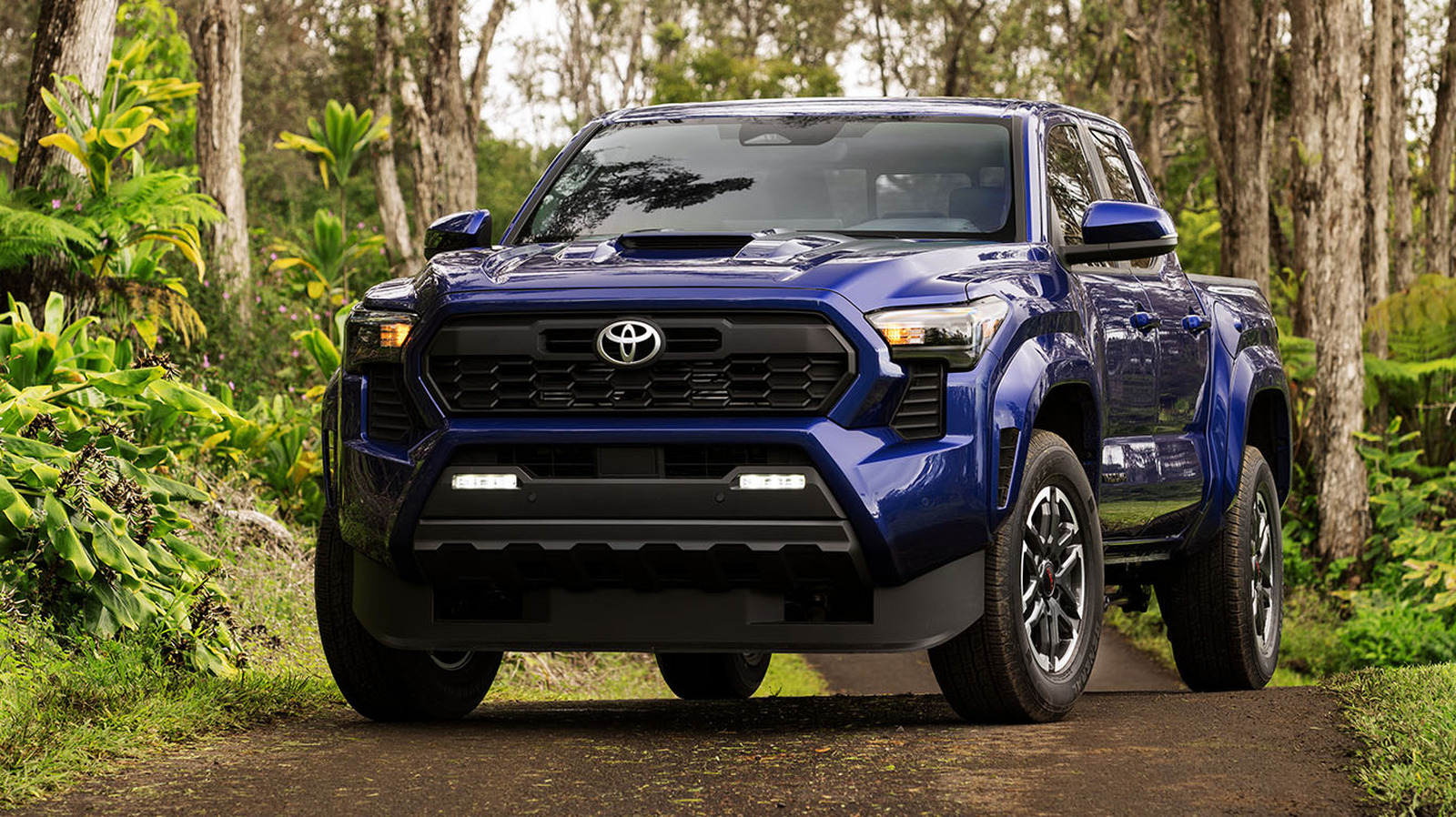
To put it simply, Americans love buying pickup trucks, with full-size models like the Ford F-Series and Chevrolet Silverado regularly beating out all other vehicles when it comes to annual sales volume. For American automakers, these full-size pickups are their bread and butter, but when you look at the mid-size truck category, it’s not a Chevrolet or Ford that’s the most popular, but the Toyota Tacoma, and by a considerable margin according to data from GCBC.
Unlike some of Toyota’s other best-sellers, including the RAV4 or Camry, which are unibody vehicles, the Tacoma uses a body-on-frame platform. This doesn’t just matter for Tacoma buyers, it’s an expected and vital part of the truck’s DNA, having been part of the Tacoma since the early 1970s, when it wasn’t even called the Tacoma. Though it’s available with lots of modern technology, including a hybrid powertrain on the flagship Tacoma TRD Pro, the Tacoma is very much defined by its rugged construction. Among other things, this allows for a four-wheel-drive system with low range, solid towing capability, and even the rare option of a manual transmission.
With that said, smaller, unibody pickups have gained popularity recently, and speculation suggests Toyota may be joining that segment in the future with a car-based, compact truck of its own. If that were to happen, though, that would be a very different kind of truck, aimed at a different type of buyer than the one who has been buying Tacomas and other Toyota pickup trucks for the last 50 years.
From Toyota Truck to Toyota Tacoma
The origin of the Toyota Tacoma nameplate stretches back to the 1995 model year, but the truck’s actual roots stretch back much further than that, back to the ’70s and ’80s when it was simply known as the “Toyota Truck”. Though the Toyota Truck, and later the Tacoma, has grown and modernized significantly over its long history, it’s always used traditional pickup truck construction, with its body mounted on a robust and dedicated frame. This is something it shares with the vast majority of pickup trucks on the market, regardless of size or manufacturer.
Not only has this body-on-frame construction contributed to the Tacoma’s legendary reputation for longevity, it’s also made the truck a big favorite among off-road adventurers and 4×4 enthusiasts. In recent years, Toyota has embraced this market in a big way with specialized factory off-road models like the Tacoma TRD Off-Road, TRD Pro, and Trailhunter.
The latest iteration of the Tacoma, which debuted for the 2024 model year, is built on Toyota’s widely used TNGA-F body-on-frame architecture, which is also used by some of the company’s most popular and iconic SUV models, including the 4Runner and Land Cruiser — as well as Lexus SUV offerings. Notably, this platform also underpins the full-size Toyota Tundra pickup, which, despite using similar architecture, competes in a completely different class than the Tacoma.
What’s in a frame?
For now, the Tacoma is the cheapest and smallest pickup that Toyota sells in America, but there’s a chance that might be changing in the future. Ford introduced the compact, unibody Maverick pickup for the 2022 model year, and the Maverick has proven to be a game-changer, combining open-bed utility with the price, fuel efficiency, and driving feel of a small car or crossover SUV.
Naturally, the industry has taken notice of the Maverick’s success, with some speculating that Toyota could be entering the market with a unibody compact pickup of its own in the coming years, perhaps based on the RAV4 Hybrid. To see how this potential compact Toyota pickup would fit in the brand’s lineup, look no further than the Ford showroom. Yes, the Maverick has established a new kind of truck market, but Ford still makes the mid-size Ranger for those looking for a more traditional, more capable, body-on-frame pickup.
Given Toyota’s vast hybrid experience and the popularity of its small cars, a less expensive, highly fuel-efficient RAV4-based pickup seems like it’d be an instant sales hit. If that model does become a reality, though, don’t expect the Tacoma that people know and love to go anywhere. Even its joined by a newcomer unibody Toyota pickup, the Tacoma will almost certainly remain the same established, body-on-frame pickup truck that it’s always been.